
RICHLAND, Wash. - Scientists have used the power of AI to analyze and predict the conversion of liquid radioactive waste into solid glass waste forms, increasing the amount of waste that goes into each container of glass produced and reducing operational risks, mission duration and costs. The research team, from the Department of Energy's Pacific Northwest National Laboratory, published its work in the April 15 edition of the "Journal of Non-Crystalline Solids."
Waste volume and variability, complex chemistry and the science of glassmaking with rigid requirements have made it tricky to find optimum glass formulations. But with the help of AI, PNNL researchers have created a custom collection of "recipes" that significantly increase the percentage of waste - called waste loading - incorporated into the final glass waste forms to levels that wouldn't have been possible without the machine learning-driven model.
During the historic Manhattan Project and the Cold War, operators at the Hanford Site generated wastes from plutonium production that are stored in massive tanks buried underground. Often referred to as nuclear byproducts or legacy waste, their complex composition makes it challenging to treat and then store long-term. PNNL has advanced the science of vitrification - immobilizing radioactive waste by converting it into glass - since the 1960s. With new advancements like AI, scientists can make sense of mountains of data faster and discover glass formulas - like customized recipes - they hadn't considered before.
"Models can learn from their own mistakes," said Xiaonan Lu, PNNL materials scientist and first author of the study. "We replaced a traditional math equation with a machine learning model that tried every combination of elements that have been measured in the Hanford tank waste samples. That's decades of data the model used to learn and then predict which recipes would work.
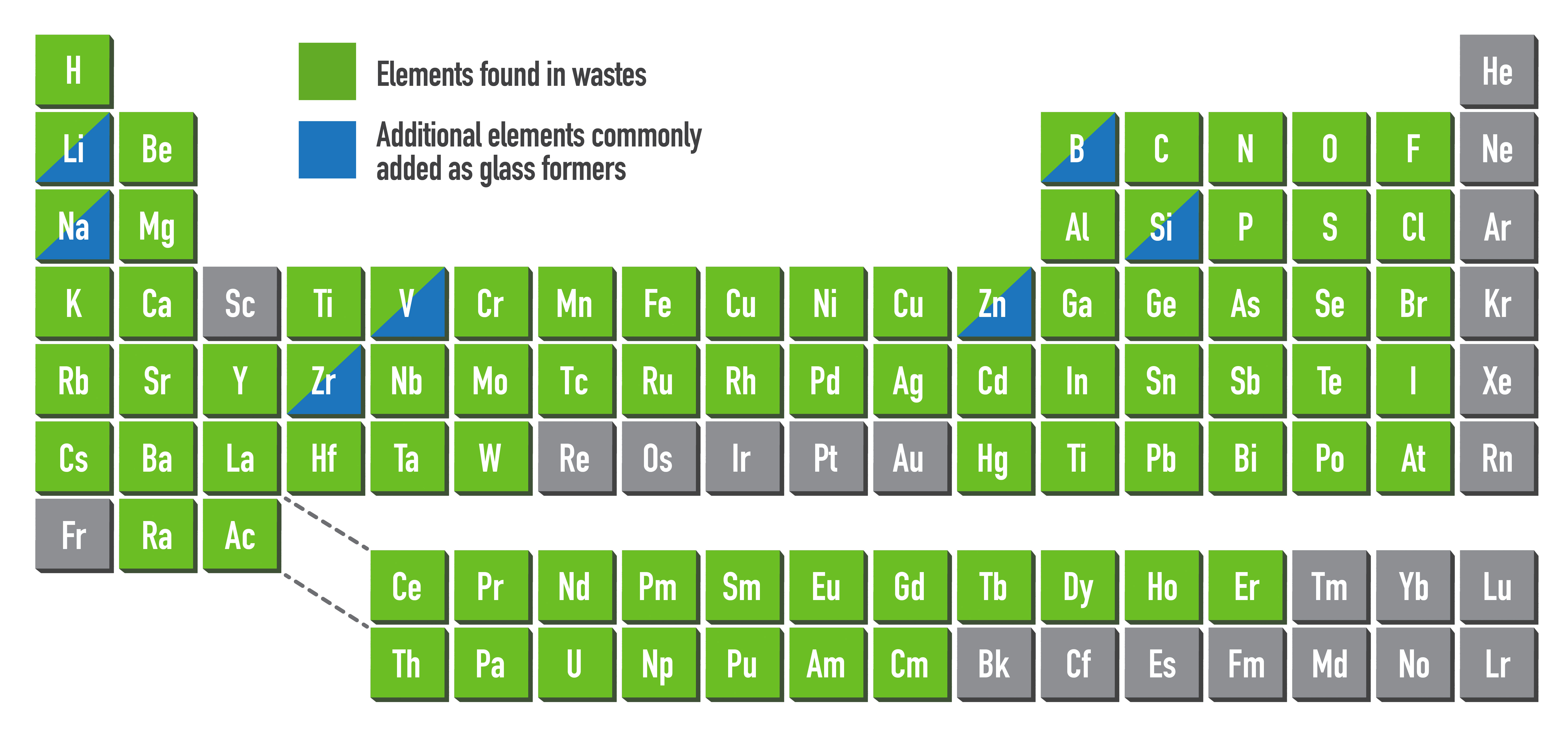
"Nearly all elements on the periodic table exist in Hanford tank waste, which is why it's considered the most complex mixture of radioactive waste in the world," she said.
Chemistry of a cup o' waste
Consider a freshly brewed pot of coffee. The composition of the coffee changes from hour to hour, day to day, and more rapidly if it's kept on a burner because oxidation breaks down the acids and oils that give coffee its flavor.
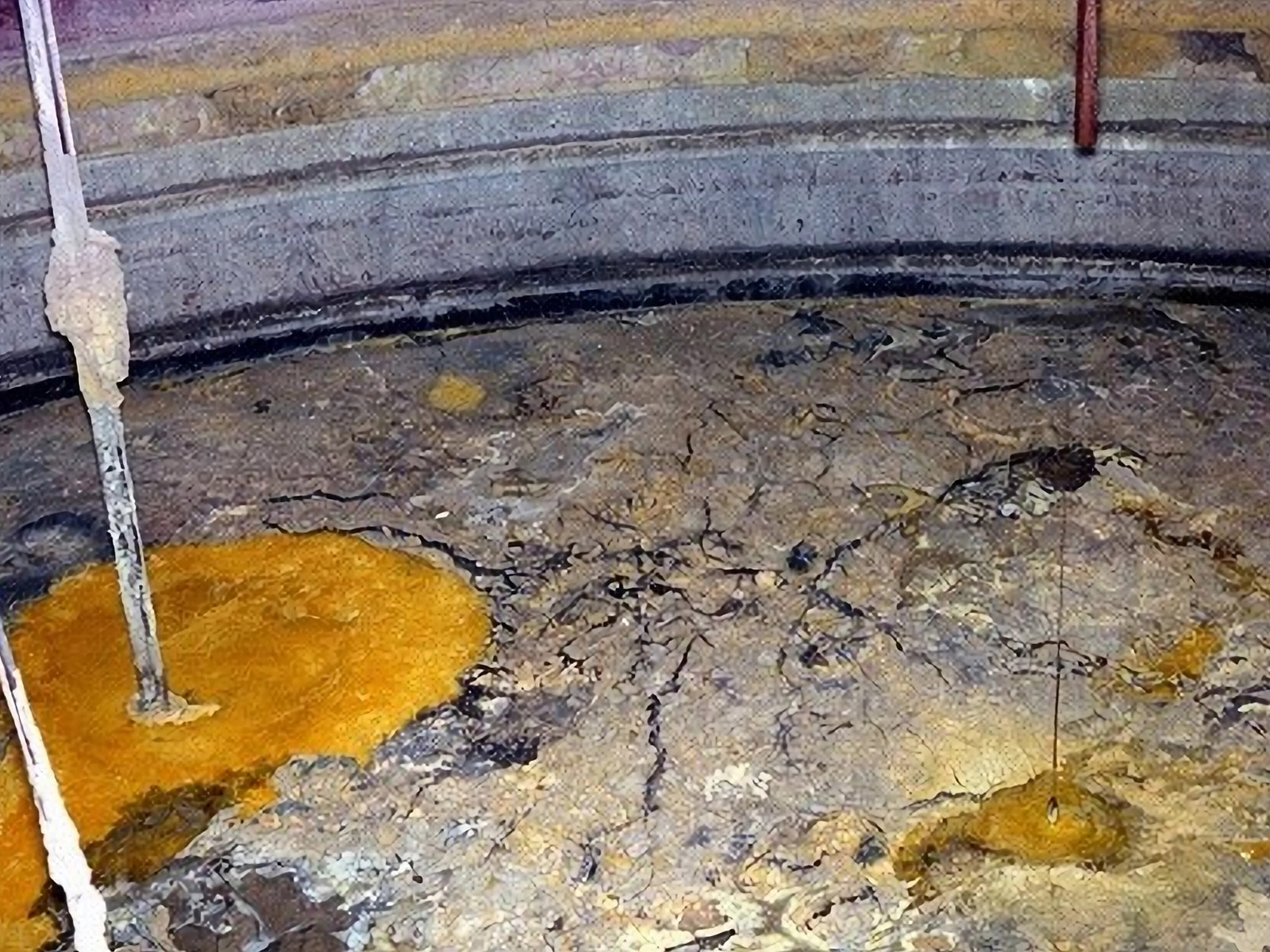
Similar changes occur in the more than 50 million gallons of tank waste stored underground at Hanford for more than 75 years, albeit on a larger, much more complex scale. The waste has sat for decades in conditions that have fluctuated depending on the tank, altering the composition.
Not only does the waste composition vary from tank to tank, but it varies within each giant tank - and also as the waste is transferred during the treatment process. Hence, the glassmakers need not just one, but a slew of glass formulas that can be tailored to hold as much waste as possible while accounting for the individual composition of each batch. Flexibility in the formulations keeps operations running as efficiently as possible.
The science of glass
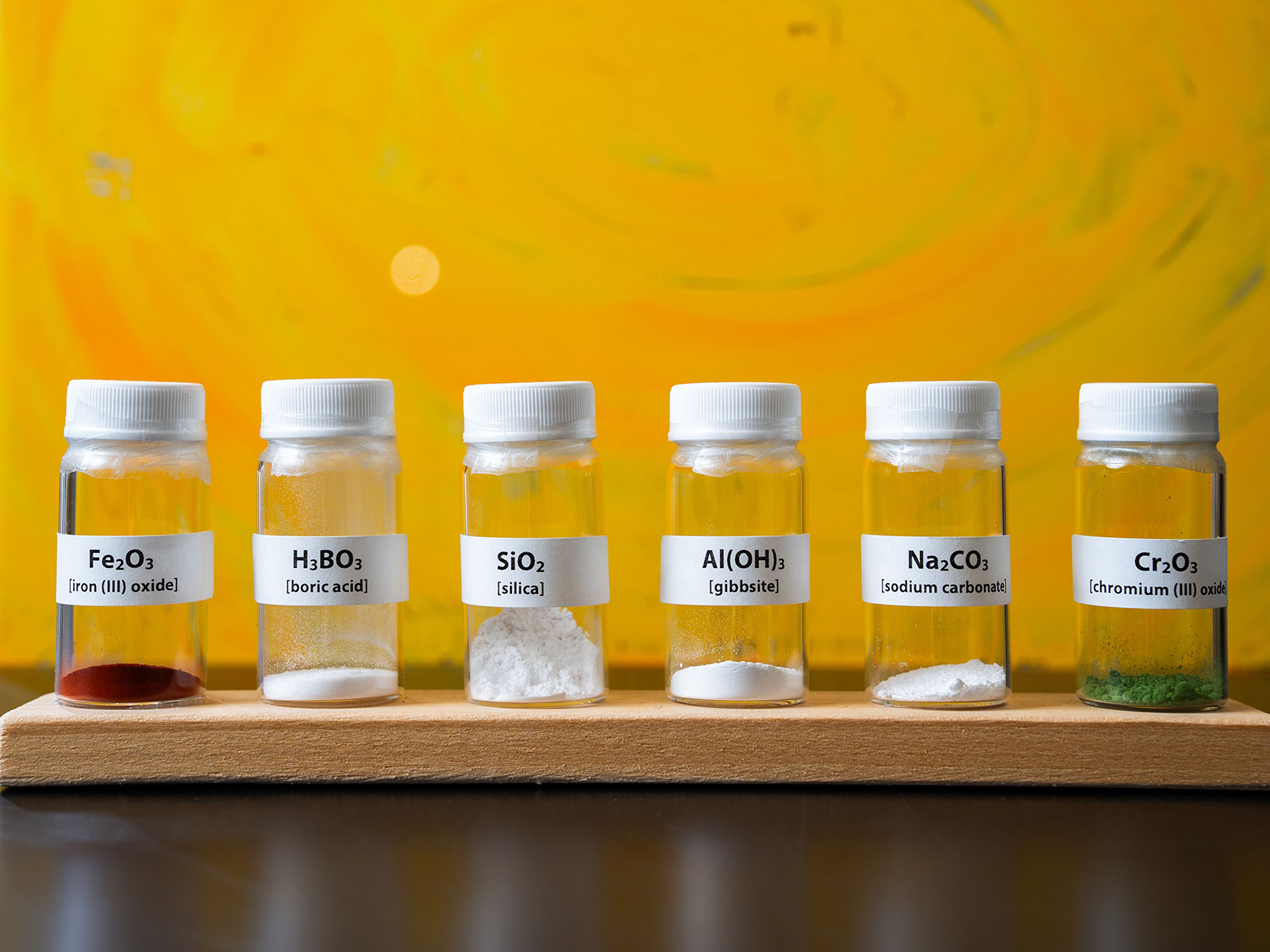
To make the glass, the waste and added chemicals (known as glass formers) are mixed, heated up to 2,100°F and then poured into 7-foot-tall steel containers. However, many of the components in the waste impact how the glass behaves at each step of that process, including disposal, and these behaviors need to be predicted and controlled within the treatment plant to ensure the process runs smoothly. Glass is a bit like Goldilocks' porridge - you need just the right mixture. As an example, if it's too thin, scientists worry about corrosion within the melter; if it's too thick to pour, it may not fill the container completely, so simultaneous optimization of the glass formulation and all the resulting physical and chemical properties are critical for efficient processing and achieving long-term storage requirements.
In their research, PNNL scientists trained the models to look at thousands of combinations of waste properties and additives to predict which ones allow for incorporating the maximum amount of waste in the glass, while ensuring the treatment plant efficiency is maintained and the glass meets durability requirements. More waste in each final glass waste form means fewer containers are produced, resulting in a smaller footprint in disposal facilities for this decades-long mission. And while the model guides a higher percentage of waste going into each piece of glass, the prediction capabilities of AI - and subsequent validation experiments reported in the published papers - demonstrate the final glass forms will be more stable.
The two-part project, funded by the Department of Energy (DOE) Office of Environmental Management's Hanford Field Office and in partnership with glass scientist Albert Kruger, includes a Spring 2024 study also in the "Journal of Non-Crystalline Solids" focused on the development of the glass formulation models.
Potential impact on the bottom line
The PNNL team's original algorithm, developed in 2012, still drives the current Hanford glass formulas. The algorithm was intentionally set to accept lower quantities of waste mixed with additives, which helps scientists and contractors test the process with fewer waste variables.
"The majority of my career has been spent on vitrification challenges, but it's the last 14-year journey from the original glass algorithm application to now that has been the most exciting," said Lab Fellow John Vienna, who was part of the original team and is the leading expert in this area.
"This is the first experimental validation of an active learning approach in waste glass design," Vienna said.
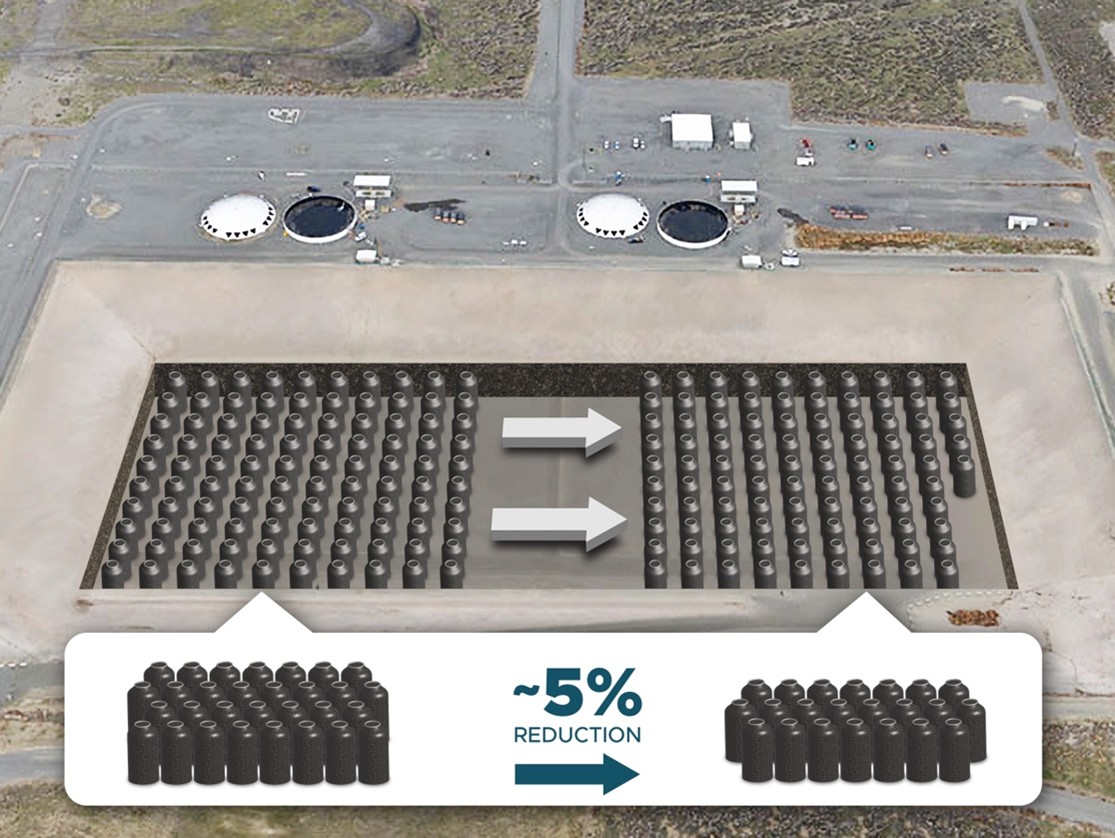
Over the life of the vitrification project, using the PNNL-developed algorithm could mean 5% fewer glass logs made to safely encase the waste, Vienna said. "Dropping 5% is significant."
José Marcial, also a materials scientist at PNNL and a co-author on the paper, explained a bit more. "Usually a glass matrix of low-activity waste holds about 20%-30% by weight of radiological waste. But the new model shows we can increase the amount of waste by roughly 1% for every 20% already going into the recipe, which reduces the volume of disposed waste and the cost over the life of the project."
Genesis mission to accelerate AI solutions
In February, the DOE announced 26 national science challenges where AI could accelerate and transform research - "Transforming nuclear restoration and cleanup" was one. The challenges are part of the Genesis Mission, which was launched by executive order in November 2025.
Four PNNL researchers are part of the Genesis Mission's Nuclear Restoration and Revitalization AI-Roadmap team. Senior materials scientist Matt Asmussen, senior advisor Inci Demirkanli, chief AI scientist Nathan Hodas and data scientist Anurag Acharya are among those teaming with other national labs to identify opportunities to operationalize AI in ways that help the DOE Office of Environmental Management speed up cleanup at complex sites, including Hanford.
"This work demonstrates the strong potential of AI in the treatment of nuclear waste," said Asmussen, who also manages several of PNNL's waste processing research programs. "We're combining PNNL's decades of expertise in glass science and vitrification with advanced AI tools to compress timelines and give a compelling preview of what mission acceleration could look like through the use of AI/ML models."


