
Key points
- Students in rural, regional and remote areas often face barriers to engaging with STEM, including limited access to resources and real‑world learning opportunities.
- CSIRO's STEM Professionals in Schools program supports sustained partnerships between teachers and STEM professionals across Australia.
- Through both virtual and in‑person collaboration, the program provides teachers with professional development and students with engaging STEM learning experiences.
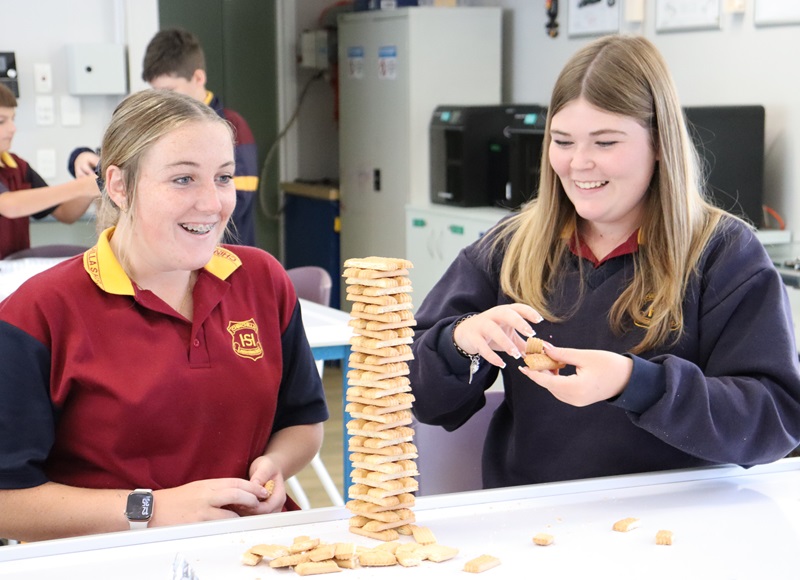
At a small, rural high school in Chinchilla, on Queensland's Western Downs, a group of students stand around a table.
It's a shake table and they're testing their building designs to see first-hand how they would hold up in an earthquake.
Months of planning, designing and teamwork are being put to the test, as students tackle real-world problems in a hands-on approach to STEM learning that is too often inaccessible to students in Australia's regions.
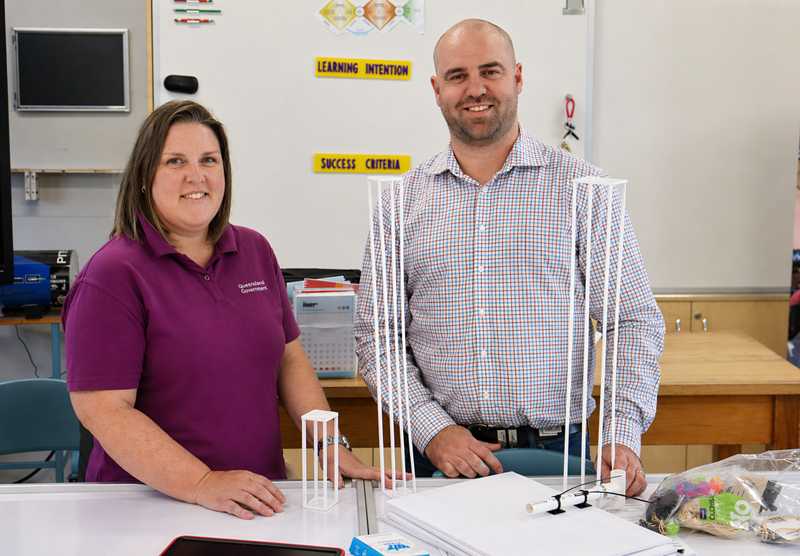
Their teacher Rebecca Davis teamed up with engineer Colin Sheldon to develop the challenge as part of learning unit they created together. Colin designed and built the shake table, allowing the Year Nine students to engage in an evidence-based assessment of which of their designs worked best.
This partnership between teacher and industry professional is one of hundreds running through CSIRO's STEM Professionals in Schools program . More than one quarter (26 per cent) of the partnerships are in regional and rural schools.
We caught up with two of these partnerships to find out how they've tailored their collaborations to suit their needs and local contexts.
From online conversations to classroom impact
After more than 20 years in the classroom, Rebecca Davis knows the realities of teaching in a rural school. As a rural teacher you often end up teaching outside of your trained area.
"As a rural teacher, you often end up teaching outside of your trained area, and sometimes you're the only teacher for that subject in the whole school," Rebecca says.
"Getting access to professional development is not easy when you're not near a big city. A lot of professional development is face to face, which means time away, long travel and extra costs."
As a Design and Technology teacher working in the science, technology, engineering, arts and mathematics (STEAM) space, she found relevant professional learning especially hard to come by.
"There are lots of STEM opportunities for Maths and Science teachers, but not much that really targets Design and Technology," she says. "I searched just about every website I could find, reached out through teaching networks, even tried AI. That's when I came across the STEM Professionals in Schools program."
Rebecca applied with a wish list: someone in engineering or electronics who could help her develop new units to teach in class. She was matched with Colin Sheldon, a Brisbane-based engineer who had been involved in the program before.
"In our first online meeting, I laid everything out," Rebecca says. "I had lots of ideas, but not the technical knowledge to bring them to life. I felt like I was drowning in information and just needed help sorting through it. I was lucky to be matched with someone who genuinely cared about what I was trying to do."
Now in their second year of partnership, the pair speak for an hour each week on Teams and stay in touch by email between meetings. From those conversations came the 'Sturdy Structures' unit to test weight (load paths), earthquakes and wind (lateral forces) - and the homemade shake table that brought it to life.
"We looked at buying one, but it wasn't affordable," Rebecca says. "Colin offered to build one using materials from the hardware store and worked out a way to measure vibration so students could analyse real data and make informed recommendations."
All of this was achieved without Rebecca and Colin ever meeting in person. The pair finally met for the first time last month, during their first in-school incursion.
"What we've created is something I couldn't have done on my own," Rebecca says. "We kept coming back to the same questions: Is this engaging? Does it solve a real-world problem? We didn't want it to feel gimmicky – we wanted it to connect to real career pathways."
While Rebecca feels she's been upskilled through the partnership, Colin says the experience has been just as valuable for him.
"Thanks to my employer's flexible working arrangements, I can set aside an hour each week," Colin says. "It's a chance to contribute to regional schools who don't get the same level of exposure as metro schools."
A big experience for a small school
Around 1,500 kilometres south, at Coomandook Area School in rural South Australia, teacher Lea Brodie wanted her students to see what a working scientist actually does. Through STEM Professionals in Schools, she was matched with Professor Kim Hemsley, a neuroscientist at Flinders University who has volunteered with the program for more than a decade. 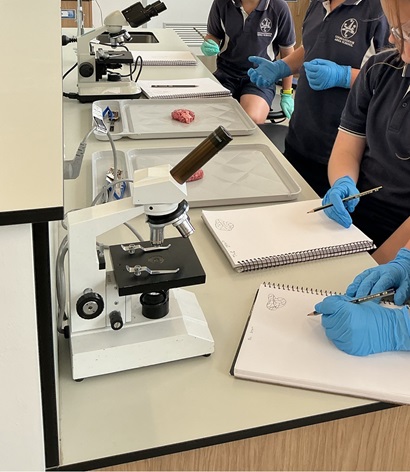
While Coomandook is not completed isolated, its location presents practical challenges for the school of just 100 students.
"We're in a unique position – rural, but close enough that students and families are aware of the opportunities city students have," Lea says. "At the same time, we're far enough away that distance and cost often mean our students miss out."
For Kim, that gap is exactly where the program does its most important work.
"It's important for students to see how varied a career in science can be," she says. "There are many entry points, not just university, and lots of different areas to work in. Science is something anyone can pursue if they're interested and determined."
On her recent visit, Kim guided students through a hands-on sheep brain dissection, working with real tissue samples under microscopes. The session ended with a Q&A she still talks about.
"They asked many, many insightful questions," Kim says. "We ran out of time before we ran out of questions."
Lea has seen what that kind of contact does in a community where prolonged drought has shaped how families think about study and future careers.
"Without programs like this, many students wouldn't see STEM careers as something real or relevant to them," she says. "It shows them they don't have to come from wealthy families to pursue these pathways. It gives them space to imagine what's possible."
Building on the success of the visit, Lea and Kim are planning a trip to Kim's laboratory later this year, so students can see how research happens in practice.
Why these partnerships matter
Students in rural, regional and remote communities continue to face barriers to participating in STEM. By age 15, students in remote Australia are, on average, around 1.5 years behind their metropolitan peers in science, and perform significantly below the international average in mathematics.
These outcomes are driven by a range of challenges, including limited access to resources; fewer opportunities for subject‑specific educator professional development; and ongoing difficulty attracting and retaining qualified STEM teachers resulting in higher levels of out-of-field teaching , particularly in STEM fields. Together, these factors place significant pressure on educators.
Evidence shows that initiatives connecting industry professionals directly with schools can make a meaningful difference. Access to role models, mentoring, hands‑on learning, excursions beyond the classroom and other memorable experiences can build confidence, spark curiosity and encourage students to continue engaging with STEM.
CSIRO Education initiatives such as STEM Professionals in Schools and the Generation STEM Community Partnerships Program help bridge this gap. Teachers report increased STEM knowledge and confidence, alongside improvements in student capability and engagement.
As teacher Rebecca explains, the impact extends well beyond lesson plans and shake tables.
"Bouncing ideas off someone who really knows their stuff can take your thinking in new directions," she says. "Where you end up might be even better than what you originally had in mind."
STEM Professionals in Schools is currently inviting Expressions of Interest from new and current STEM professionals for remote engagement opportunities.


