
The UAB, through its WildCoM (Wildlife Conservation Medicine) research group of the Department of Animal Medicine and Surgery, participates in the new POCTEFA AVES project, conducted in the border regions of Spain, France and Andorra. The aim of the project is to strengthen surveillance of emerging avian viruses, in particular influenza and flaviviruses.
The area of POCTEFA, a cross-border cooperation programme that serves as a stepping stone for this project, is a true mosaic of ecosystems between France, Spain and Andorra in which conditions can favour the emergence and circulation of avian viruses, especially those responsible for avian influenza or West Nile fever. In a context of climate change and the expansion of vector-borne diseases, it is a priority to address these challenges to ensure animal health, biodiversity and the prevention of health risks.
The AVES (Avian Viruses Emergence and Surveillance) project is based on a comprehensive and multidisciplinary approach combining microbiology, epidemiology and ecology, and is aligned with the concept of One Health, which integrates animal, human and environmental health to anticipate future health challenges.
Its priorities focus on the development of innovative surveillance by combining field and laboratory tools such as telemetric monitoring, environmental DNA, xenomonitoring and metagenomics, together with a better understanding of viral circulation through the identification of reservoir populations, the study of genetic diversity, and transmission mechanisms between different environments.
The project also seeks to generate risk maps that allow locating areas with the highest probability of an emergency and strengthen prevention strategies on a cross-border scale. At the same time, it offers support to local actors with practical solutions to improve surveillance for the benefit of public health, livestock and biodiversity.
In this framework, the WildCoM group at the UAB, led by Oscar Cabezón, is leading environmental sampling using innovative passive torpedo-shaped water devices, capable of capturing viruses non-invasively and at a low cost thanks to their production with 3D printing at the UAB's Open Labs.
"This methodology allows us to obtain, in a non-invasive and economical way, information on the viruses most relevant for the transmission of avian viruses with zoonotic potential circulating in wetlands, such as avian influenza. The aim is to be able to detect their circulation quickly and, if possible, anticipate the appearance of cases on surrounding farms," says Oscar Cabezón.
The UAB is also leading the research on the prevalence of avian influenza and other emerging viruses, such as the West Nile virus, in mammals present in the sampling areas (the Empordà Wetlands, Banyoles, and the Llobregat Delta). This will help to better understand how these viruses can adapt to mammals and increase the potential zoonotic risk.
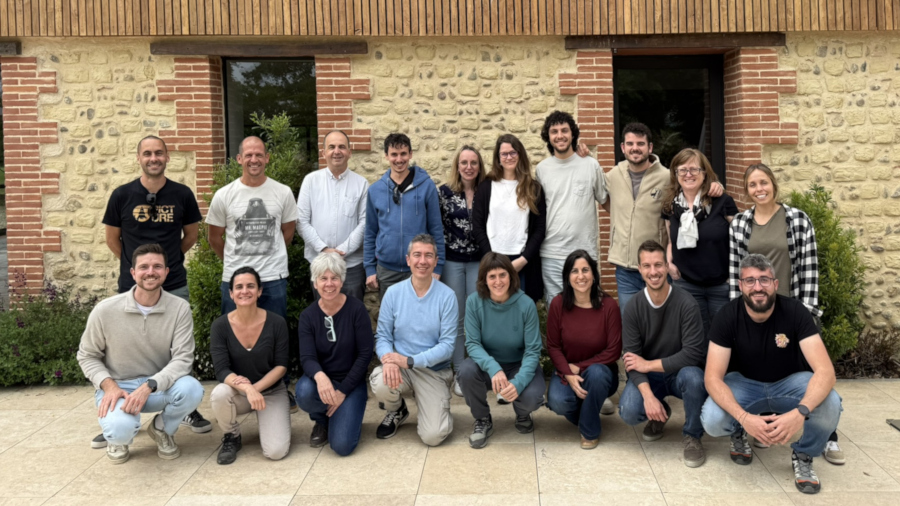
POCTEFA-AVES brings together six European partners committed to health surveillance, veterinary research, ecology, and epidemiology. In Spain, in addition to the UAB, the participants are NEIKERM (Basque Institute for Agricultural Research and Development), IREC-CSIC (Institute for Research on Hunting Resources), and IRTA-CReSA (Centre for Research on Animal Health). On the French side, the National Agency for Health Safety (ANSES), the canton of Maisons-Alfort, and the National Veterinary School of Toulouse.
The project has a total budget of 1,836,133.51 euros, with 65% co-financed by European funds, and a duration of 36 months. The scientific meeting for its launch took place recently in France.


