
AI is not just another technology. Medicinsk Vetenskap has spoken to researchers who describe their hopes and fears amid the current AI fever.
Text: Annika Lund, first published in Medicinsk Vetenskap nr 2 2026
The welfare system faces well-documented challenges: the proportion of the working-age population is shrinking as more people live longer. In healthcare, the challenge is compounded by demand for new, expensive medicines and an existing staff shortage. That equation calls for smart solutions. Expectations of artificial intelligence, AI, are high.
The state-funded organisation AI Sweden, which promotes the adoption of AI in Sweden, has attempted to map its use in the healthcare sector. Their Healthcare Map is updated continuously on a self-reporting basis. In spring 2026, around 200 AI projects were listed as ongoing within Swedish healthcare.
The compilation shows that AI in healthcare largely involves administrative support, such as reducing the workload in scheduling or record-keeping. In patient-facing activities, image-intensive fields dominate, such as radiology and pathology, with mammography being a prime example.
Significant barriers to implementation
The majority of AI support in healthcare is, as yet, limited to studies or pilot projects. In a snapshot from spring 2025, only 13 per cent had been implemented in healthcare routines. According to AI Sweden, this suggests that Sweden is on the verge of a major change. At the same time, it highlights barriers to moving from pilot projects to widespread implementation.
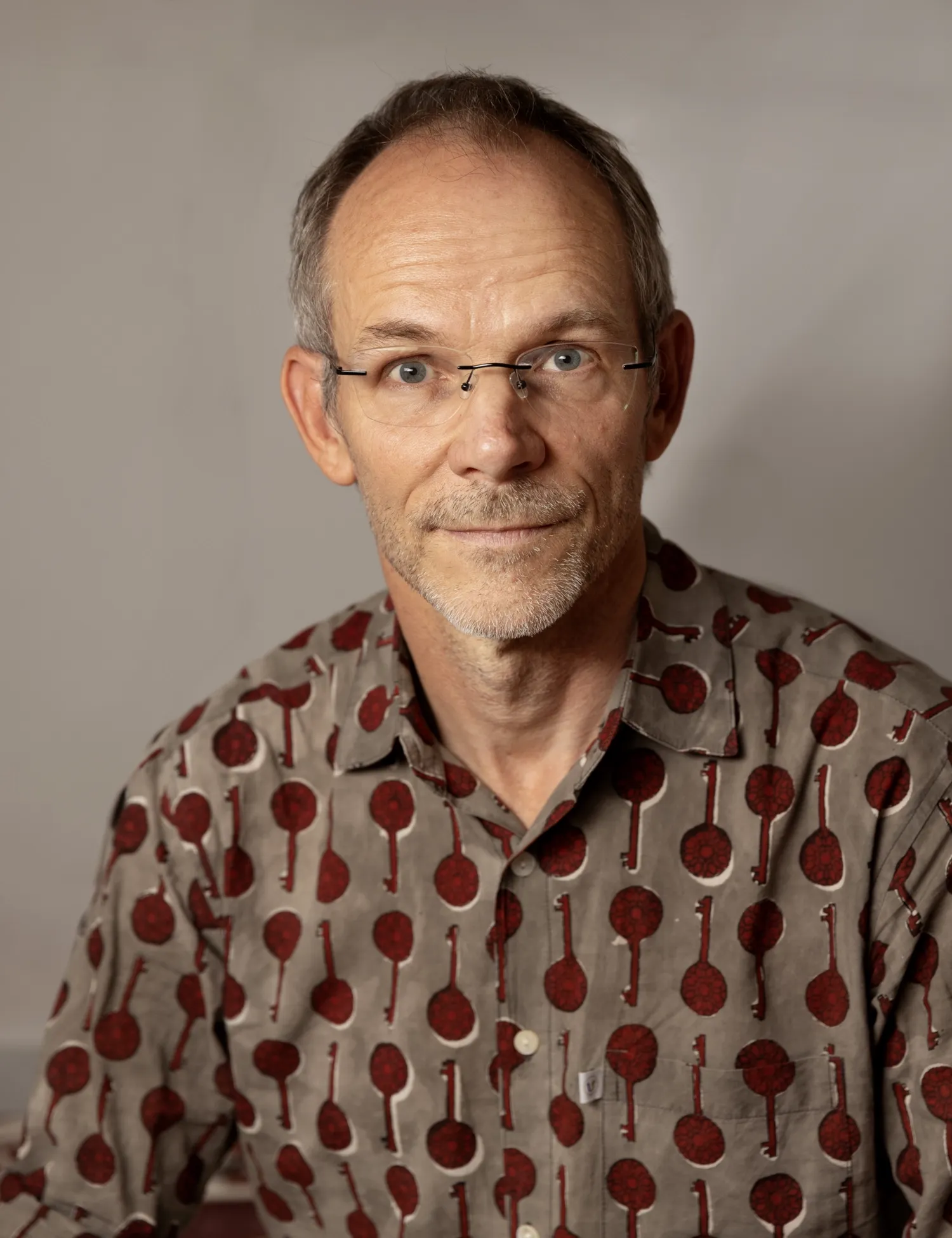
The barriers are significant, explains Magnus Boman , Professor of Artificial Intelligence and Health at the Department of Medicine, Solna, at Karolinska Institutet.
"There is a great deal of immaturity around AI, on several levels. The absence of adequate societal infrastructure brings both problems and risks," he says.
The infrastructure he is calling for relates, among other things, to legal frameworks and computing capacity. The latter is currently being developed in Linköping. A technical hub, known as NAISS, serves as an umbrella for national computing resources and is set to be bolstered by a new supercomputer, named Arrhenius. Furthermore, a newly established 'AI factory', Mimer, will serve as a test environment for innovations.
"These are fantastic computers. As a researcher, you can apply for computing projects and storage space for a limited period, perhaps six months to a year. During that time, you can have your data uploaded and run your project," says Magnus Boman.
Rapid developments in research
Development is racing ahead in the field of engineering. At Chalmers University of Technology in Gothenburg, an AI known as Eve has for several years been able to conduct research independently. It is a robot that can formulate hypotheses, plan its research, carry out experiments, analyse results and suggest next steps. Eve has learnt the research process and produced its own results, including work on malaria.
"It works like any other AI - it makes bold guesses. At the start of an AI's learning process, it often gets it wrong, but it corrects itself. In the end, it works well," says Magnus Boman.
Progress is rapid in medical research too. AI can, for example, create advanced simulations showing how different substances affect the body. This, in turn, can speed up the development of new medicines.
AI can also handle staggering volumes of data, such as a person's entire genome or thousands of proteins and molecules in the blood, reflections of the body's metabolism or traces of what we have eaten. These are examples of so-called 'omics': genomics, proteomics and metabolomics. They make it possible to obtain molecular snapshots of what is happening in the body and to track biological processes, from health to disease.
This type of omics data opens the door to precision medicine, a more personalised form of diagnosis and treatment. It can be described as a new generation of healthcare, more precise and more tailored.
This is now on the threshold of clinical practice. In smaller patient groups, for example in paediatric oncology and rare diseases, it is already being used in certain clinical practices. AI is also used there to support analysis and decision-making.
But in standard healthcare, with larger patient flows, progress is slower. Magnus Boman describes a strong desire for simplification and improvements, but the enthusiasts are having to fight for it. There are no well-trodden paths for innovation in this field. Nevertheless, some smart solutions have made it all the way from idea to standard clinical practice. But these do not involve research robots or AI analyses of entire omics data sets.
At Karolinska University Hospital in Stockholm, an AI model has been trained on data from previous operations and so-called surgical records, which contain information about various procedures. The result is an AI that can estimate the duration of operations and assist with surgical planning. The aim is to improve the schedule so that operating theatres, staff and other resources are used more efficiently. An early evaluation shows that the AI is a valuable aid.
Developing and implementing this tool took a few months. The pace of change in the world of AI is rapid. The algorithm is classified as an administrative tool. These are subject to simpler regulations than technology used directly in patient care.
There is a strong demand for both, says Magnus Boman.
"Many clinics ask me to develop AI so they can look more deeply into the medical information they have about their patients. They want better decision-making support, better integration of, for example, blood tests, X-rays and the patient's own account. But these are slow processes. It takes many years from a successful pilot to first use in everyday clinical practice," he says.
Used to detect breast cancer
One shortcut is to use a commercial AI solution that is already trained and ready to use, developed by an AI company. In the field of mammography, there is a growing number of such products, approved for use in healthcare. At Capio St. Göran's Hospital, one called Lunit Insight MMG is used, manufactured by the South Korean company Lunit.
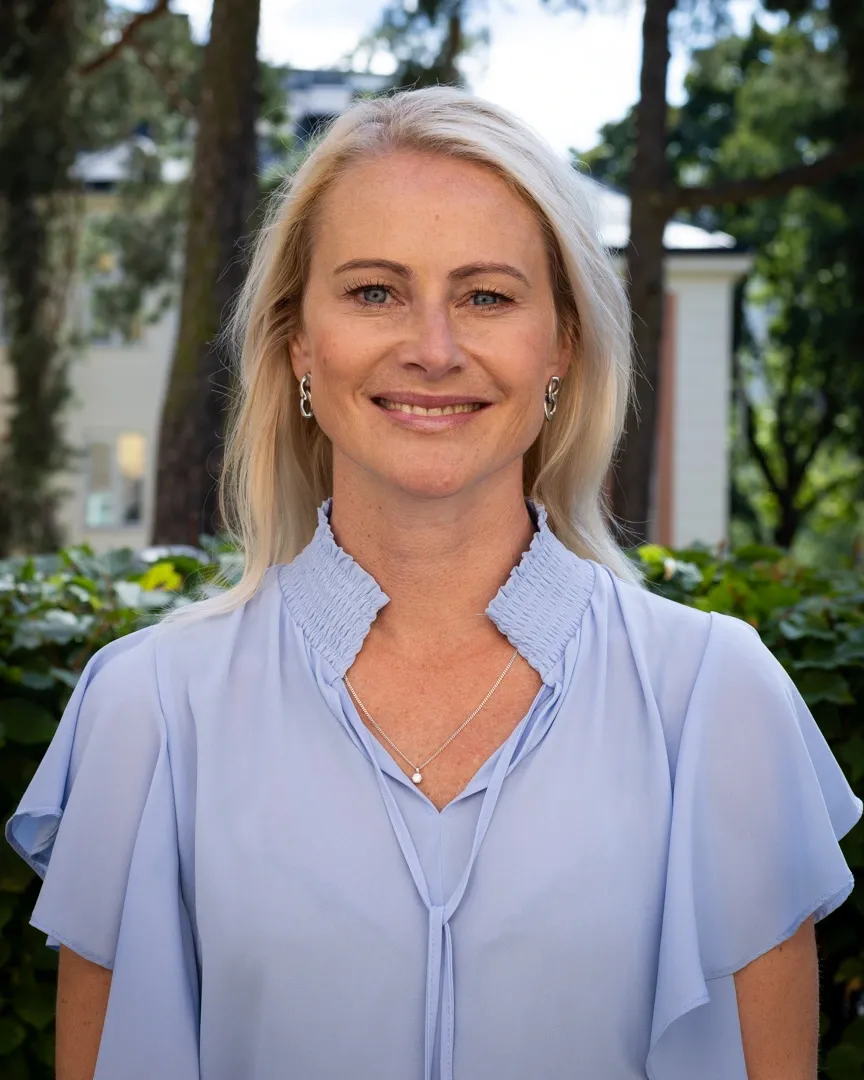
"All algorithms perform very well in the studies conducted by the manufacturers themselves. Before introducing a product like this, it is essential to carry out an independent evaluation in the setting where it is intended to be used," says breast radiologist Karin Dembrower , a researcher at the Department of Medical Epidemiology and Biostatistics at Karolinska Institutet.
She led a validation study in which the algorithm was put to the test in direct comparison with human radiologists. The study involved just over 55,500 women, and all images were reviewed by two radiologists, which is standard practice in Swedish breast cancer screening. In parallel, all images were also assessed by the algorithm, Lunit. Subsequently, knowing which women had later received a breast cancer diagnosis, the performance of different combinations of AI plus radiologist was compared.
The combination of AI and one radiologist outperformed two radiologists. More cases of breast cancer were detected, whilst fewer women received false-positive results. Fewer women had to worry unnecessarily and return for a follow-up scan, despite being healthy.
The study was published in 2023. That same year, a new care protocol was introduced: one of the two radiologists reviewing each screening image was replaced by AI. This has freed up time that radiologists can devote to more advanced investigations for women who may have breast cancer. It has also reduced waiting times.
"We can now offer appointments within two weeks. Previously, waiting times were longer, and we often had to work evenings and weekends," says Karin Dembrower.
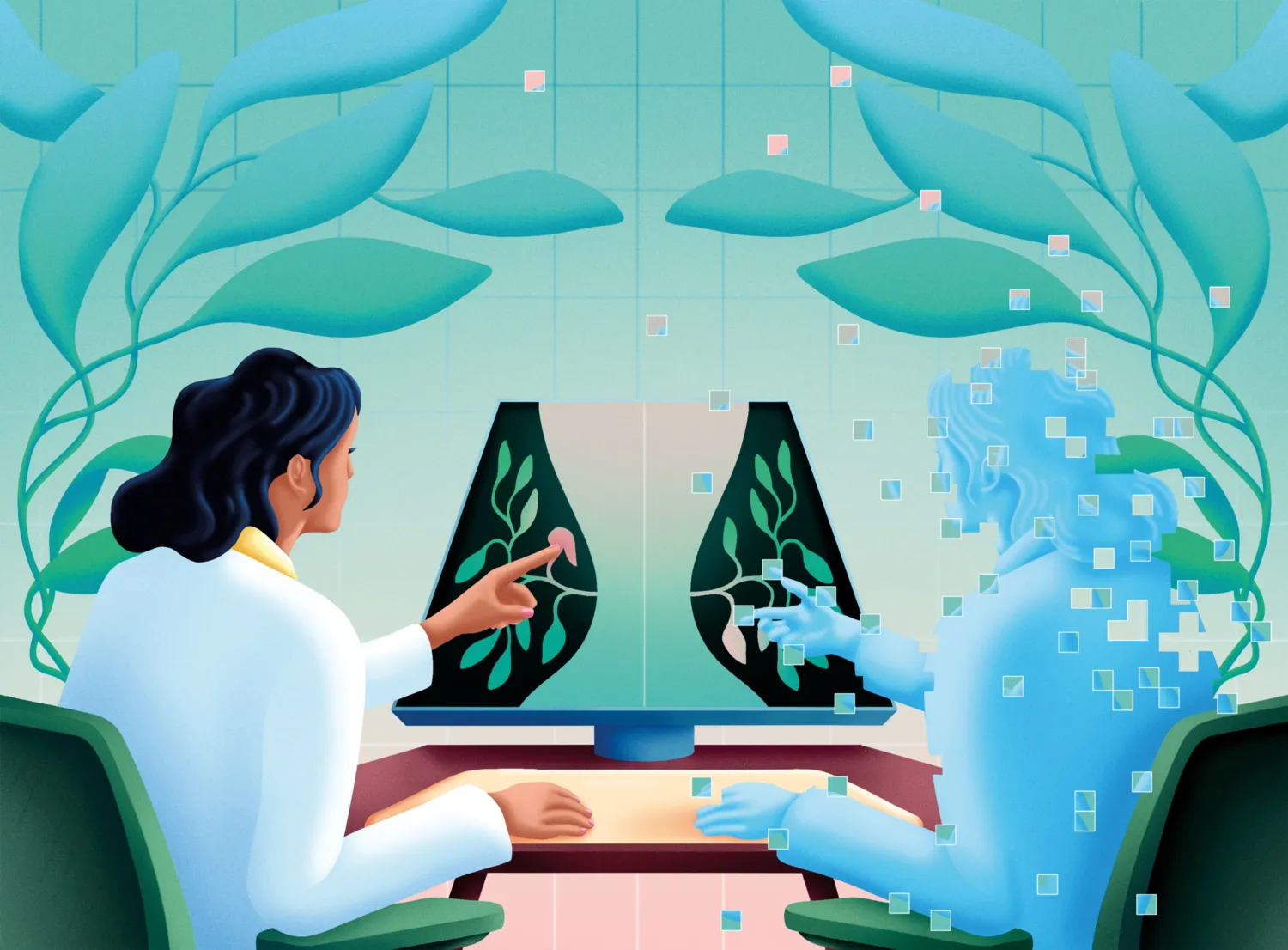
At first, the radiologists were surprised when the algorithm suddenly flagged an area as suspected cancer. In some cases, they could not see anything abnormal at all. The question then became: should the woman be called back for further examination or not?
Over time, the approach to recall has changed, explains Karin Dembrower.
"Nowadays, we pay greater attention to what our AI flags, unless there is other information that contradicts a suspected case of breast cancer. Radiologists, for example, have access to older mammogram images, which our AI does not," she says.
The algorithm has become more than just a tool that highlights relevant areas in the images. When the AI algorithm flags an area with a high score for suspected cancer, that information can carry significant weight, even if the radiologists themselves do not see anything suspicious in the images.
The clinic now has the best accuracy in the country: the lowest rate of recall for healthy women and the highest proportion of breast cancer detected through screening. Assessments have gradually improved since the AI was introduced. But the AI itself has not changed. It is fixed and analyses the images in the same way as when it was first introduced.
"It is we radiologists who have changed our approach to the algorithm," says Karin Dembrower.
A major barrier to the widespread introduction of AI-enhanced mammography screening is time, she says:
"There is an extreme shortage of breast radiologists, so we are needed in day-to-day work. It is difficult to find the time for major development work, such as introducing AI."
Can support stressed healthcare staff
Swedish healthcare staff are notoriously stressed. If you want to put a figure on it, you can refer to a survey published in March 2026, conducted by the Swedish Agency for Health and Care Services Analysis. Two out of three doctors in primary care report that their work is very stressful, and around one in three show signs of exhaustion. Only 11 per cent are satisfied with the amount of time spent on administrative work.
An AI tool that has rapidly gained ground in Swedish healthcare is a medical record support system. During tens of thousands of doctor's appointments across the country, an AI is present as a silent third party, recording and transcribing what is said. Once the patient has left the room, the conversation is summarised into a medical record entry, ready to be signed by the doctor, sometimes complete with diagnosis codes and all. The recording is deleted afterwards.
The market-leading company, Tandem Health, has sold its solution to, among others, the entire primary care sector in Gävleborg. But the company has competitors whose solutions are also used in Swedish healthcare. Anyone scrolling through them is met with varying messages. Some state openly that their AI is not a medical device.
The Swedish Medical Products Agency, which is the relevant regulatory authority in the field of AI, has launched an inspection round among manufacturers and distributors of these types of AI assistants. The focus is on classification. If they are to be regarded as medical devices, they must meet the requirements of current regulations. In practice, the question is whether suppliers know and state what they are actually selling.
Safety monitoring is important
Farhad Abtahi , senior research infrastructure specialist at the Department of Clinical Science, Intervention and Technology at Karolinska Institutet, has taken an interest in AI governance and safety monitoring. He flips the script: does the healthcare sector know what it is buying?
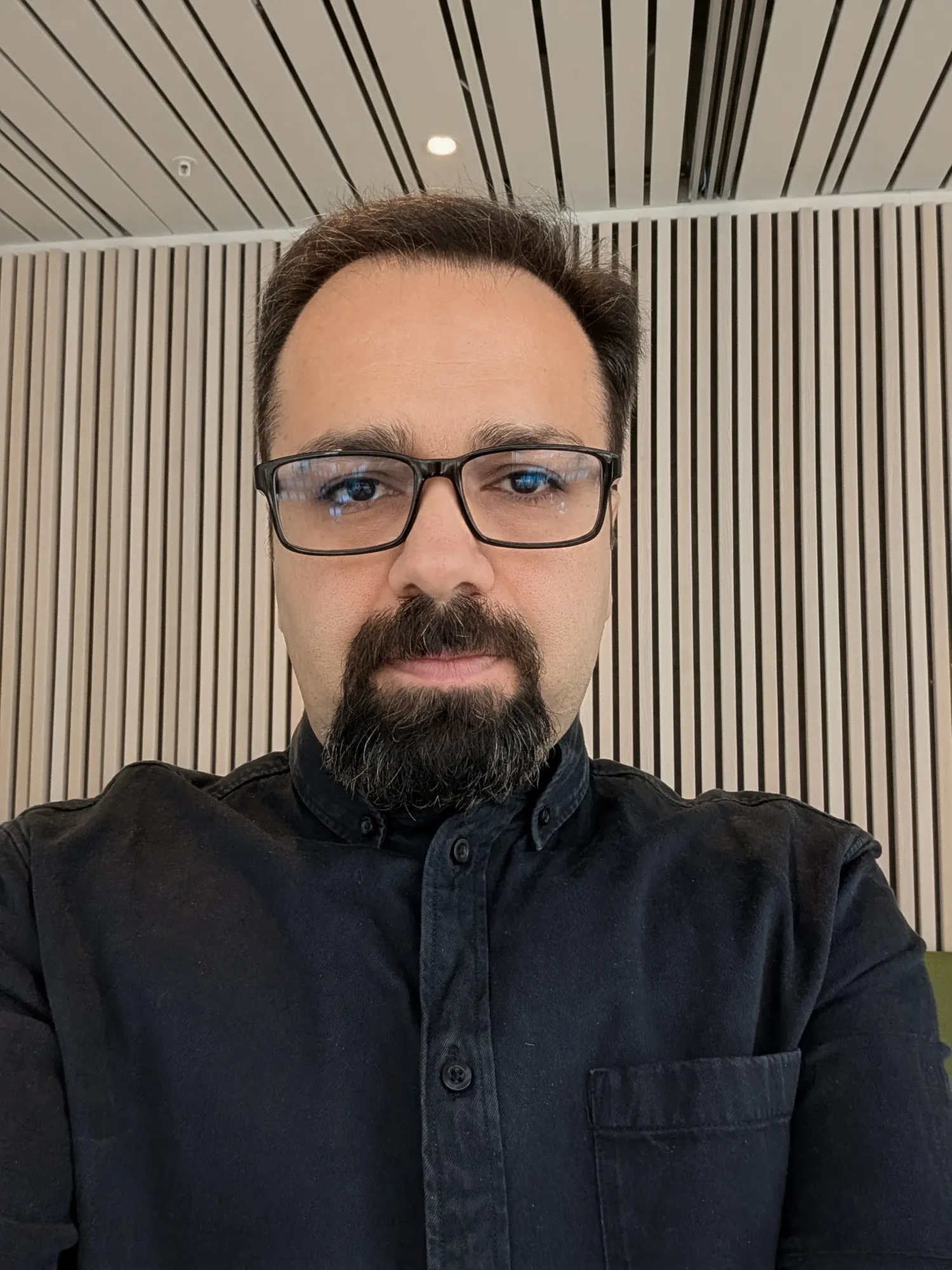
"There are gaps of knowledge about what AI is. Sometimes I encounter the view that this is just another new technology, a natural next step, much like a new machine. But AI is something else. It is more dynamic than a new machine," says Farhad Abtahi.
He emphasises the need for ongoing safety monitoring of AI systems in operation. This perspective is also highlighted by the Swedish Medical Products Agency, which believes that healthcare providers using AI need technical expertise that is closely linked to clinical practice. In guidance for the healthcare sector, a comparison is drawn with hospital physicists, who work in a clinical setting in areas such as radiotherapy. AI is described as a new type of risk, which requires specific expertise to be managed safely.
At Capio St. Göran's Hospital, Karin Dembrower and her colleagues are responsible for continuously monitoring the AI system. On a weekly basis, its accuracy is checked in several ways, including the proportion of recalled patients who actually have cancer. Regular cross-checks are also carried out against national cancer registries.
On one occasion, the clinic upgraded the algorithm to a new version. On another, they replaced the mammography equipment. On both occasions, all images were double-checked by two human radiologists until the algorithm was deemed ready to return to service.
"We handle our AI algorithm with great care," says Karin Dembrower.
The government has ambitious plans for Sweden as an AI nation: the country is set to be among the top ten in the world. The societal benefits are described as significant. The public sector is expected to save billions through increased efficiency. And when healthcare staff, social workers and teachers are freed from time-consuming tasks, more energy can be devoted to human interaction, the government writes in its AI strategy.
But the aim is also for Sweden to be a leading nation in innovation. Regulatory simplification is promised. It will become easier to share sensitive data, the raw material needed to train an AI. And it will become easier to start and run companies that develop AI. Implicitly, it would be preferable for Sweden to sell a smart algorithm to South Korea rather than the other way round.
"We still have some way to go," says Magnus Boman.
New AI centre inaugurated
In late April, the Centre for AI Innovation at Karolinska Institutet was inaugurated. It will serve as a hub for collaboration at local, regional, national and international levels. The aim is to promote research, innovation, application and education in AI and health data.


