
Thousands of years ago, in Central Oregon's high desert, Indigenous communities left evidence of their textile-making prowess. Modern humans learned their story through artifacts - such as cordage, bone needles and animal skins - unearthed over decades and curated in museums, including the University of Oregon Museum of Natural and Cultural History.
Now, archaeologists have used advanced dating techniques to determine the age of these artifacts. What they discovered sheds new light on the complex crafting skills humans had developed as far back as the end of the last Ice Age. Some of the items are over 12,000 years old, including the oldest known piece of sewn hide.
The discovery, published in February in the journal Science Advances, underscores the importance of museum collections to our understanding of humans in the deep past. The UO museum contributed many objects analyzed in the study.
"There's a lot we can learn from what already exists in museums," said study coauthor Katelyn McDonough, director of the UO museum's Great Basin Archaeology field school and assistant professor of anthropology at the UO. "When we excavate something, we are removing it from its original place. And we can never put things back exactly as they were. We should try to learn as much as we can from what has already been excavated."
McDonough and her colleagues analyzed artifacts uncovered from the Cougar Mountain, Paisley, and Connley caves in Southeastern Oregon. Students in Museum of Natural and Cultural History field schools, which give aspiring anthropologists hands-on experience, excavated some of the items examined in the study. McDonough even helped unearth some of the material in the Paisley Caves as an undergraduate student.
"It was a big part of my life and my own journey with archaeology," McDonough said.
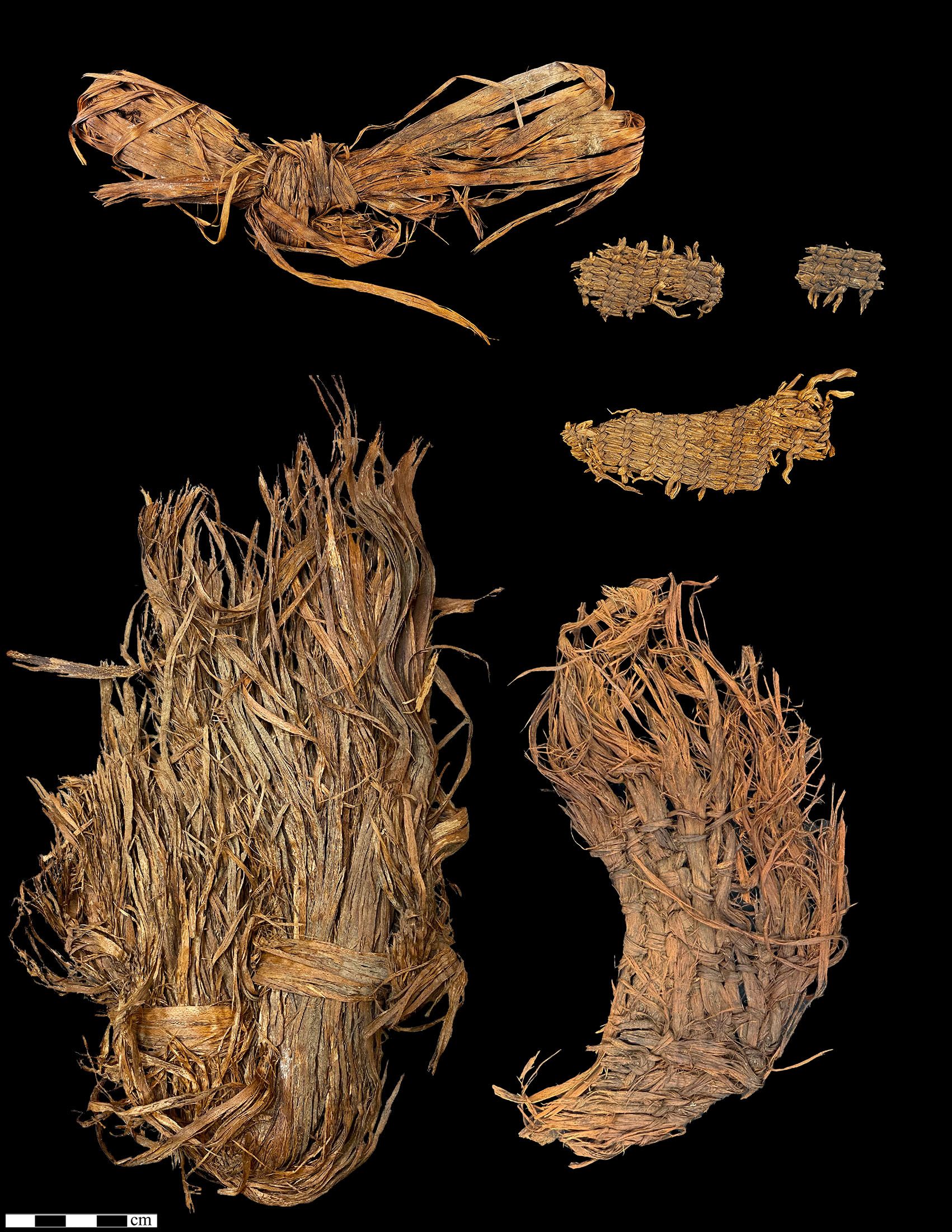
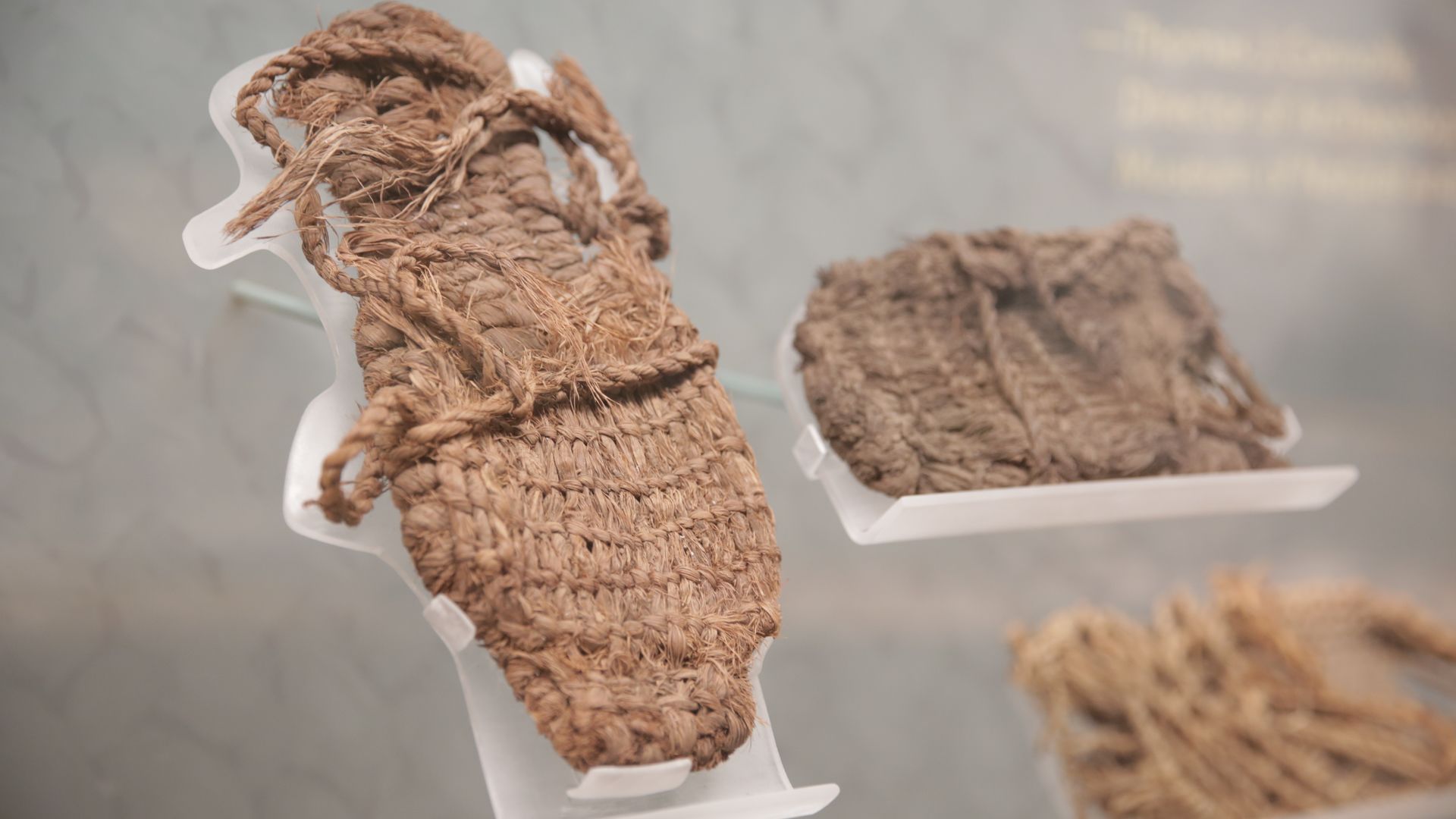
Until now, researchers hadn't found evidence of clothing from the Pleistocene period, roughly 11,000 to 2.6 million years ago. But in Central Oregon's caves, the dry air and sheltered setting preserved dozens of tiny needles, twisted strands of plant cordage, and pieces of animal skins that clearly had been sewn.
The sewn hide analyzed by the team is up to 12,600 years old, and might have served as clothing, footwear, or a small bag. Another important finding of the recent study was identification of 12,000-year-old twined basketry made in a style still used by Klamath and Paiute people in the region today.
The study is one example of how the museum and its field schools are furthering the field of archaeology, McDonough said. Museums like the UO's safeguard objects, fossils and other archaeological materials that researchers and others uncovered before there were means for studying them. These objects hold vital clues to the past, but only recently has technology advanced enough to probe the secrets they hold.
"Museum collections are important because they are curated records of the past that we only have fragmentary views into," said Richard Rosencrance, an archaeologist at the University of Nevada, Reno, who led the study. Rosencrance is also a research affiliate with the UO museum.
The UO opened the Museum of Natural and Cultural History in the 1930s as the Oregon State Museum of Anthropology and Museum of Natural History. Staff began conducting research shortly thereafter and established the first field school in 1937. Over the next 90 years, the museum's researchers contributed a trove of evidence that humans have lived in the Great Basin region much longer than experts once thought.
As the state's repository for archaeological materials, the museum "centralizes a large portion of the state's cultural heritage in one place," Rosencrance said.
Another finding that helped shape researchers' understanding of the past was the discovery of a new stone tool in the Paisley Caves, McDonough said.
Historically, anthropologists have based their estimate of when humans first arrived in the Americas (about 13,000 years ago) on the discovery of long, pointed projectiles, called Clovis points. But work in the Paisley Caves led by Dennis Jenkins, museum researcher and former director of the UO museum's Northern Great Basin field school, revealed another type of stone tool, called the Western Stemmed point. Later work indicated that these tools predate Clovis points and the people who used them.
"Work at Paisley changed our view of technology and even of when people were in the Western Hemisphere," McDonough said.
As the discovery of the oldest known hide shows, the full impact of students' field school research might not become apparent for years into the future. But McDonough recommends the experience for any student interested in an anthropology career.
Without field school, she said, "I would not be where I am today. It really changed the whole trajectory of my life."


