
Key Facts:
- Zero Trust Architecture (ZTA) is reshaping both physical and cyber security, treating every access point - including doors, turnstiles, and gates - as an active verification checkpoint rather than relying on assumed trust.
- Biometric authentication, encompassing fingerprint, iris, facial recognition, vein, and behavioural scanning, has evolved significantly from its 19th-century origins and is now central to modern layered security strategies.
- Layered security combines multiple overlapping safeguards that escalate in sophistication - from speed gates in high-traffic areas through to high-security mantrap portals with dual biometric authentication - to protect facilities such as data centres, telecommunications hubs, and IP repositories.
- Integrating biometric systems within physical security entrances, particularly high-security portals, ensures that only one authorised individual gains entry at a time, preventing tailgating and credential sharing.
- Automated biometric security systems offer cost-efficient, scalable, and continuously updatable 24/7 protection, freeing manned security personnel to be deployed where they are most needed whilst helping organisations meet their legal duty of care obligations.
In today's highly connected environment, security is evolving beyond a one-time check. Across both cyber and physical domains, organisations are rapidly aligning with Zero Trust Architecture (ZTA) – a model built on continuous verification of identity, credentials, and context, rather than implicit trust at the door.
In this model, doors, turnstiles, and gates become active decision points in a wider security ecosystem – where every movement must be authenticated, not assumed.
Ever since police began using fingerprints to identify individuals more than a 100 years ago, biometrics has played an increasingly important role in establishing identity with certainty.
History has it that Francisca Rojas was the first criminal in the world to be caught and convicted using fingerprint evidence. In June 1892, she murdered her two children in Necochea, Argentina.
After attempting to blame an innocent neighbour, police matched her bloody thumbprint to an impression left at the crime scene, forcing her to confess. She was sentenced to life imprisonment for the crime, committed to improve her chance of marrying her boyfriend, who was known to dislike children.
Fast forward to the future, and biometric tracking – of which fingerprints are just one element – gained major momentum this century, with Australia being an early adopter when we rolled out biometric passports in 2005. These feature an embedded microchip that securely stores a range of each individual's unique physical and biographical data to verify their identity.
Moving closer to today, consumer tech saw biometrics enter many people's everyday lives with the introduction of fingerprint scanners on smartphones, followed rapidly by facial recognition on these same devices. (Read Boon Edam's white paper on facial recognition in access control.)
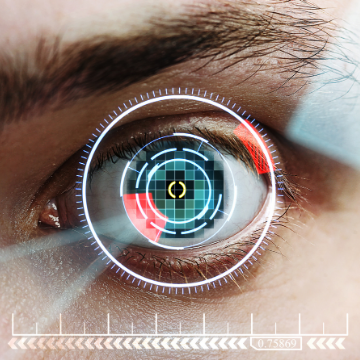
The security community – of which our global entrance security authority company Boon Edam is part – was quick to extend the value of biometrics far beyond simple fingerprinting and into the realm of what might have been considered science fiction a generation ago.
This evolution is closely aligned with ZTA principles, where identity is no longer verified once and then assumed, but continuously validated as users move through physical and digital environments.
Today, advanced systems can use behavioural traits (such as how we type or walk), while Artificial Intelligence can efficiently bundle together unique biometric sets to confound would-be lawbreakers, saboteurs and thieves of our IP, data, public records and other valuable, personal and private property.
This is where the technology becomes valuable to those charged with the design, building, managing, owning and protecting facilities extending from data centres (ranging from small in-house facilities to hyperscale cloud campuses), telecommunications centres, public records repositories, IP centres and the myriad of places where we store our valuables, digital and physical.
Who needs to know this?
We know we are preaching to the converted when we discuss the following points with people at the forefront of entrance technology and layered security. This savvy group typically includes architects, builders, developers, system designers, security and facility managers, data centre managers, OH&S managers – plus the CEOs, MDs and the Risk Managers of major public and private enterprises who have Statutory Duties of Care to observe, particularly concerning infrastructure and data of national importance, such as the personal, financial and IP data held in dedicated data centres and corporate in-house facilities, both of all sizes.
But such is the pace of emerging risks (affirmed by agencies as diverse as ASIO through to Data Centres Australia) that entrance security protections should be understood by all parties involved in the safety of employees, data centres, digital resources IP, and financial and telecommunications information, as well as physical, logistical and warehousing operations.
After all, there is no point in having the best digital security in the world, if malcontents can walk in, or exploit their position within a company to destroy or take what they need. Data and physical security are the complementary sides of the same coin, after all.
This convergence of cyber and physical risk is exactly why Zero Trust Architecture has become such an important framework: it assumes that no access – digital or physical – should be inherently trusted, even inside the perimeter.
So the information that follows is intended to be relevant to everyone who needs to understand further and


