
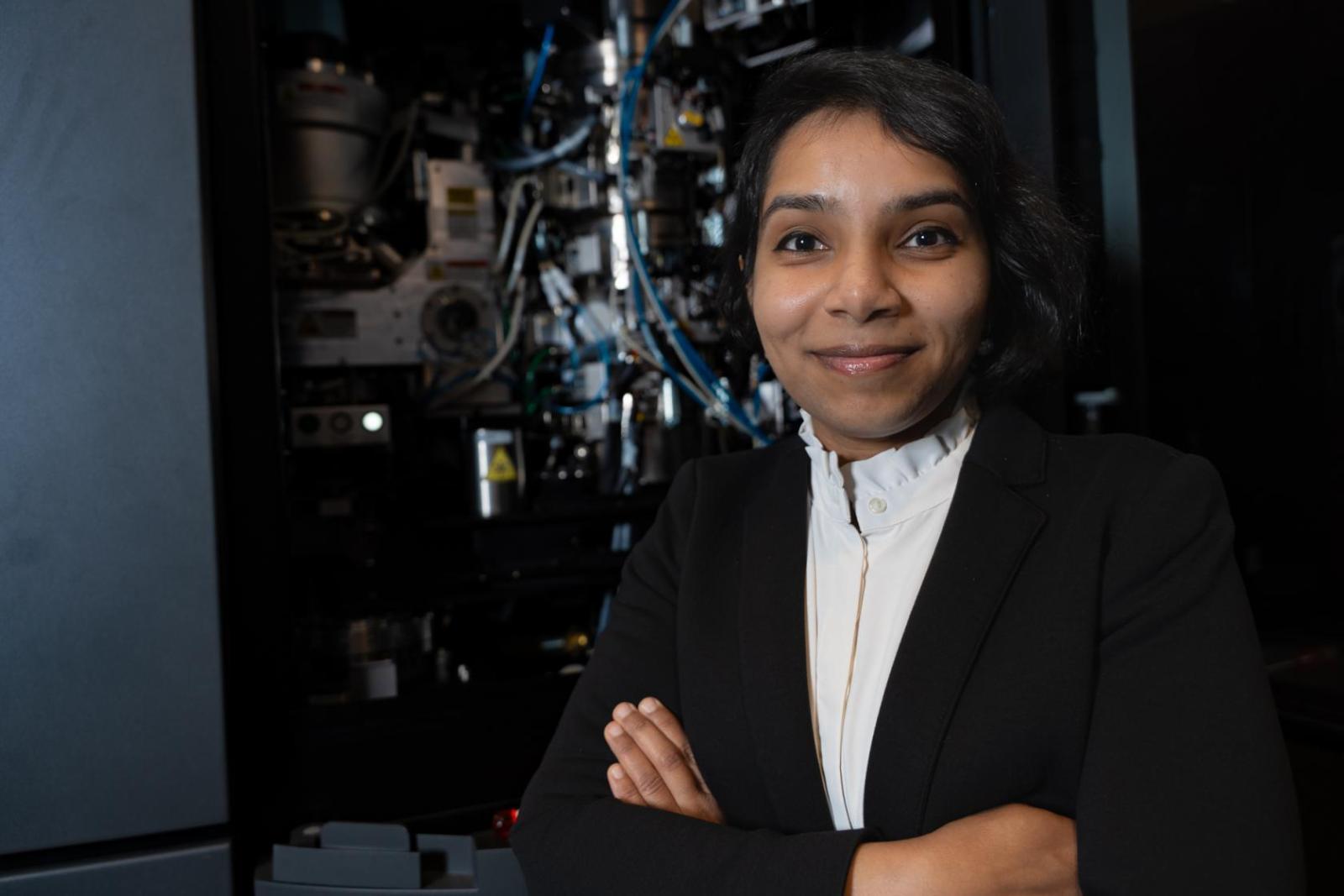
Akanksha Thawani joined Columbia University's Vagelos College of Physicians and Surgeons in January as an assistant professor in the Department of Biochemistry and Molecular Biophysics. Photo by Rudy Diaz / Columbia University Irving Medical Center.
One of Akanksha Thawani's first research projects in college was to reengineer a Dyson vacuum cleaner to be just a little bit quieter. It was a cool project, she says, that had her working through fundamental principles of fluid mechanics and then using her hands to modify the vacuum cleaner. But after the project ended, Thawani, who majored in chemical engineering, felt like she wanted to tackle more transformative challenges in her career.
Now Thawani is now setting her sights on finding the next CRISPR-a gene editor that has revolutionized research and medicine with its speed and precision. Even more powerful editors, Thawani says, are likely to come from the "jumping genes"-mobile bits of DNA that hop around the genomes of plants, insects, and mammals.
Thawani joined Columbia earlier this year as an assistant professor of biochemistry and molecular biophysics in the Vagelos College of Physicians and Surgeons, to find and develop these editors which could spark the next wave of gene therapies.
We recently spoke with Thawani in her new lab, where she told her story:
I grew up really loving math, physics, chemistry, and I picked a major track-chemical engineering-that aligned with all of them. I loved it. But toward the end of my undergrad years, when I thought about what I wanted to do long term, I felt that the research was quite restricted. Chemical engineering is about making processes that are already 95% efficient become 97% efficient. That has massive impacts for industry, but personally it's just not as satisfying.
I didn't like biology in school. We just memorized a bunch of information, whereas physics and math come from first principles. It took me a little while to warm up to molecular biology. I started with very "biophysicsy" work, trying to understand bacterial locomotion. At the end of my PhD, I knew I really wanted to be in academia and have my own lab, so I spent a lot of time reflecting on a research topic to focus on. You have a long career, so you have to find something that will last for a long time.
I wasn't alone in being fascinated by the CRISPR revolution happening at the time, but by the time I was ready to start my postdoc, I felt like the CRISPR field was already saturated.
CRISPR is like a word processor that allows you to change one letter or a few words in a document. That is a huge step forward from what we had before. But if we want to insert a whole paragraph in a specific place and not delete chunks of words from the two edges, we don't have tools for that. Without those tools, we can't fix a genetic disease like cystic fibrosis, where we need to add a long stretch of DNA.
I turned my attention to transposable elements-jumping genes-because they can do what CRISPR cannot: insert large genetic payloads into the genome in a way that's compatible with human cell biology. If we can understand how these elements work, it would unlock the next genome editing revolution."If we can understand how these elements work, it would unlock the next genome editing revolution."
Mobile elements are so fascinating. By definition they want to spread, maybe for their own selfish gain, but they are not simply detrimental to the host and that's why they've been retained.
Retrotransposons are even more mysterious and fascinating, because they have overtaken the higher, eukaryotic side of the evolutionary tree. They jump from one part of our genome to another, first by copying themselves into an RNA, then reverse transcribing that back into DNA (this is where the "retro" name comes from), and finally inserting that DNA into a new location in the genome.
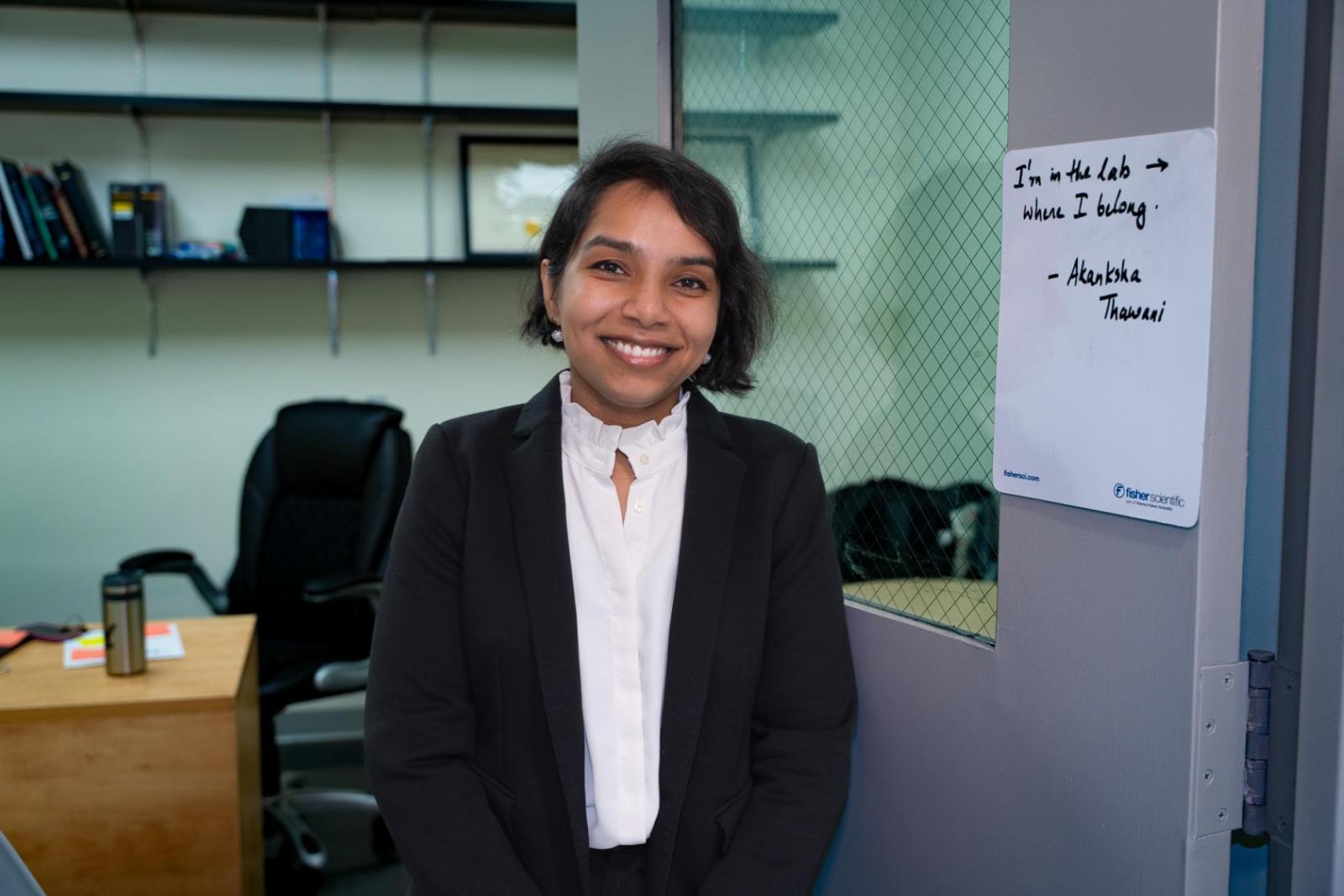
Akanksha Thawani... on the way to her lab. Photo by Rudy Diaz / Columbia University Irving Medical Center.
They've really expanded in mammals, and some mammalian genomes are 75% transposons. For us it's about half; and about a third of our genome comes from a single retrotransposon, called LINE-1. It's crazy to think that a billion of our genome's three billion bases come from this single element that is only 6,000 bases long.
When I realized just how little was understood about these retrotransposons, from a molecular and structural biology perspective, I thought what could be better than to study these cryptic bits of code. Part of the reason we can't engineer them into useful genome editors is that we don't know what we're engineering.
I went to UC Berkeley to make the switch to genomic engineering. It was quite a different language, so I sat in on a couple classes. I was very happy to be sitting among undergrads and trying to learn something!
At Berkeley I worked to uncover how the LINE-1 retrotransposon inserts itself into our genome. It's very difficult to purify the LINE components, which is why it wasn't studied before. I spent months trying to optimize that process. I was told repeatedly it's a foolish project, and honestly, there were days when I thought, would it ever work? And then it did! That's spawned a huge branch of research for the lab, as we try to understand how we can harness LINE-1 biology for clinical use.
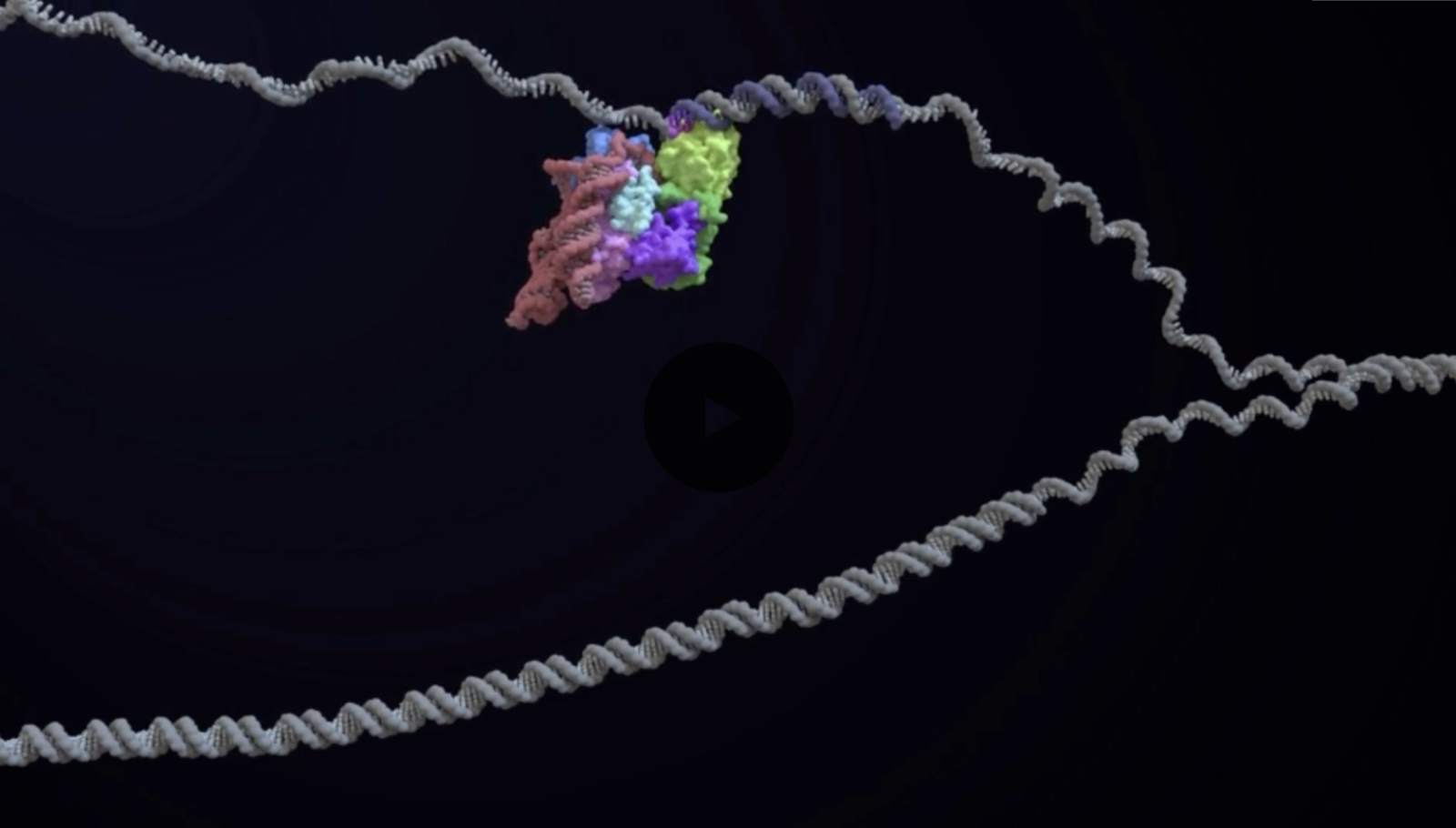
We're also on the lookout for other retrotransposons that could be new genome engineers. Right now, nearly all genome editing methods must trick the human cell into finishing the job. The editors start the process, but they do not end it. There might be elements out there that can complete every step. I think this is where the technology is going, which should prevent many of the mistakes we see now with editing…the half edits and potential fusions with other genes.
I tell my lab that we're uninhibited by scale, which means that, if we can see a path forward, even if we must learn new fields or technology, we can do it. Just today one of my lab members showed me results using a technique that she had to learn herself. She troubleshot all the issues without my help, because it's not something I have experience with. For us, the interesting part is the biology. And as long as we can pick up the tools we need, we can answer the most significant questions.


