
Underground fungi play a central role in the fragile ecosystems of atoll islands. The unique symbiotic relationship between these fungi and rainforest trees is vital for the restoration of nature and ultimately for the survival of coral reefs. New research shows how fungi help nutrients to move between the forest and the sea.
Palmyra Atoll is a remote and uninhabited cluster of small islands halfway between Hawaii and Samoa. Conservationists have recently been working to remove an unwanted intruder from Palmyra: coconut plantations. The aim is to allow the rainforest tree Pisonia grandis to re-establish itself.
Our research reveals a hidden dependency at the heart of an entire ecosystem
However, a new study suggests that simply ridding the atoll of these coconuts may not be enough to restore the forest - it also requires the right fungi.
An international team of researchers has, for the first time, documented the underground network of unique fungi that help maintain the delicate balance of the atoll. The conclusion is that the Pisonia trees may need help to successfully reclaim areas cleared of coconut palms.
"Our research reveals a hidden dependency at the heart of an entire ecosystem," says the study's lead author Charlie Cornwallis, professor of evolutionary biology at Lund University.
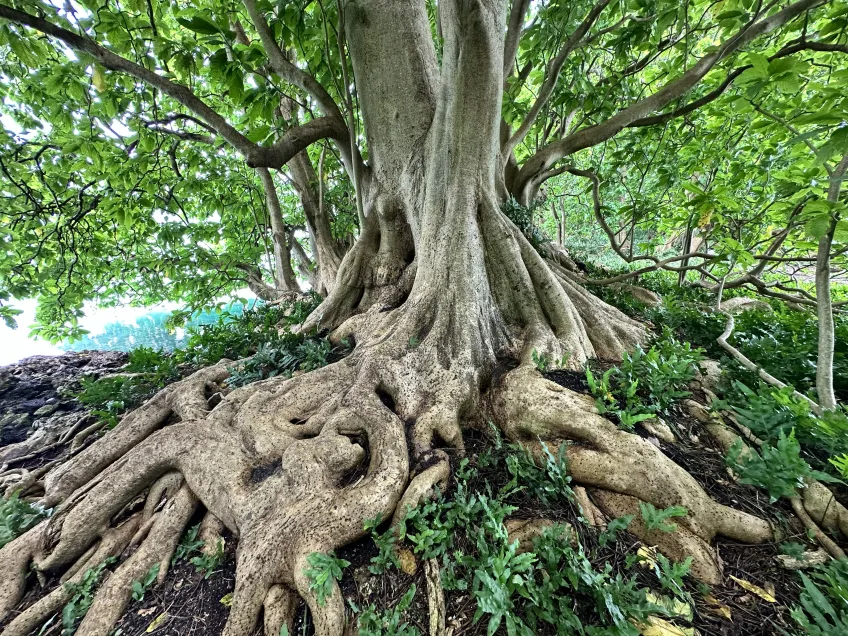
In every soil sample the researchers collected beneath Pisonia trees on 27 of Palmyra's islands, they found rare fungi, including several species never documented before. Because Pisonia trees form the backbone of many of the world's ~600 atolls, these findings suggest that the fungi are central to life in these vulnerable island ecosystems.
The researchers identified so-called fungal hotspots where soil rich in symbiotic fungi can be moved to help new tree seedlings establish themselves. They emphasize that successful reforestation may involve not only introducing native plants but also their native fungi.
If you remove one link in the chain, the whole system could collapse
It is a well-known phenomenon that soil fungi generally interact with trees and other plants through symbiosis. Around the world, mycorrhizal fungi form complex hidden networks that interact with 80 per cent of all vegetation, supplying plant roots with water, phosphorus and nitrogen in exchange for carbon. However, no one has previously studied soil fungi on Palmyra Atoll or how these underground players also contribute to the circulation of nutrients between the forest and the sea.

The study shows that fungi are of fundamental importance to the atoll's overall ecosystem through a remarkable chain of events: the soil fungi help the Pisonia trees, which in turn provide nesting sites high up in the tree canopy for hundreds of thousands of seabirds. The seabird droppings then flow out into the surrounding sea and fertilise plankton, which in turn nourish spectacular coral reefs.
The study thus highlights how dependent ecosystems are on their individual components and that nature conservation is not just about species that can be seen. Documenting underground fungi could be crucial to preventing ecosystems from collapsing, the researchers argue.
"If you remove one link in the chain, the whole system could collapse,'"concludes Charlie Cornwallis.


