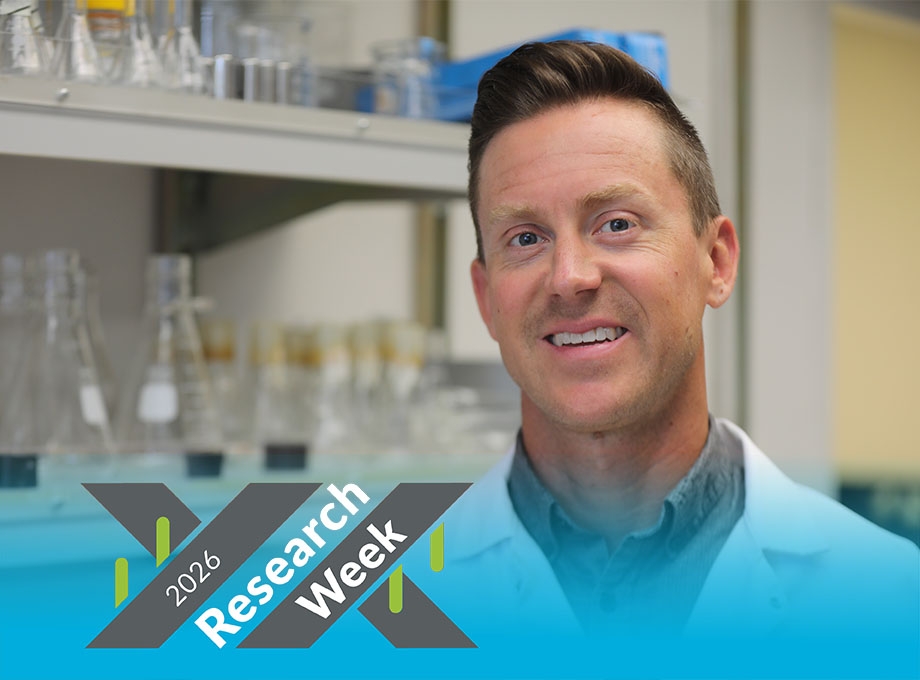
When Jonathon Baker, Ph.D., describes his lab's approach to stopping disease‑causing microbes in the mouth, he resists sweeping solutions.
"Two of the most prevalent human diseases — cavities and periodontal disease — are caused by bacteria," he said. "Our goal is to prevent and treat them with targeted strategies that spare the microbes that actually help keep us healthy."
Broad‑spectrum antibiotics can save lives — but they can also wipe out beneficial microbes and accelerate antimicrobial resistance. Baker's research in the OHSU School of Dentistry focuses on precise interventions tailored to how specific Streptococcus species acquire and use fats — insights that could lead to narrow‑spectrum drugs and even diet‑derived "prebiotics" that disarm pathogens while favoring protective bacteria.
"There isn't a one‑size‑fits‑all answer," he said. "Different species use lipids differently. If we understand those differences, we can design smarter therapies."
From Rochester to nanopore sequencing
Baker, now assistant professor of biomaterial and biomedical sciences, grew up in Rochester, New York, completed his doctorate at the University of Rochester, interned in Pfizer's vaccine group, and trained at University of California, Los Angeles, and the J. Craig Venter Institute before joining OHSU in 2023.
"My background was molecular microbiology of Streptococcus mutans," he said. "In my postdoc I really got into sequencing and bioinformatics, and now I've merged those approaches in my own lab."
That merger pushed him toward an emerging capability: reading chemical modifications on DNA and RNA using nanopore sequencing.
"Nanopore sequencing is revolutionary because it's the first time you can sequence a sample and actually see all the DNA or RNA modifications in one experiment," Baker said. "It brings the cost way down and opens questions we couldn't ask before."
The mouth-body connection
People don't always connect oral bacteria to broader health concerns and disease.
"Cavities and gum disease are bacterial diseases," Baker said. "There's growing evidence that oral microbes are also linked to conditions like colorectal cancer and cardiovascular disease."
He also sees dentistry as a critical front in antibiotic stewardship. Globally, dentists write about 10% of antibiotic prescriptions but are underrepresented in national action plans to combat antibiotic resistance. Baker is part of RESISFORCE, a Norway‑led collaboration spanning five countries to improve stewardship through training, tools and comparative research.
"We're gathering the data needed to guide more consistent, evidence‑based prescribing," he said.
A precision strategy
Baker was nominated for a 2025 OHSU Faculty Excellence and Innovation Award, which is aimed at early career faculty at OHSU. His nomination materials lay out a three‑part plan to turn microbiome science into targeted therapeutics.
First, he said it is important to map the landscape of the genomes.
"There are nearly 100,000 Streptococcus genomes out there," he said. "We're building a pangenome of their lipid machinery to pinpoint vulnerabilities: what's shared, what's unique and what matters for disease."
Second, his lab wants to test context, not just genes. His lab uses mouse models across sites — including skin, throat, lung and blood — to learn where lipid‑targeting antibiotics can be repurposed and which new targets actually control virulence.
"We're interested in where existing drugs will work better, and where we need new ones," Baker said.
Finally, he aims to create nutrients that encourage helpful bacteria to grow and crowd out the harmful ones.
"If a fatty acid feeds a beneficial oral bacterium but starves a pathogen, that's a win," he said. "We're testing safe, diet‑derived lipids in complex biofilms to see if we can push the microbiome toward better health."
The larger context for Baker's research is sobering: The World Health Organization estimates that antimicrobial resistance could lead to nearly 10 million deaths per year by 2050.
"That's why we need targeted strategies that don't burn down the microbiome to kill one bad actor," Baker said.
Technology as a catalyst
Baker's team helped pioneer methods to assemble multiple complete bacterial genomes directly from saliva with nanopore sequencing and has extended the platform to bacterial RNA, opening windows on gene regulation and epigenetics in pathogens.
His collaborative network at OHSU includes microbiologists Justin Merritt, Ph.D., and Jens Kreth, Ph.D., and biomaterials scientist Carmem Pfeifer, Ph.D.
"The Pfeifer Lab designs new dental biomaterials to discourage harmful biofilms, and our lab quantifies which microbes grow and why," Baker said. "It's a great connection between materials science and microbiology."
Pfeifer said Baker has made a huge impact in just a short period of time since joining OHSU.
"His work with nanopore sequencing allowed us to elucidate biofilm diversity on the surface of materials, which has been instrumental in proving the concept that our new chemistries are able to select for non-virulent bacteria," she said. "This has implications for biomedical implantable materials, ubiquitous in clinical practice."
At heart, Baker is motivated by puzzles — how a single chemical bond in a fatty acid changes a microbe's ability to cause disease; how a regulatory RNA tweak makes a biofilm more resilient; and how to nudge a body's ecosystem toward better health.
"I'm driven by using leading‑edge technology to solve problems in microbiology," he said. "If we can learn which Streptococcus species use which lipids, we can design interventions that promote the good and suppress the bad."