
Over the course of natural history, animals and plants have evolved to adapt to an ever-changing environment and increase the chances of survival. So, too, has our own DNA.
A new grant from the Alfred P. Sloan Foundation, will allow Charles Carter, PhD, a professor in the UNC Department of Biochemistry and Biophysics, to shed more light on the origins and evolution of the genetic code.
"This award couldn't have come at a better time," said Carter.
The Importance of Proteins in Genetics
Carter's team has been studying the evolutionary history of a protein family-the aminoacyl-tRNA synthetases-to work out their key role in building the genetic code.
The genetic code, much like an instructional booklet, tells organisms how to interpret information in genes and produce proteins. Proteins play key roles in controlling metabolism, hormones, muscle structure, and other processes that can mean the difference between life and extinction.
Aminoacyl-tRNA synthetases belong to a unique protein family that is tasked with translating the genetic code to make all proteins in the human body, including themselves. The complex proteins can be divided into two different classes based on their structures and the amino acids they work with.
A Way to Go Back in Time
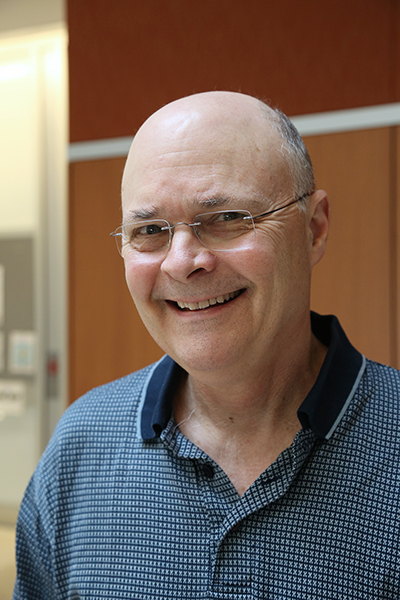
Charles Carter, PhD
Carter has spent much of his career designing models that look and act like ancient synthetases. Over the years, the lab's research has revealed that tRNA synthetases of earlier natural history were probably much shorter compared to modern synthetases.
"We showed in the first two decades of this century that very small excerpts from both modern families, termed urzymes, retain the necessary energetic activities to serve as rudimentary synthetases," said Carter. "More recently, we showed that these synthetase urzymes are very small and have other specialized properties that make them excellent experimental models for ancestral synthetases."
But many retain doubts about the significance of Carter's work. That is why in 2023, Tiger Tang in the Carter lab worked towards-and achieved-a fundamental discovery. He showed that E. coli, a microbe that has been on Earth for 20-30 million years, was able to turn a very long synthetase into one shorter than any seen before.
Compared to Carter's previous models, Tang's E. Coli model could translate genetic code much more efficiently. It was also the first time that researchers proved that these ancestral sequences could be resurrected by living cells.
Work by Carter's collaborators, supported by the Alfred P. Sloan Foundation, essentially changed how evolutionary biologists understand the process of genetic evolution. In May 2025, Carter's associates in Auckland, New Zealand proved that new species do not generally result from gradual changes but instead result from explosive changes.
The findings, published in Proceedings of the Royal Society B: Biological Sciences, explained that these rapid genetic changes led to the evolutionary diversity of the tRNA synthetases, as well as the evolution of marine organisms like octopus and squid, and even that of Indo-European languages.
It was named one of the "Biggest Breakthroughs in Biology" for 2025 by Quanta Magazine, as it explained what might be responsible for quick, rapid evolution of DNA code.
Mapping the Co-Evolution of Aminoacyl-tRNA Synthetases
Carter and team, with further support from the Alfred P. Sloan Foundation, now aim to understand how two classes of aminoacyl-tRNA synthetases may have co-evolved from opposite strands of the same ancestral genes.
Researchers will now create a database comprised of protein sequences from six different families of aminoacyl-tRNA synthetases and a series of reconstructed ancestral sequences to map out the evolutionary history of the genetic coding table.
"In this way, we hope to demonstrate that such a simple system of synthetase urzymes and their cognate tRNAs could have constituted a system with sufficient specificity to be selective and hence evolve into the contemporary genetic code, making natural selection possible," said Carter.


