
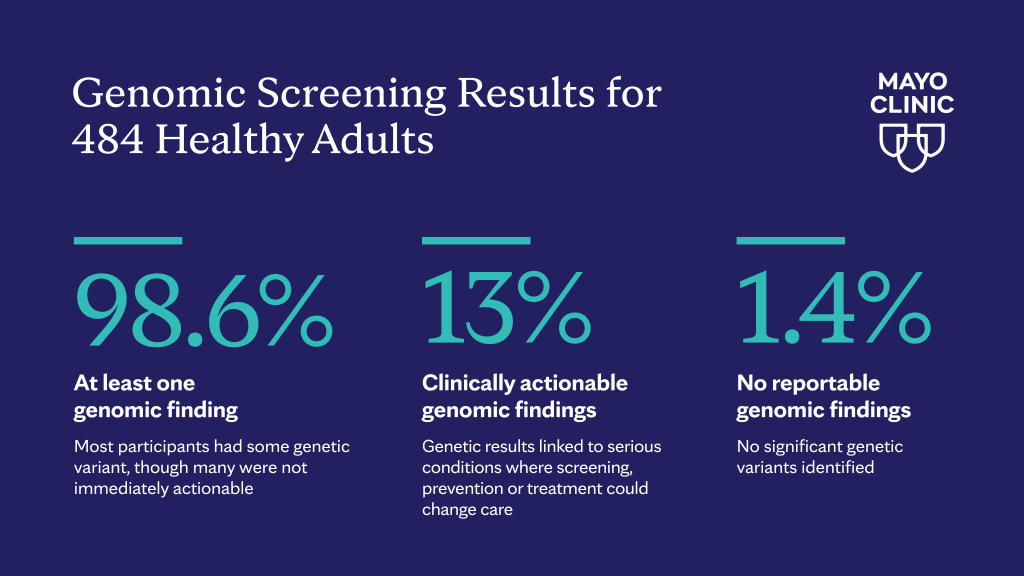
When Mayo Clinic researchers sequenced the genomes of 484 seemingly healthy adults, they found that about 13% carried a serious, previously unrecognized genetic risk - conditions those patients did not know about and that standard care would likely miss.
Nearly all participants, 98.6%, had at least one genetic finding, and for most, the results called for monitoring. The study, published in Genetics in Medicine, also takes a closer look at what it takes to turn those findings into the proper follow-up care.
Among the 13%, the actionable findings pointed to serious risks, including hereditary breast and ovarian cancer; Lynch syndrome, linked to colorectal cancer; cardiomyopathy; long QT syndrome; and amyloidosis.
"These are people who would not have been identified through traditional testing based on symptoms or family history," says Dr. Konstantinos Lazaridis, the Carlson and Nelson Endowed Executive Director of the Center for Individualized Medicine and senior author of the study. "This study helps define the blueprint for integrating genomic insight into care at scale - turning information into decisions that can change the trajectory of disease."
From discovery to care
Identifying the risk, it turns out, is the easiest part. Acting on it is far more complex. Nearly every case required clinical interpretation, documentation and communication. This work fell largely to genetic counselors, who reviewed results, prepared individualized summaries and helped guide next steps for patients and care teams.
"Genetic counselors are often the first people to share this kind of information with patients," says Jessa Bidwell, a certified research genetic counselor and first author of the study. "There can be surprise, anxiety, devastation, and at times even relief. Our role is to meet people in that moment and help them understand what their health risks might be, based on the genetic finding, and their personal and family history."
Most participants with actionable findings followed through, completing referrals and connecting with primary care specialists. Yet fewer than half had a documented conversation with a primary care professional after receiving results - underscoring how difficult it remains to integrate genomic findings into routine care.
The study positions predictive genomic screening as both a clinical opportunity and a systems challenge. The science exists. Researchers and clinicians are still building the infrastructure to act on it consistently.
At Mayo Clinic, that infrastructure is beginning to take shape through an initiative called Precure. Genomic screening is one part of that initiative, which aims to detect disease earlier by combining genetic data with other biological signals.
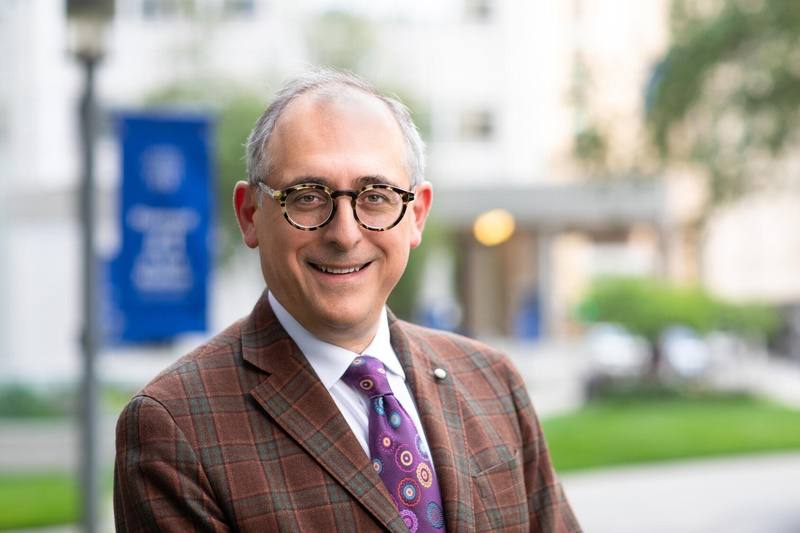
"Precure is one example of a moonshot for human health at Mayo Clinic," says Dr. Lazaridis, who leads the initiative. "It reflects Mayo Clinic's commitment to move medicine beyond treatment and toward lasting wellness." - Dr. Lazaridis
Predicting disease before it begins
Most diseases don't arrive without warning. They begin with small shifts in genes, molecules, proteins and immune signals that develop over time, often years before symptoms appear.
Precure is Mayo Clinic's enterprise-wide effort to detect those early signals and intervene sooner. Powered by advanced computing and artificial intelligence (AI), the initiative currently focuses on five organ systems - the brain, heart, kidneys, liver and lungs - studying conditions such as Alzheimer's disease, heart failure and chronic liver disease to better understand how they emerge and progress.
The work draws on expertise from across Mayo Clinic and is supported by Mayo Clinic Platform, which brings together large-scale patient data and advanced computing to enable scientists to study disease across populations.
"Precure is one example of a moonshot for human health at Mayo Clinic," says Dr. Lazaridis, who leads the initiative. "It reflects Mayo Clinic's commitment to move medicine beyond treatment and toward lasting wellness."
Precure is part of Mayo Clinic's Bold. Forward. strategy to Cure, Connect and Transform healthcare. The genomic screening study demonstrates what this looks like in practice: science that does not wait for disease to announce itself, and a system already being built to act on what it finds.
For a complete list of authors, disclosures and funding information, review the study.


