
Key points
- Nallawilli Bunjil is an Indigenous-led technology company using drones and data modelling to support environmental land management.
- Through CSIRO's Kick-Start program, the company collaborated with researchers to build a machine learning model capable of detecting and classifying vegetation from drone imaging data.
- A follow-on collaboration with CSIRO is underway, with Nallawilli Bunjil developing a hyperspectral algorithm to detect early signs of plant stress and land health change.
The alpine Country of the Jaithmathang Nation is under growing pressure.
Climate change is reshaping the region's ecosystems, extreme weather events are becoming more frequent, and vast, remote landscapes are increasingly difficult to monitor with conventional tools.
In Jaithmathang lore, Bunjil – the wedge-tailed eagle and Great Creator – watches over Country from the sky. The responsibilities borne of this lore endure today: to care for Totems, and to pass a healthy Country to future generations. A Totem – whether an animal, plant or landform – is kin; to protect a Totem is to safeguard the spiritual and ecological health of the entire nation.
From this story Nallawilli Bunjil takes its name and purpose. Founded to protect the sacred Totems and biodiversity of Jaithmathang Bimble – the Victorian High Country – the company trades as BunjilView , a contemporary 'eye in the sky'.
Today Nallawilli Bunjil is expanding to work with Traditional Owners and land managers across Australia.
Using drones, machine learning and Indigenous Knowledge, Nallawilli Bunjil monitors, protects and improves the health of Country, while creating new tools, jobs and economic futures for Indigenous communities. 
This work is anchored by a partnership with the Pauline E. McLeod Foundation , ensuring communities, Country and future generations remain at the centre of every project.
Unlocking the power within the data
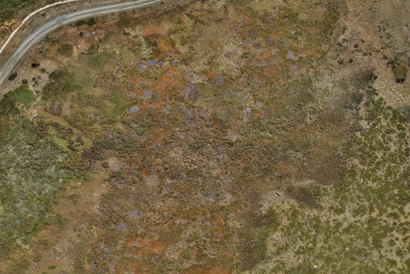
Nallawilli Bunjil was already capturing high-quality aerial data and producing visually striking three-dimensional models of the land.
The problem, as Chief Commercial Officer Andrew Bassford puts it plainly, was that these were essentially impressive images – rich in detail but limited in actionable intelligence.
"What the team needed was a way to extract deeper meaning from their data: to move beyond what the land looked like and begin to understand what it was telling them," Mr Bassford said.
"That meant combining multiple sensors that capture colour, heat and structure and developing machine learning workflows capable of translating raw data into land management insights."
The challenge was that Nallawilli Bunjil had the vision and the data, but not yet the in-house capability to define a starting point. They turned to CSIRO's Kick-Start program for help.
From ideas to actionable analytics
Kick-Start offers dollar-matched funding for start-ups and small to medium enterprises to undertake research and development projects with CSIRO researchers – from product prototyping and testing through to technical problem-solving. For Nallawilli Bunjil, it provided something equally valuable: clarity.
The program connected the company with Dr Nariman Habili, a researcher from CSIRO, who worked alongside the Nallawilli Bunjil team to define the problem, identify a practical starting point and translate concepts into a working vegetation detection model.
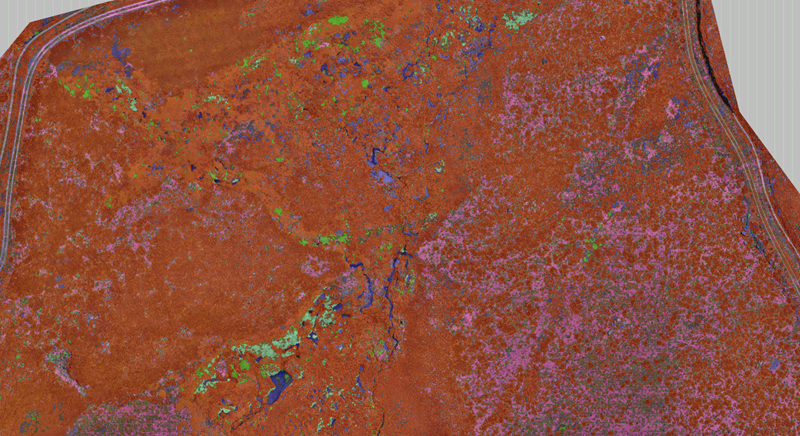
"From a technical perspective, the collaboration was about turning complex sensor data into something that could produce real insight. We developed a computer vision pipeline that could detect and classify vegetation from drone data, turning visually rich images into actionable outputs," Dr Habili said.
"What made the project distinctive was the close, iterative process of translating an initial vision into a practical, deployable model. In doing so, we established a strong foundation that can be extended to hyperspectral analysis (reading hundreds of light wavelengths) in future work."
The project was initially scoped for six months but extended to 18 months as the team worked through the complexities of translating raw drone imagery into a working model.
The result was a computer vision model that could identify and classify vegetation types from drone imagery, turning beautiful pictures into the kind of structured data land managers can act on.
"Kick-Start helped us clarify our goals, identify where to start, and translate concepts into practical solutions. CSIRO provided technical guidance, mentoring, and logical, grounded advice – helping us move from ideas to action, integrating cultural knowledge with technology," said Mr Bassford.
A canary in the mine for Country
With the trained model now being refined and transferred to Nallawilli Bunjil's in-house platform, the team is already planning the next evolution.
A second collaboration with CSIRO is underway, focusing on improving the technology so it can detect subtle changes in plant health – not just identify vegetation from images, but see signs of stress before they're visible to the human eye.
"We will be improving accuracy, and enabling early insights into plant health, stress, and early climate-driven change as a 'canary in the mine' for land management and biodiversity," explained Mr Bassford.
The longer-term vision extends beyond the Victorian High Country. Having proven the model in Jaithmathang Country, Nallawilli Bunjil is already expanding its approach to other regions across Australia – applying the same blend of geospatial precision and Indigenous Knowledge to protect sensitive landscapes and the communities that depend on them.
Advice for businesses considering Kick-Start
Beyond the Kick-Start program, the collaboration also opened the door to the broader CSIRO ecosystem, allowing Nallawilli Bunjil's work to influence tools well beyond the original project. This collaboration included a partnership with Terria – a spatial data platform originally developed by CSIRO and spun out in 2024; and an integration with Spark , a CSIRO-developed AI-toolkit for fire prediction and analysis.
"What started as a single technical collaboration quickly grew into something much bigger. Working with CSIRO didn't just help us solve one problem – it connected Indigenous-led innovation into a wider ecosystem, allowing our knowledge and tools to influence national platforms and support real-world outcomes well beyond a single project."
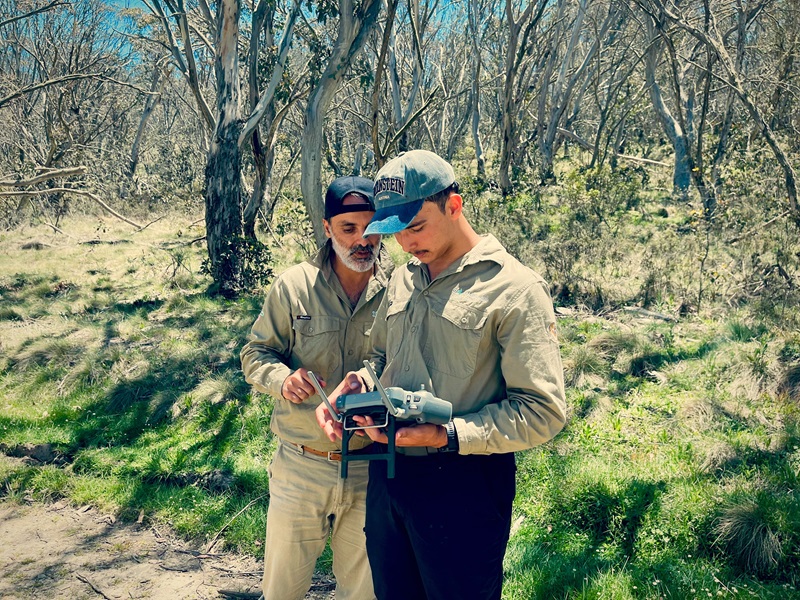
For Nallawilli Bunjil, the value of the program extended well beyond the technical outcomes – and Mr Bassford's advice to others considering Kick-Start is straightforward.
"Our advice to anyone considering the Kick-Start program is to embrace the mentoring and depth of CSIRO expertise for problem-solving, as our journey transformed an idea into reality and equipped us to plan the next evolution of our detection algorithm," he concluded.


