
Key points
- As Australia aims for 82 per cent renewable energy by 2030, large-scale solar farms play an essential role in the transition.
- Their rapid deployment is an Australian success story, and collaborative solar research is advancing their next-generation development.
- Researchers from Australia's national science agency are developing innovative solutions to address these challenges.
Globally, the amount of power solar PV panels can produce in ideal conditions is tipped to surpass coal next year, according to the International Energy Agency .
In Australia, large-scale solar farms are projected to supply nearly 25 per cent of our electricity by 2050.
That's a long way from the nation's first utility-scale solar farm, which officially opened in Western Australia in 2010, providing up to 10 MW of clean electricity generation.
CSIRO research is ensuring renewable technology works alongside other vital industries, like agriculture, while also improving its efficiency and effectiveness through innovation in design and materials, and the integration of AI.
So, what does the future look like for large-scale solar farms as they continue to transform our energy landscape?
Modelling a better deal for agriculture
Solar farms enjoyed the highest level of acceptance of key renewable technologies among the wider Australian public, according to a 2024 survey by CSIRO .
But people living out of town (in rural areas) were more likely to reject living near renewable energy infrastructure, and those surveyed reported low understanding of its impacts.
Environmental impacts and concerns about waste disposal when developments were decommissioned were the two highest concerns about solar farms. There were also significant concerns about devaluing nearby properties and less land availability for farming and other land uses.
New spatial modelling by researchers from CSIRO and the University of Western Sydney has revealed how impacts on agricultural profitability can be minimised.
Researchers modelled 1,568 scenarios, quantifying trade-offs between solar power yield and agricultural profitability by considering factors like solar farm design, performance and distance from renewable energy infrastructure

CSIRO research scientist Dr Stephen Snow explained that impacts on prime agricultural land from large-scale solar are largely avoidable.
"When siting is done strategically, high-value irrigated land and intensive cropping zones require almost zero conversion to solar," Dr Snow said.
"Instead, the land most likely to host solar is lower-profitability grazing country, where hosting solar can represent reliable, drought-proof income."
By converting marginal grazing areas instead of prime agricultural land, the impact on national agricultural profit drops from $29 million per year (or 0.03 per cent of Australia's agricultural GDP) to just $2.6 million per year (or 0.003 per cent of Australia's agricultural GDP). That's a 90 per cent reduction, while generating the same amount of energy with minimal cost effects.
"In suitable areas, grazing livestock like sheep under solar panels could reduce the impact even further: farmers receive compensation for harvesting the sun, while their herds and pasture are shaded," Dr Snow said.
Land use sits within a broader picture of how solar farms are designed and run.
Planning large-scale solar farms for peak performance
The performance of large-scale and utility-scale solar farms depends on more than size; it also depends on layout and operation of the system for consistency and efficiency.
Experimental scientist Kenrick Anderson is working on planning of large-scale farms and next generation photovoltaics and said advanced models were helping grid operators better understand how a solar farm performs in real time and over its full lifespan.
"Being able to better predict the output of a solar farm is incredibly important," Mr Anderson said.
"It means you can operate with confidence, rather than holding capacity back because of uncertainty."
The modelling tools can be applied at every stage – from planning solar farm layouts to maximise output per hectare, to perfecting the tracking system for the PV panels – so the panels are optimally positioned as the sun moves across the sky.

With the aid of this kind of modelling, solar farms can run closer to their true capability, delivering more power from the same infrastructure while improving reliability for the grid.
Forecasting and batteries
The same modelling is critical when paired with large-scale batteries, which are becoming increasingly common on solar farms. During peak sunlight hours when many facilities must curb electricity generation due to grid constraints, batteries are now widely used to store excess energy for later use, said Mr Anderson.
More accurate output predictions using models are helping operators develop strategies that ensure batteries are adequately charged and able to discharge energy to the grid when demand peaks in the late afternoon and evening.
"These models can ensure batteries are available when they're needed most," he said.
PV design for optimal energy
Large-scale solar farms are inevitably exposed to the elements that affect performance.
"PV panels work better when they are cooler, so understanding wind patterns can inform solar panel orientation in a solar farm," Mr Anderson said.
Advanced computational fluid dynamics modelling to better understand how wind, heat and dust move across large solar arrays is helping shape how future solar farms are being built and operated.
With hundreds of thousands of solar panels making up large-scale PV projects, operators face the challenge of ensuring the panels remain clean from dirt and dust to perform at their capacity and to absorb as much sunlight as possible.
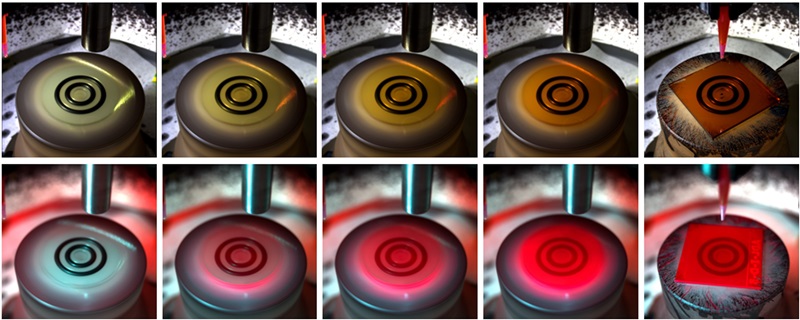
"We are developing new self-cleaning coatings that don't sacrifice the anti-reflective technology crucial for PV Panels," Mr Anderson said.
"Thin, film-like coatings that repel dirt and dust, they also allow the panels to absorb energy at a higher rate."

That takes us down to the cell level and CSIRO's partnership with the Australian Centre for Advanced Photovoltaics (ACAP) which includes work on silicon-perovskite tandem photovoltaics.
These tandem cells are expected to deliver at least a 5 per cent efficiency gain over existing single junction silicon technology. At scale, that improvement would enable a solar farm to generate enough additional electricity to power around 1,000 more homes using the same land area as a 100-megawatt solar farm today.
Maintaining solar farms
The work doesn't stop once solar farms are built. In fact, inspecting and maintaining the panels is essential to keeping their energy output high. But the cost, safety risks and labour of doing this manually are significant.
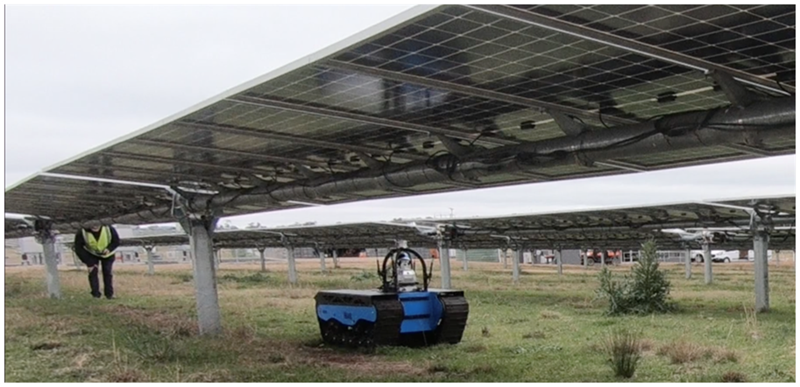
To address these challenges, CSIRO researchers are bringing AI and robotics expertise to solar farms, using AI-powered robots that can autonomously navigate large-scale sites, mapping and moving across rapidly changing terrain.
The robots safely and efficiently build precise maps to digitise site conditions and use AI to develop a holistic understanding of the site, that would otherwise take weeks of manual inspection.
Equipped with cameras, Light Detection and Ranging (LiDAR) and sensors, the robots can detect issues ranging from dust build-up and bird droppings to damaged wiring, loose components and dangerous hotspots within panels.
"Hotspots decrease the efficiency of a PV panel over time because of the electrical and thermal imbalance they create. Solar farms benefit from early hotspot detection," Mr Anderson said.
By logging faults precisely on a digital map of the farm, the robots enable skilled workers to target only the panels that need attention, reducing maintenance costs, improving safety and helping solar farms deliver more efficient and reliable electricity output.
Dr Peyman Moghadam, Senior Principal Research Scientist with CSIRO, said the long-term vision is to move beyond inspection toward site intelligence.
"We a not just collecting images or 3D data. We are building the foundations for intelligent solar operations, where data from robots, fixed sensors and field systems get fused to support earlier warning, better predictive maintenance decisions and more resilient performance over time," said Dr Moghadam.
Smart and sustainable
The rapid deployment of solar is an Australian success story, and collaborative solar research is advancing their next-generation development.
Smarter solar operations are shaping how we run systems today – but they also raise important questions about sustainability tomorrow. The relative newness of large solar farms presents ongoing research opportunities regarding their durability and longevity while their scale ultimately brings large challenges associated with end-of-life solar PV panels and solar waste management.
As we become accustomed to fields of solar panels in the landscape, future innovation will help shape a more efficient, reliable and sustainable renewable energy sector.


