
Chalk-stream salmon should be officially classified as a sub-species, new research suggests.
Scientists from the University of Exeter and INRAe (France) carried out detailed genetic testing of salmon from 42 rivers in England, Ireland and France - including fish from chalk streams in southern England and northern France.
They found that salmon from chalk streams are closely related to each other - and genetically distinct from salmon in nearby non-chalk rivers.
The researchers propose that chalk-stream salmon could be formally recognised as a sub-species of Atlantic salmon, with the scientific name Salmo salar calcariensis (meaning Atlantic salmon from a limestone region).
With salmon populations in decline due to multiple factors, the researchers say sub-species status could boost targeted conservation.
"About 85% of the world's chalk streams are in England, and just six of these contain significant populations of salmon," said Professor Jamie Stevens, from the University of Exeter.
"These streams - the Frome, Piddle, Avon (Hampshire), Stour, Test and Itchen - begin in agricultural areas, which brings a threat from pollution, and pass through major urban areas such as Southampton, Portsmouth, Bournemouth and Poole.
"Now we know chalk-stream salmon are genetically distinct, we see the vital importance of protecting these habitats, along with chalk streams in northern France."
Chalk streams - which originate in chalk hills and are generally wide and shallow with clear water - are fed by underground aquifers, have steadier flow rates and more stable temperatures than most other rivers, and are less acidic.
The new research builds on a 2018 study from the same Exeter team, and assesses salmon genetic diversity in much finer detail, while comparing salmon from English and French chalk streams for the first time.
Of the fish sampled in the study, chalk-stream salmon accounted for more than 6% of all genetic diversity in Atlantic salmon.
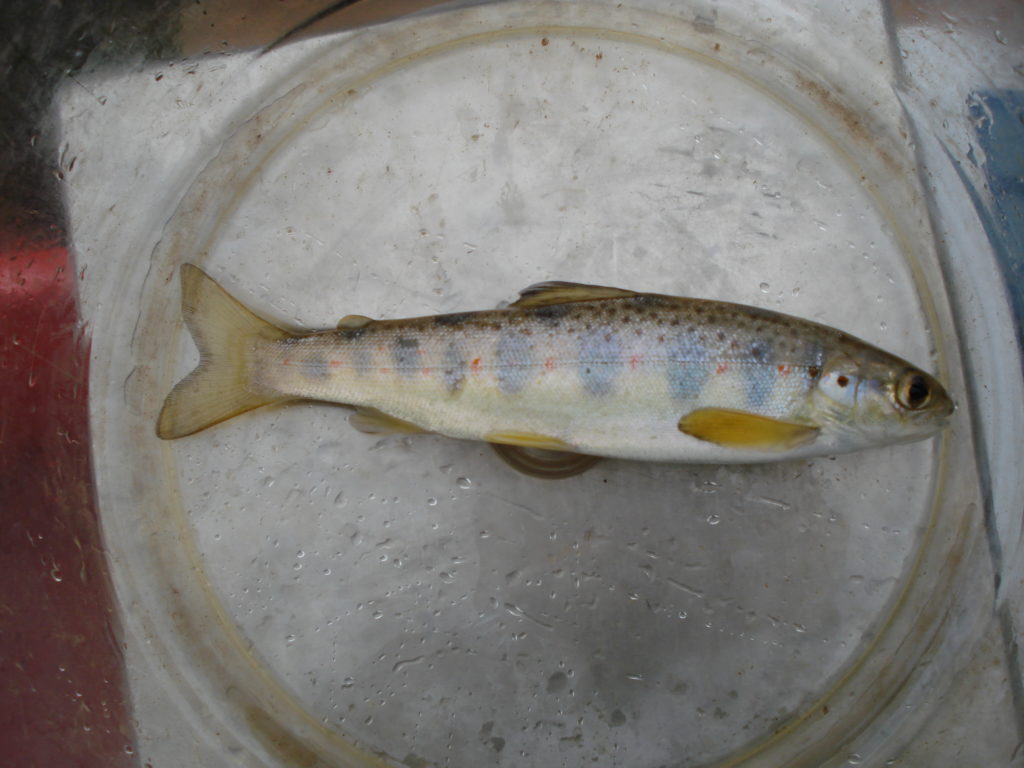
"Species benefit from genetic diversity to make them resilient to environmental change - especially with the rapid changes being driven by human activity," Professor Stevens said.
"Our findings reveal numerous small differences between chalk and non-chalk salmon across the genome, suggesting independent evolution over a long period."
Existing evidence suggests many British rivers were covered by ice during the last Ice Age, while the chalk streams of southern England were not - meaning salmon populations there may have persisted, while more northerly rivers would have been repopulated once temperatures rose.
The study found almost no evidence of salmon "straying" from chalk to non-chalk streams, or vice versa.
Like other salmon, chalk-stream salmon spend long periods at sea but return to rivers to breed.
Many salmon return to the exact river where they were born, often giving rise to distinct, river-specific genetic profiles, but this may not be the case for chalk-stream salmon.
Instead, their distinct "chalk signature" is more uniform, suggesting the possibility that they may return to one of several chalk streams near their birthplace.
The majority of fish in the study were caught as fry or juveniles during routine management surveys by the Environment Agency, Natural Resources Wales, Inland Fisheries Ireland and the Game and Wildlife Conservation Trust.
The study was part of the SAlmonid MAnagement Round the CHannel (SAMARCH) project, part funded by the EU Interreg VA France (Channel) England programme.


