
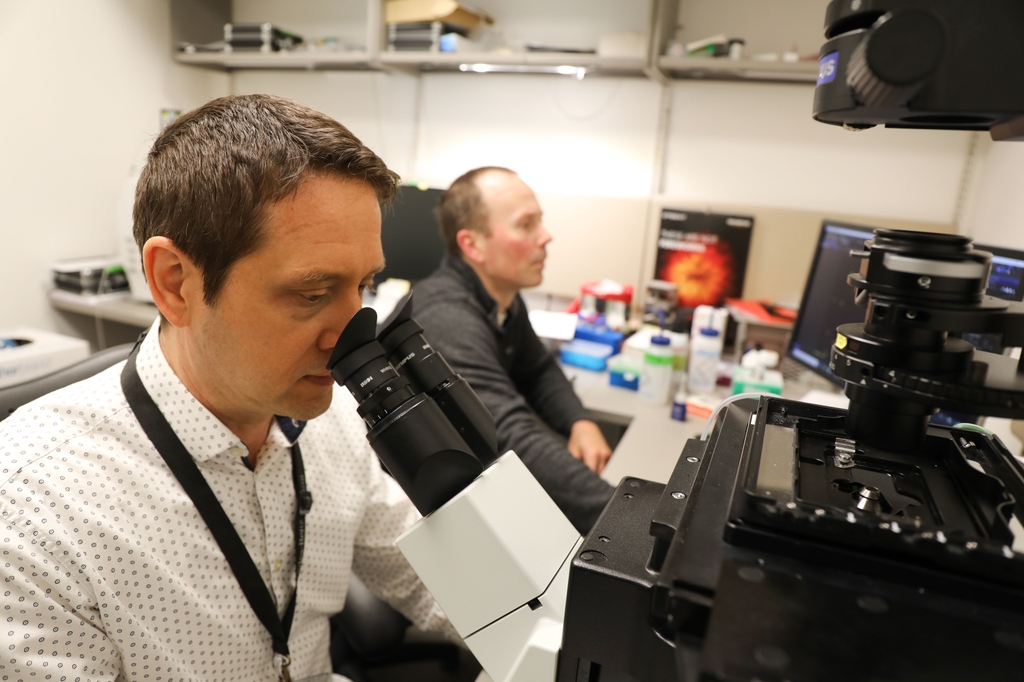
Researchers at Oregon Health & Science University have secured a $2.9 million National Institutes of Health grant to develop a new, highly targeted approach to preventing tooth decay — one of the most common and costly diseases worldwide.
Led by Justin Merritt, Ph.D., professor in the Division of Biomaterial and Biomedical Sciences in the OHSU School of Dentistry, the project aims to eliminate harmful bacteria in the mouth while preserving beneficial microbes. The strategy could transform how dental disease is treated.
Tooth decay affects more than 2 billion people globally and carries an estimated $245 billion annual price tag, making it one of the most expensive health conditions to manage.
"This is one of the most common preventable diseases of all diseases," Merritt said. "Most people on Earth experience tooth decay at some point."
Moving beyond antibiotics
For decades, treatment for bacterial infections has relied on broad-spectrum antibiotics. While effective in many cases, such drugs wipe out both harmful and beneficial bacteria — an approach that can disrupt the body's natural microbial balance.
That treatment is particularly problematic in the mouth.
"Antibiotics are carpet bombers," Merritt said. "When you're dealing with the oral microbiome, wiping out everything is a horrible idea."
Unlike infections caused by a single pathogen, tooth decay is the result of a complex microbial community that becomes imbalanced over time. Many of the bacteria in the mouth play essential roles, including protecting against fungal infections and supporting overall oral health.
The challenge, Merritt said, is to target harmful organisms without destroying the entire ecosystem.
The mouth as an ecosystem
Merritt's work is grounded in a growing understanding of the oral microbiome as an interconnected system shaped by diet and environment.
"Think of your mouth as an aquatic ecosystem," he said. "Conceptually, it's the same thing."
When people consume high levels of sugar and starch, that ecosystem shifts. Acid-producing bacteria such as Streptococcus mutans, or S. mutans, gain an advantage, while beneficial microbes decline. Over time, the acid they produce erodes tooth enamel faster than the body can repair it, leading to cavities.
Rather than trying to eliminate all bacteria, Merritt's team is focused on restoring balance.
"If we could disadvantage those bugs that have an artificial advantage because of human habits, then in theory you could force a reestablishment of that homeostasis," he said.
Targeting bacteria
The NIH-funded project centers on a molecular system inside bacterial cells known as the RNA degradosome, which helps regulate gene activity.
Merritt's research has shown that this system depends on a network of protein interactions to function properly. By disrupting those interactions, researchers believe they can turn the bacteria's own machinery into a self-destruct mechanism.
"If you prevent that system from talking to other proteins, it becomes toxic," Merritt said. "The cell will essentially kill itself."
Merritt's team aims to design interventions that are specific to S. mutans, leaving other microbes largely unaffected. That precision could reduce side effects and help maintain a healthy oral microbiome.
The project will use a combination of genetics, advanced imaging and sequencing technologies to map how the system works and identify points for intervention.
A public health issue
Although often seen as a routine or cosmetic issue, tooth decay can have far-reaching health consequences. Untreated dental disease can lead to pain, infection and tooth loss — and is increasingly linked to broader health conditions.
Bacteria from the mouth can enter the bloodstream and travel throughout the body, potentially contributing to diseases ranging from Alzheimer's to cancer.
"When those microbes get into other parts of the body, they can make conditions more aggressive," Merritt said.
At the same time, access to dental care remains uneven. Many insurance plans treat dental coverage as optional, leaving patients to delay care until problems become severe.
"There's a huge unmet economic need and burden placed on the public health care infrastructure," Merritt said.
The five-year, $2.9 million grant will allow Merritt's team to pursue early-stage experiments, including designing molecules that disrupt key protein interactions in S. mutans. If successful, the work could lay the foundation for a new generation of precision therapies.
Such treatments would represent a shift from eliminating bacteria to managing microbial ecosystems — a strategy that may be essential as traditional antibiotics become less effective.
"We need new strategies," Merritt said.
Merritt's grant was awarded by the National Institute of Dental and Craniofacial Research of the National Institutes of Health, under award number R01DE035840. The content is solely the responsibility of the authors and does not necessarily represent the official views of the NIH or other funders.


