The world's forests form a vast network of carbon reservoirs, keeping carbon sequestered from the atmosphere, where its presence is disrupting Earth's climate systems. Many corporate, national and state climate policies rely on forests' ability to store carbon-often tracked and funded through a system of "carbon credits" issued to polluting industries in exchange for protecting and restoring forests.

But when trees die suddenly-from wildfire, drought or insect infestation-vast amounts of greenhouse gases are released, exacerbating ongoing climate change. And the warming climate is accelerating this problem by making such disturbances more frequent and severe.
New research led by University of Utah scientists in collaboration with international experts sought to determine the likelihood that forests will release their stored carbon over the next 100 years. Along the way, they documented how current carbon-credit systems fail to accurately account for that risk in U.S. forests, particularly the parched U.S. West.
But the research points out ways this problem can be corrected, according to William Anderegg, senior author on the study published in Nature in May.
"Forests are facing increasing durability risks due to climate change," said Anderegg, a biology professor at the University of Utah. "Those risks have been underappreciated to date in multi-billion-dollar carbon markets.
"But with better science, we can set these policies up to potentially work better," continued Anderegg, a leadership team member of the university's Wilkes Center for Climate Science & Policy. "We're providing a potential solution as well."
The trouble with buffer pools
Carbon offset programs try to cover the risk of fire and other disturbances by setting up "buffer pools," reserves of extra carbon credits set aside to compensate for forests that suddenly lose carbon because their trees burn or die. However, the study found these buffer pools are currently far too small for U.S. forests. On average, they would need to be around six times larger to fully cover expected losses over a century for the projects that have been set up so far

The research team, which included scientists from eight other universities and organizations, used forest plot data, satellite observations and machine learning to predict where forest losses are most likely to occur.
"Compared to other natural disturbances, we found that wildfire is the largest climate-sensitive risk to durability for forest nature-based climate solutions," said co-lead author Chao Wu, now at Tsinghua University in Beijing, China. "Our analysis shows for the first time what a robust, climate-informed buffer pool would look like to handle accelerating climate threats."
When the research was conducted, Wu was a U postdoctoral researcher in biology.
The study produced maps showing relative levels of risk for carbon loss, with the increased likelihood of climate-driven disturbance concentrated in California and the Intermountain West. Along with the maps, the Wilkes Center is releasing a set of interactive tools to help plan where and how to conduct forest management and conservation efforts with the highest chances of success.
Using forests to keep carbon out of the atmosphere
Carbon credits are among a host of nature-based climate solutions that harness market incentives to encourage investments that keep greenhouse gases out of the atmosphere. Promoting tree growth is a great way to pull carbon and keep it locked up for decades-as long as the trees don't die prematurely.
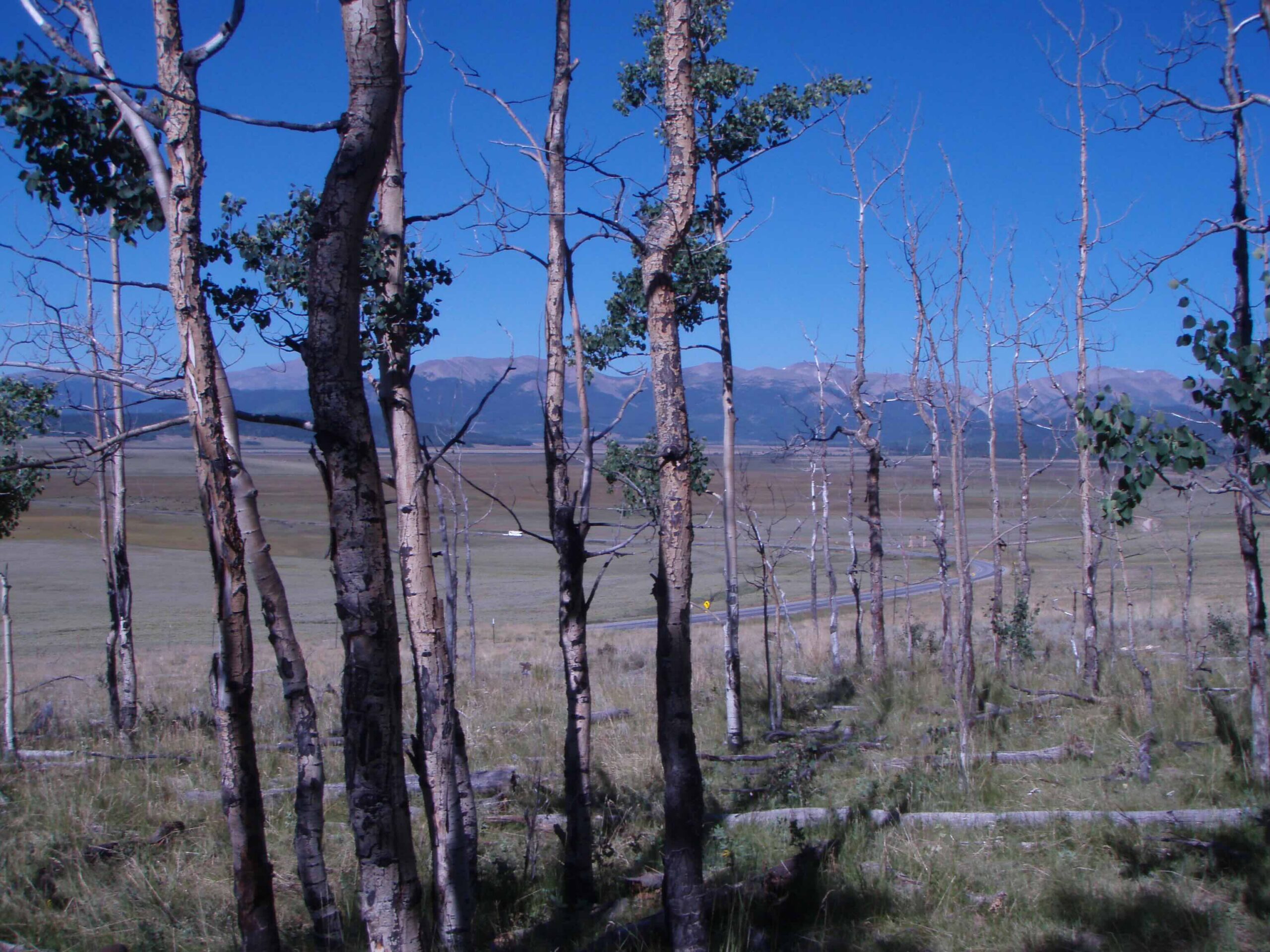
"Nature-based climate solutions in forests aim to store carbon and keep it out of the atmosphere," Anderegg said. "Sometimes that forest carbon is claimed as a 'carbon offset' for fossil fuel emissions elsewhere. Somebody's buying that credit, assuming that a ton of carbon in the trees is the same as a ton of carbon in fossil fuels that you emit to the atmosphere."
For this system to function as a climate solution, one key element is that the carbon has to remain in the trees for a long time. Projects are typically planned on a 100-year horizon in the major California program that the researchers examined. Many offset protocols assume risks are stable over time and space. In reality, risks vary widely by location and are increasing due to climate change, meaning current methods systematically underestimate future losses, according to the research.
The research team mapped areas across the continental United States, showing their risks of a carbon "reversal" - or carbon loss - occurring at least once in the next 100 years from wildfire, drought or insects. The maps compared the risks under historical models and updated ones that account for climate change. The differences are stark.
Under the team's analysis, the portion of the country projected to experience a reversal by wildfire expanded from 10% to 33%; from 19% to 21% for drought; and from 23% to 25% for insects. Broad areas in Idaho, Southern California, Arizona and New Mexico show an 80% or more chance of experiencing such a carbon loss due to wildfire over the next century.
"There is some positive news here," Anderegg said. "Once you have the best available science and data directly incorporated into programs and policies, you can then inform and strategically guide where new projects get developed.
"This ability to choose and really focus on forest carbon in low-risk areas is very promising," he continued, "This can incentivize these forest activities where they're likely to last, and then maybe steer clear of areas where forests are likely to be gone in 100 years."
This study was published May 20 in Nature under the title, "Forest carbon protocols underestimate climate-driven carbon loss risks." Co-authors include Jonathan Wang and Linqing Yang of the University of Utah's School of Biological Sciences, as well as scientists from the University of California, Irvine; CarbonPlan; University of California, Santa Barbara; University of Leicester; The Nature Conservancy; University of Pennsylvania; Stanford University; and Clark University. The underlying research was supported by the David and Lucille Packard Foundation, the National Science Foundation, the Department of Energy, NASA, and the Wilkes Center for Climate Science & Policy.
Banner photo: The plume from the massive Elkhorn fire rises above the Salmon River on July 30, 2023, in Idaho's Payette National Forest. Photo credit: Brian Maffly.
See related stories:
Know the risks of investing in forests
Carbon 'offsets' aren't working. Here's a way to fix nature-based climate solutions
US forests face an unclear future with climate change
How climate change puts property values at risk in forested areas