
Original article published in Asahi Shimbun Globe+, available here (Japanese)
Since 1700, three-quarters of the world's land area has been significantly altered by human activity to the detriment of wildlife, with changing habitats directly linked to species extinctions. In Japan alone, which has a rich diversity of endemic species considering its limited land area - about 40% of land mammals and vascular plants, and 80% of amphibians are found nowhere else in the world - almost 4,000 species are listed on Japan's Ministry of the Environment Red List of threatened species. Despite various interventions, Japan has seen a steady decline in biodiversity since 1970.
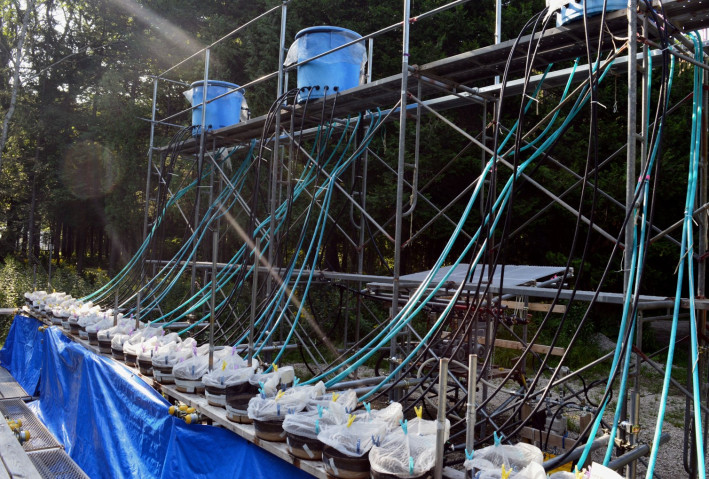
One researcher committed to steering nature onto the path of recovery is Dr. Samuel Ross, a scientist in the Integrative Community Ecology Unit at the Okinawa Institute of Science and Technology. His work centers on ecosystem resilience, studying how biodiversity and ecosystems collectively respond to environmental changes. To this end, he's explored a range of approaches across Japan: from experimenting with how heatwaves could impact life in Hokkaido's Horonai stream if predatory fish were extinct, to deploying a large-scale sound-monitoring system in Okinawa to study the long-term effects of climate change on wildlife.
As he sees it, a key barrier to creating effective interventions for nature is the lack of a shared language. "Some researchers are experts on the anatomy or behavior of certain species, others model the impacts of climate change, and still others focus on communicating findings to business and society. So, how can we connect all these fields to achieve research that feeds into policy and vice versa?"
To help answer this, he points to the importance of building connections between people and among diverse fields, uniting around the common desire to conserve life on our planet.
Originally from Nottingham, United Kingdom, Dr. Ross grew up watching nature documentaries, going on trips to the woods with his grandparents, and immersing himself in Japanese monster-collecting franchises, which instilled a love for the natural world and its underlying biological mechanisms from an early age, together with an enduring fascination with Japan. "I'm a city kid - I love the hustle and bustle of city life. But I've always known that I wanted to be an ecologist, even before really understanding what that means. Being in nature was formative for me, and I was introduced to concepts like taxonomy and evolution through Pokémon and Digimon." These franchises revolve around collecting fantasy creatures found across various biomes, from forests, over glaciers, to savannahs, and training them to evolve into stronger forms with enhanced traits.
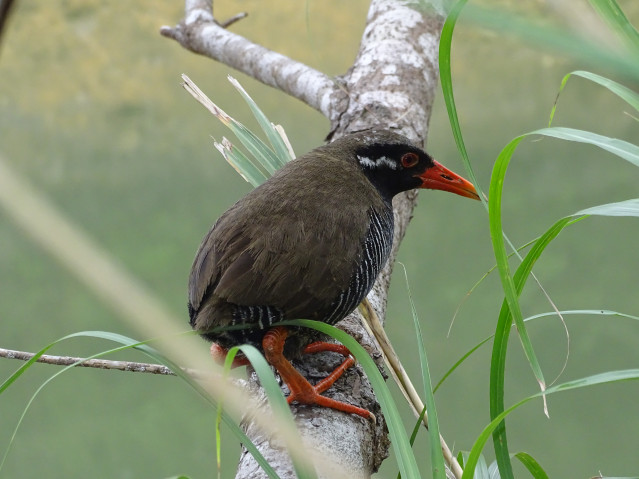
His dream of working in Japan was realized in 2016, when he first joined OIST as a research intern. There, he contributed to bringing OIST's OKEON (Okinawa Environmental Observation Network) acoustic monitoring project to fruition, helping set up high-end autonomous microphones at 24 locations across Okinawa Island. These microphones have been recording the local soundscape every 30 minutes, year-round, for about ten years. To ensure the best data collection and processing, Dr. Ross had to become familiar with the basics of sound physics and machine learning, as well as work with fundamentally challenging ecological datasets. "Ecological data is extremely messy compared to the neat data points typically collected in physics or other fields. Statistical models and theory used in those fields don't work particularly well when applied to complex ecosystems."
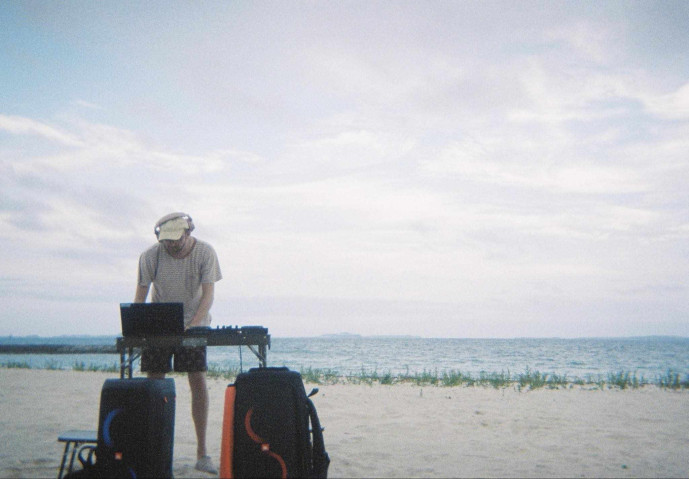
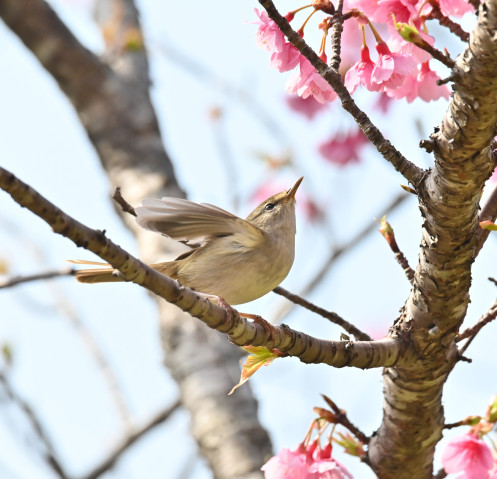
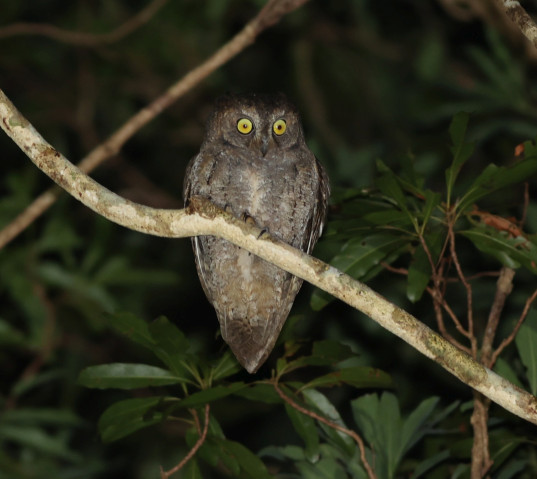
In 2023, Dr. Ross and collaborators published a study that used 13,000 hours of recorded audio to study the effect of two consecutive major typhoons on Okinawan birds. Thanks to a sophisticated machine learning model, the researchers identified bird species present in each recording and compared their presence and activity levels before and after the extreme weather events. They discovered that the birds were surprisingly resilient to these intense disturbances, even in built-up areas. However, resilience varied across species. For example, Japanese bush warblers were slower to reappear in the recordings than Ryukyu scops owls, suggesting that some birds may be more at risk from the increased frequency and intensity of extreme weather driven by climate change.
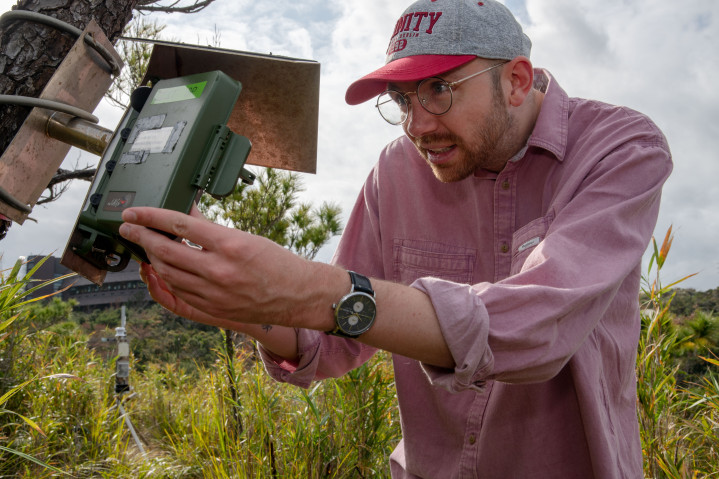
As an expert in acoustic monitoring, Dr. Ross is also working with the Don't Follow the Wind collective in Fukushima's nuclear exclusion zone, where he's set up a monitoring network to study ecosystems in towns and settlements reclaimed by nature following the 2011 disaster. This initiative began as an art project, in which artworks were curated and exhibited within the difficult-to-return zone. The residents, artists, and cultural workers involved quickly realized the difficulties of working amid extreme ecological change, prompting their interest in remote ecological monitoring, which ultimately brought them to Dr. Ross. From a biological point of view, the project offers an opportunity to study not only how ecosystems respond to the sudden absence of humans, but also how they change as humans gradually return in the months and years that follow. "Through this project, I'm working alongside artists, cultural anthropologists, machine learning experts, and others, which is really broadening my perspective on how different people view and interact with nature," he points out.
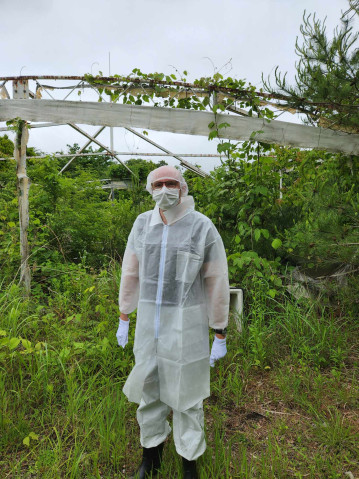
"By meeting and collaborating with people from diverse fields and backgrounds, you automatically start to adapt your thinking, to create a shared language with which you can connect different ideas. These connections form a strong foundation for tackling complex socio-ecological problems," says Dr. Ross.
To him, one term has gradually emerged as the missing link for understanding complex ecological problems: response diversity. Broadly speaking, it relates to how organisms within an ecosystem respond differently to environmental change - like how the Japanese bush warbler responded to typhoons differently from the Ryukyu scops owl in his 2023 study. Generally, the greater the response diversity, the greater the ecosystem's resilience. But how response diversity is measured, which environmental changes are most relevant, and how the measure should be used remain contentious, as indicated by a recent survey of leading ecologists conducted by Dr. Ross and collaborators published in the journal Oikos.
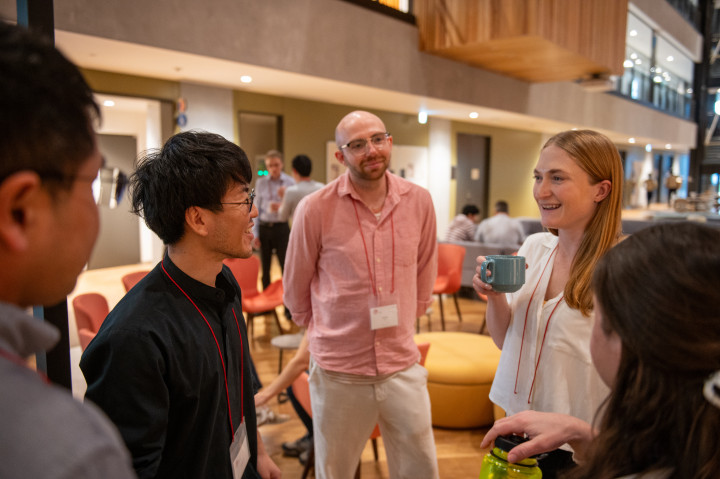
In 2024, Dr. Ross hosted a symposium about response diversity organized through the OIST Visiting Program. This brought together for the first time members of the Response Diversity Network, which he co-leads with Professor Owen Petchey from the University of Zurich. Now numbering more than 150 ecologists worldwide, the network bridges a diverse range of ecological research areas, from socio-economic studies to mathematical biology and field experiments. In addition to supporting novel, cross-disciplinary research projects and attracting large-scale funding for research and events, one of the network's main goals is to build a shared language across these very different fields. Because of their separate areas of study, terms like "climate response" can mean many different things. In human-centric fields like engineering or economics, climate response refers to societal or individual actions aimed at mitigating climate change. This is very different from ecology, where an organism's climate response may be its physiological or behavioral response to changes in temperature, for example.
By extension, they also intend the network to act as a platform for creating meaningful change in the real world. For, as Dr. Ross points out, there is ample opportunity to forge a shared language among ecologists, researchers from other fields, policymakers, and businesses. "I believe that nature has intrinsic value. It might be the Pokémon influence, but I've always thought that the diverse forms of life are inherently important and should be conserved. But it's hard to make that case to policymakers and large enterprises who are chiefly concerned with financial growth and improving people's quality of life."
Thus, to bridge the gap between research on how best to preserve our ecosystems and the development of effective real-world interventions for enhancing resilience, Dr. Ross and colleagues aim to bring together experts across fields and sectors through the Response Diversity Network. One example of a shared language is translating the value of ecosystems into 'natural capital,' a measure of the monetary benefits ecosystems provide society. This includes improved mental well-being when interacting with nature, which translates into better work performance and reduced strain on health services; the immense economic importance of honeybees for food production; or the financial costs of pests or viruses exacerbated by a reliance on vulnerable monoculture crops, among others.
"For me, science is about people," summarizes Dr. Ross. "As an ecologist, I have a moral imperative to share my science and love of nature with the world. This is especially important as every successive generation has fewer opportunities to engage with nature. We need both specialists who dive deep into specific fields and give us unparalleled access to individual ecosystems or methods, and generalists like me who can bring people together. Only then can we find a shared language to help us navigate different ecosystems, research fields, and sectors of society that will allow us to achieve something genuinely transformative."
CV: Dr. Samuel Ross
Staff scientist in the Integrative Community Ecology Unit at the Okinawa Institute of Science and Technology. From Nottingham, United Kingdom. Visited Japan for the first time at the age of 14 and later joined OIST as a research intern in 2016. Earned a PhD in Natural Science from Trinity College Dublin, Ireland, in 2021, and rejoined OIST as a post-doctoral researcher the same year. Will join Kyoto University as an Associate Professor, cross-appointed by the Hakubi Center for Advanced Research and Graduate School of Agriculture in September 2026.


