More than 90% of the key nutrients degrading the Mar Menor, such as ammonium, phosphorus, and silica, do not come from streams or continental groundwater, but rather through a mechanism that has so far been overlooked: water from the lagoon itself infiltrates the sediments and re-emerges loaded with nutrients that have accumulated over years.
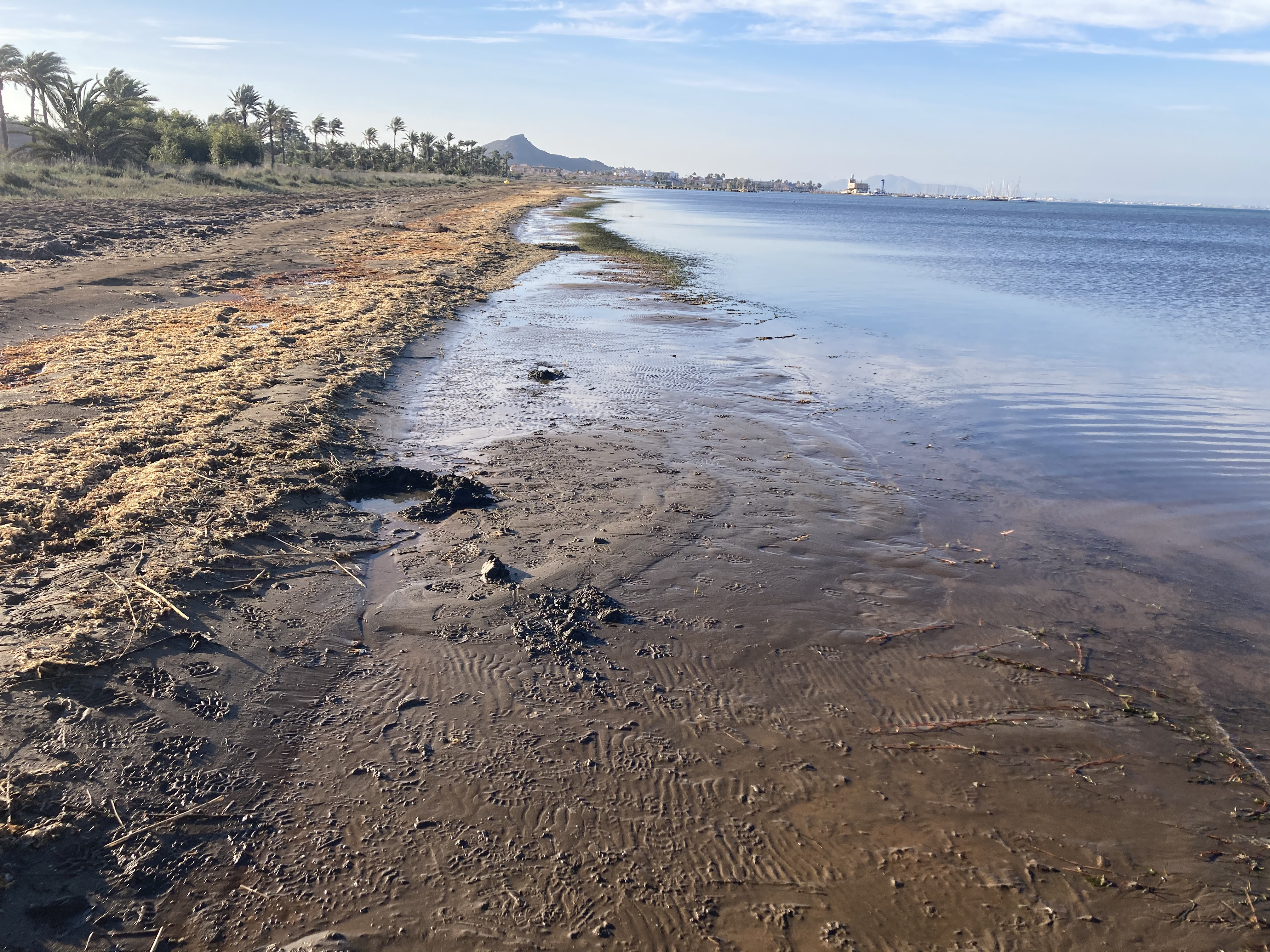
This is the conclusion of a recent study carried out by the Institute of Environmental Science and Technology of the Universitat Autònoma de Barcelona (ICTA-UAB), Spain, which questions the current restoration strategies for the Mar Menor, as they do not take this pathway of contamination into account.
The Mar Menor, a coastal lagoon in southeastern Spain, is a paradigmatic example of the environmental impact of human activities. This emblematic ecosystem, once known as a tourist destination, is now famous for its ecological degradation. Since 2016, the largest lagoon in the western Mediterranean has experienced several episodes of eutrophication, a process of increased primary productivity that depletes oxygen in the water and can cause massive species mortality, such as the well-known fish die-off of 2019.
Traditionally, most of the pollution has been attributed to agricultural fertilisers rich in phosphates and nitrates, which reach the Mar Menor through the Albujón stream, the only surface watercourse flowing into the lagoon. However, this new study reveals that the picture is incomplete.
The research, published in the journal Limnology and Oceanography, used radium isotopes to trace the different types of groundwater entering the lagoon and, for the first time, to quantify three main groundwater discharge processes: freshwater groundwater discharge, mainly originating from irrigation water infiltration; the continuous recirculation of saline lagoon water through the aquifer; and porewater exchange, a process occurring at the bottom of the lagoon in which water rapidly recirculates through the uppermost centimetres of the sediments.
The results show that these latter two processes, previously overlooked, are the dominant source of ammonium, dissolved organic nitrogen, dissolved inorganic phosphorus, and dissolved silica in the Mar Menor. This process occurs on two different temporal scales: at a large scale, water may remain within the sediments for months or years, driven by fluctuations in lagoon water levels, density-driven circulation, and wave action; at a small scale, water circulates over hours or days, mainly due to wave pumping and the activity of sediment-disturbing organisms. In both cases, the water acts as a vector that collects and transports into the lagoon nutrients accumulated in the sediments over decades of agricultural and mining pollution.
The conclusions are particularly relevant for understanding why the Mar Menor remains vulnerable to eutrophication episodes even when action is taken against the most visible pollution sources. The lagoon's sediments have accumulated organic matter, nitrogen, and phosphorus over many years, meaning that this underground pathway continuously redistributes that nutrient load into the water column.
The study also reveals that, in summer, small-scale recirculation significantly increases phosphorus inputs, a key element for phytoplankton growth. This seasonal increase heightens the risk of algal blooms and hypoxia events, two of the most severe symptoms of the ecological degradation of the Mar Menor.
The findings have direct and urgent implications for the environmental management of the lagoon. Currently, the Priority Actions Framework for the Restoration of the Mar Menor includes measures aimed at recovering surrounding ecosystems and restoring natural stream channels, but it does not include any specific measures to limit nutrient inputs through groundwater circulating within the lagoon's own sediments. According to the researchers, incorporating this pathway into restoration strategies will be essential to improve their effectiveness.
This research was carried out within the framework of the OPAL project (Origin and Pathways of Anthropogenic solutes into coastal Lagoons: groundwater, sediments, and episodic events), funded by the Spanish Ministry of Science, Innovation and Universities, in collaboration with the Polytechnic University of Cartagena (UPCT) and the Institute of Marine Sciences (ICM-CSIC).
Article reference: Rodriguez-Puig, J. et al. Recirculated submarine groundwater discharge dominates nutrient inputs and enhances eutrophication risk in a coastal lagoon. Limnology and Oceanography (2026). https://doi.org/10.1002/lno.70371