
Scientists have developed an injectable therapy that helps clear blocked airways in flat-faced dogs.
Melbourne-based biotechnology company Snoretox and RMIT University have shown early success using the first therapy from a new technology, known as Snoretox-1.
The collaboration tested the therapy on bulldogs with breathing difficulties caused by a common condition in flat-faced dogs that restricts airflow, known as brachycephalic obstructive airway syndrome (BOAS).
Almost half of all pugs, French and British bulldogs are affected, impacting their ability to breathe, eat, exercise and sleep, according to Snoretox Managing Director and RMIT Adjunct Professor Tony Sasse.
"Decades of selective breeding for the popular flat-faced appearance have unfortunately led to serious breathing problems," he said.
"In severe cases, the condition has been shown to shorten a dog's life by up to four years."
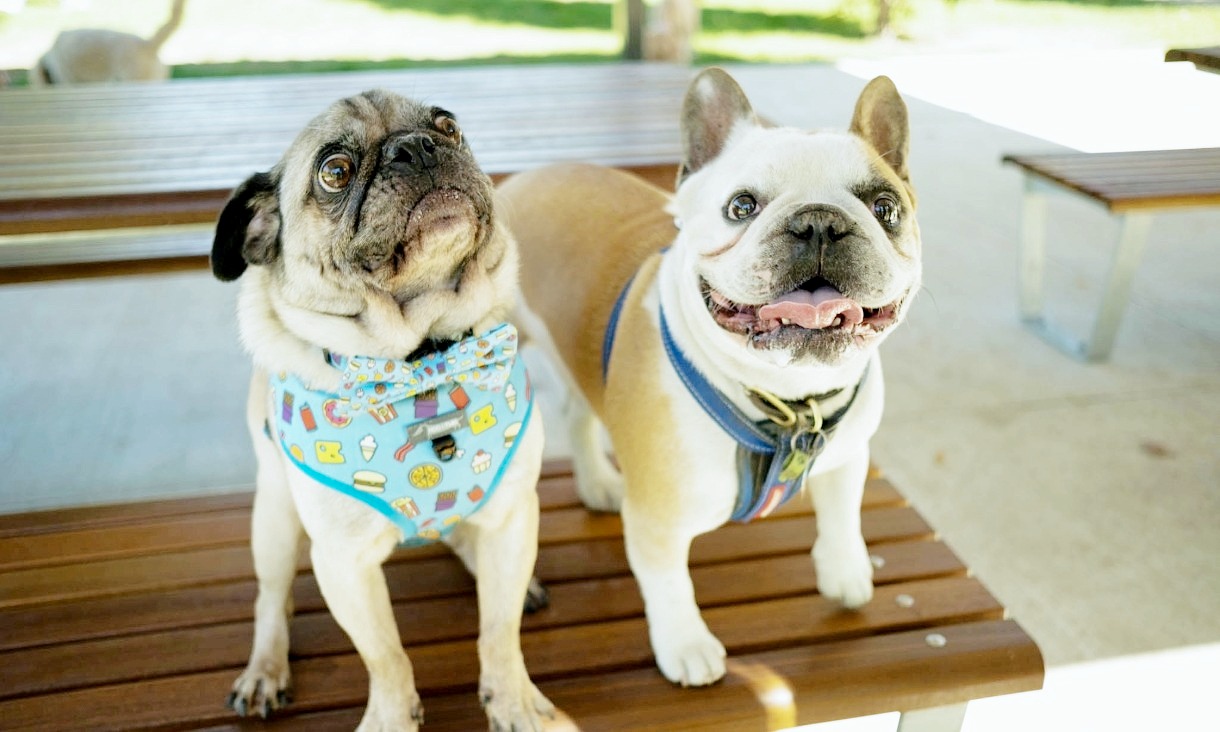 Pugtato the pug and Piglet the French bulldog both showed significant improvement in breathing and exercise ability after the Snoretox-1 treatment as part of the initial small-scale trial.
 Successful early results in affected dogs
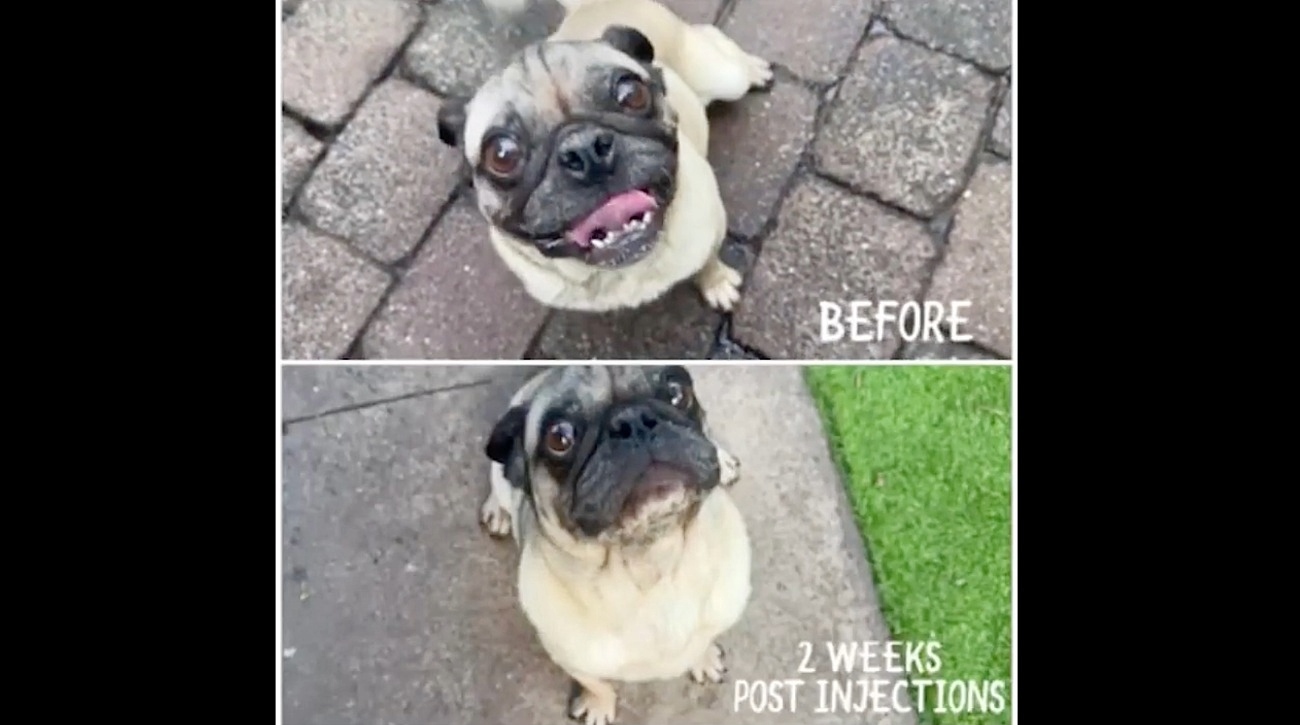
The early-stage trial involved six bulldogs with severe symptoms that struggled to complete a three-minute walk but were able to do so far more easily after receiving the patented Snoretox-1 treatment, with noticeably reduced breathing noise and effort.
The first published results of the study in The Veterinary Journal show how all six dogs displayed visible improvements and were able to complete a brisk walk that was previously difficult.
Surgery to widen the nostrils and remove excessive throat tissue, along with weight-management strategies, are currently the main treatment options available, but outcomes vary.
"Research shows that up to 60 per cent of affected dogs still experience breathing problems after surgery, and seven per cent do not survive the procedure," Sasse said.
Sasse said the bulldog trial results suggested a possible combination with, or alternative to, surgery.
"We also observed improvements in dogs that had not responded well to previous surgery," he said.
"Further research and regulatory approvals are required before the treatment can be offered more widely, but these positive results provide an early indication that we are on the right path."
How Snoretox-1 works
Snoretox-1 is an injectable treatment that uses a modified tetanus toxin to improve the muscle tone in the floor of the dog's mouth, helping keep the airway open.
The technology has been in development for over 15 years in collaboration with RMIT School of Science biotechnologist Professor Peter Smooker.
"In short-snouted breeds, the soft tissue in the upper airway hasn't adapted to the shorter skull. This leaves excess tissue crowded into a smaller space, where it can obstruct airflow," he said.
"The therapy strengthens the muscles at the front of the airway, helping support the throat and maintain airflow during breathing."
The treatment combines a targeting component with a tiny dose of the therapeutic agent to safely increase muscle tone in the airway.
The technology may also have future applications in other conditions involving weak muscle tone, although the current focus is on veterinary use.
"This product has platform potential for a range of conditions in both animals and humans," Sasse said.
"From a regulatory approvals perspective, it makes sense to start with these animal applications, but we are keeping the bigger picture of wider applications in animals and humans in mind."
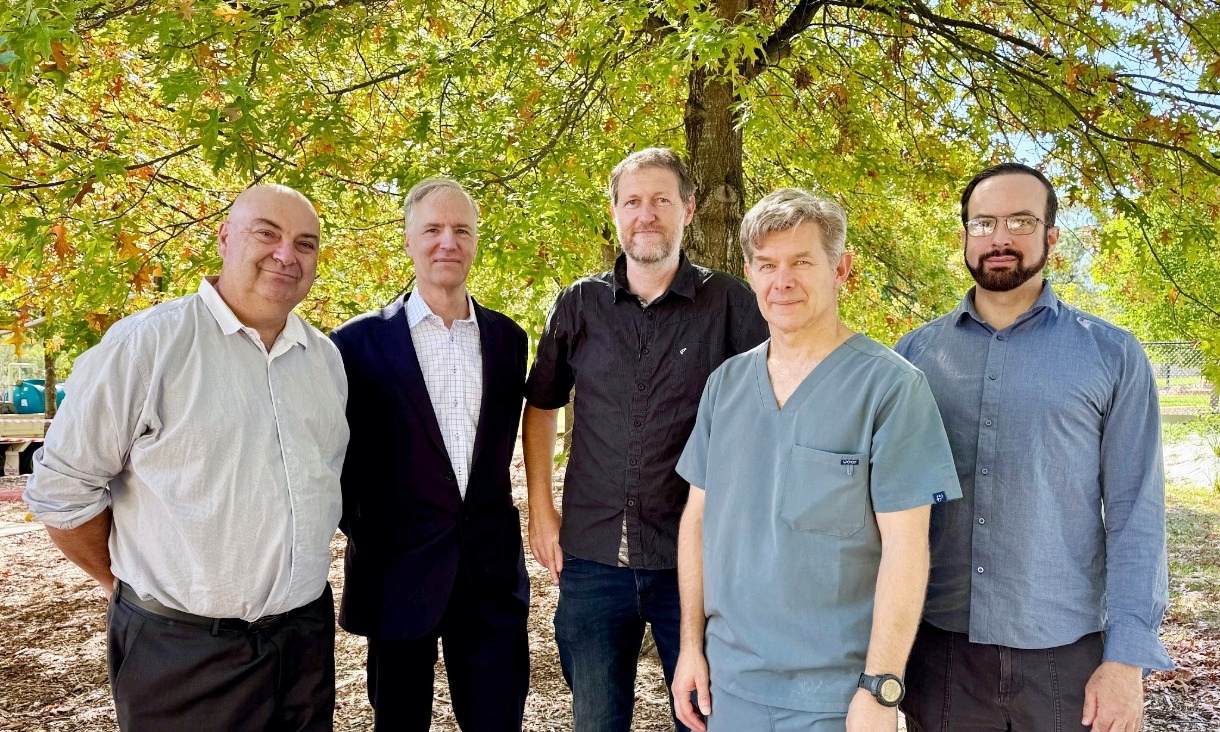 The team: Professor Russell Conduit, Dr Tony Sasse, Dr Luke Norbury, Dr Arthur House and Danny Aliano.
 Impact-focused research
RMIT Deputy Vice-Chancellor Research and Innovation Distinguished Professor Calum Drummond AO said the technology was an example of RMIT's commitment to research impact.
"This project is focused on making a real difference to animals, with the potential for broader impact in the future," he said.
Professor Russell Conduit, who is part of the team from RMIT's School of Health and Biomedical Sciences, said the findings also point to future applications beyond veterinary care such as such as obstructive sleep apnoea, incontinence and pelvic floor disorders for humans.
"This is exciting evidence to support human drug trials for conditions involving poor muscle tone," Conduit said.
Supporters and future trials
The research was supported by Australian Research Council Linkage (ARC) grants, Medical Research Future Fund Frontier Round 1 (MRFF), Medical Technology Enterprise Consortium (MTEC) and RMIT Enabling Impact Platform funding.
The team also recognises Pug Rescue & Adoption Victoria and its founder Joanna Herceg for their contribution to the trial and ongoing dedication to the welfare of pugs and other brachycephalic breeds.
This story's top banner image features Pru and Biggie Smalls, courtest of Pug Rescue & Adoption Victoria. The pair have accompanied Pugtato to every vet consult and test over the past year.
The research team is also planning a larger scale trial. If you have a bulldog that snores, has interrupted breathing or is generally sleepy and lethargic, and would like to be considered for participation in an upcoming trial, visit snoretox.com/bulldog-trial-volunteers
'Clinical observations of tetanus toxin plus decoy, Snoretox-1, a novel targeted neuromuscular stimulant, in a pilot study of 6 British bulldogs with BOAS' is published in The Veterinary Journal (DOI: 10.1016/j.tvjl.2026.106636).


