
Emphysema is a chronic, progressive lung disease in which the air sacs are damaged and lose elasticity. As trapped air accumulates, the lungs become hyperinflated, making breathing increasingly difficult and limiting daily activities. Emphysema is a major contributor to chronic obstructive pulmonary disease (COPD), which affects millions of Americans.
Interventional pulmonologists at UC Davis Health are expanding treatment options for patients with severe emphysema. They are conducting a clinical trial that provides access to a novel implantable investigational device designed to reduce lung hyperinflation and help patients breathe more comfortably.
"Many people with emphysema struggle with severe shortness of breath and feel limited in what they can do each day," said Chinh Phan, director of the UC Davis Interventional Pulmonology Program and principal investigator of the trial. "This investigational device offers a new approach intended to treat the affected lung while potentially reducing some of the complications associated with current procedures. When medications aren't enough, we hope this new minimally invasive treatment can help patients with severe emphysema breathe easier and live better."
BREATHE-3 clinical trial
The BREATHE-3 clinical trial is a pivotal, multicenter, randomized controlled trial evaluating the safety and efficacy of the Apreo BREATHE Airway Scaffold. The device represents a new potential therapy for individuals with severe emphysema who continue to experience significant shortness of breath despite optimal medical management.
How the therapy works
The Apreo BREATHE Airway Scaffold is a small, self-expanding implant that is placed into selected airways using a bronchoscope. Once placed, the scaffold is designed to:
- Reduce lung hyperinflation by supporting weakened or narrowed airways
- Potentially improve breathing efficiency, stamina, and overall quality of life by facilitating the release of trapped air
Unlike other lung volume reduction procedures, this device aims to treat multiple regions of the lung (up to six scaffolds) without removing tissue or blocking airflow.
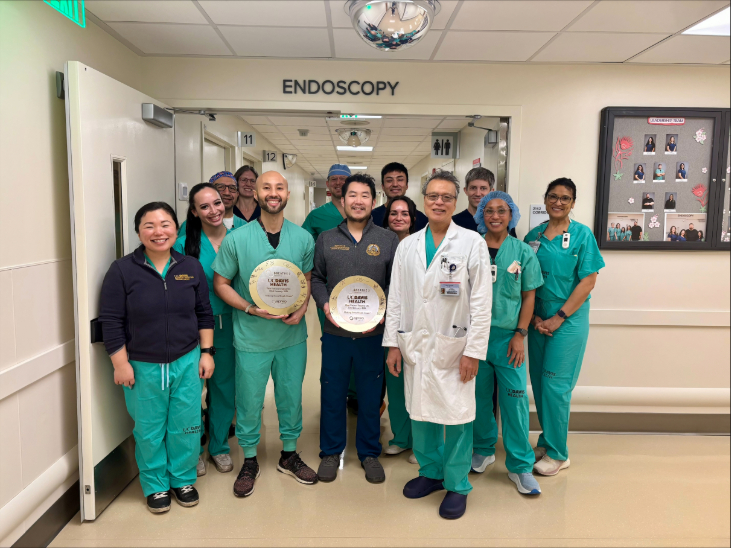
UC Davis Medical Center is the only site in California providing this investigational therapy and the team successfully treated its first patient in January.
BREATHE‑3 will include up to 250 patients at 25 sites in the United States and Europe. Participants will be followed for three years. The study will look at changes in lung function, quality of life and a person's exercise capacity.
"Through this research, we hope to bring forward a treatment that helps people with severe emphysema breathe better and improve their daily lives," Phan added.
"Through this research, we hope to bring forward a treatment that helps people with severe emphysema breathe better and improve their daily lives."-Chinh Phan

Participation in the clinical trial
Clinical researchers are seeking participants who meet the following criteria:
- People who are at least 40, but not older than 84, years of age
- Diagnosis of severe emphysema with hyperinflation, confirmed by imaging and pulmonary function testing
- Those who have completed, or are willing to participate in, a Pulmonary Rehabilitation program
A comprehensive screening process will determine full eligibility for enrollment.
The Apreo BREATHE Airway Scaffold is an investigational device. It has yet to be approved by the FDA so its use is considered Iimited by United States law.


