
Parks Victoria has partnered with Dutch data science company Addax to launch a new open‑access super‑computing tool that rapidly analyses remote camera images to identify and protect native wildlife.
Thousands of motion-triggered remote cameras are deployed each year by Parks Victoria rangers across the state to monitor our most vulnerable creatures and detect and respond to feral animal threats.
Dr Erin Nash, conservation officer and a co-creator of the tool says: "the Victorian Species Recognition Model represents a step change in the economics and effectiveness of nature conservation, by taking images from information to action and better manage threats to our native animals."
Each field camera can generate thousands of images, creating a massive manual review task to distinguish falling leaves from wildlife and accurately identify animals. This time‑consuming work pulls rangers and conservation teams away from critical field activities.
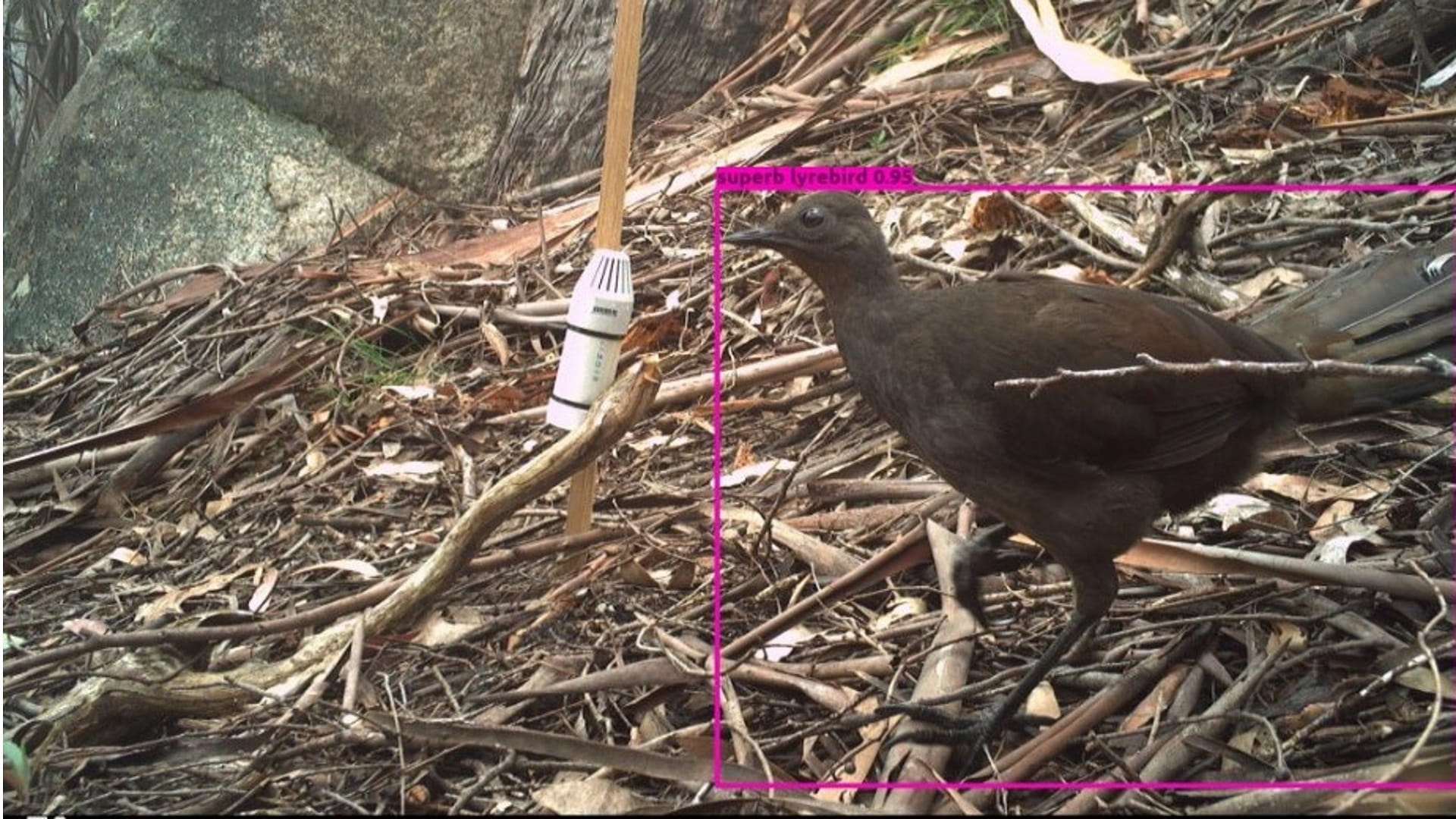
A Superb lyrebird is identified by the Victorian Species Recognition Model can identify thousands of camera trap images per minute
The Victorian Species Recognition Model was created using artificial intelligence (AI) and machine learning to recognise 212 different wildlife and feral animal species, and process more than a thousand images per minute – at greater than 95 per cent accuracy. This is helping to boost efficiency, effectiveness, and productivity in nature conservation.
Dr Mark Norman, Chief Conservaton Scientist says: "this is a great example of how AI can save time and money and equip others to gather critical wildlife information across Victoria; accelerating our efforts to save species, respond to natural disasters and emerging threats, and to a changing climate."
"Having a trusted AI model in our toolkit will help us better understand how Victorian species are responding to threats and major emergency events in our parks and reserves," says Mary Thorpe, Conservation Science Support Officer.
Erin and Mary collaborated with a world-leading expert on automated wildlife recognition, Peter van Lunteren, of Addax Data Science in the Netherlands. To train the tool, they rallied support from 18 different organisations that use remote wildlife cameras in Victoria to build a reference collection of confirmed images. Erin and Mary then used this reference library to test and train the software on more than 5 million images taken in the wild.
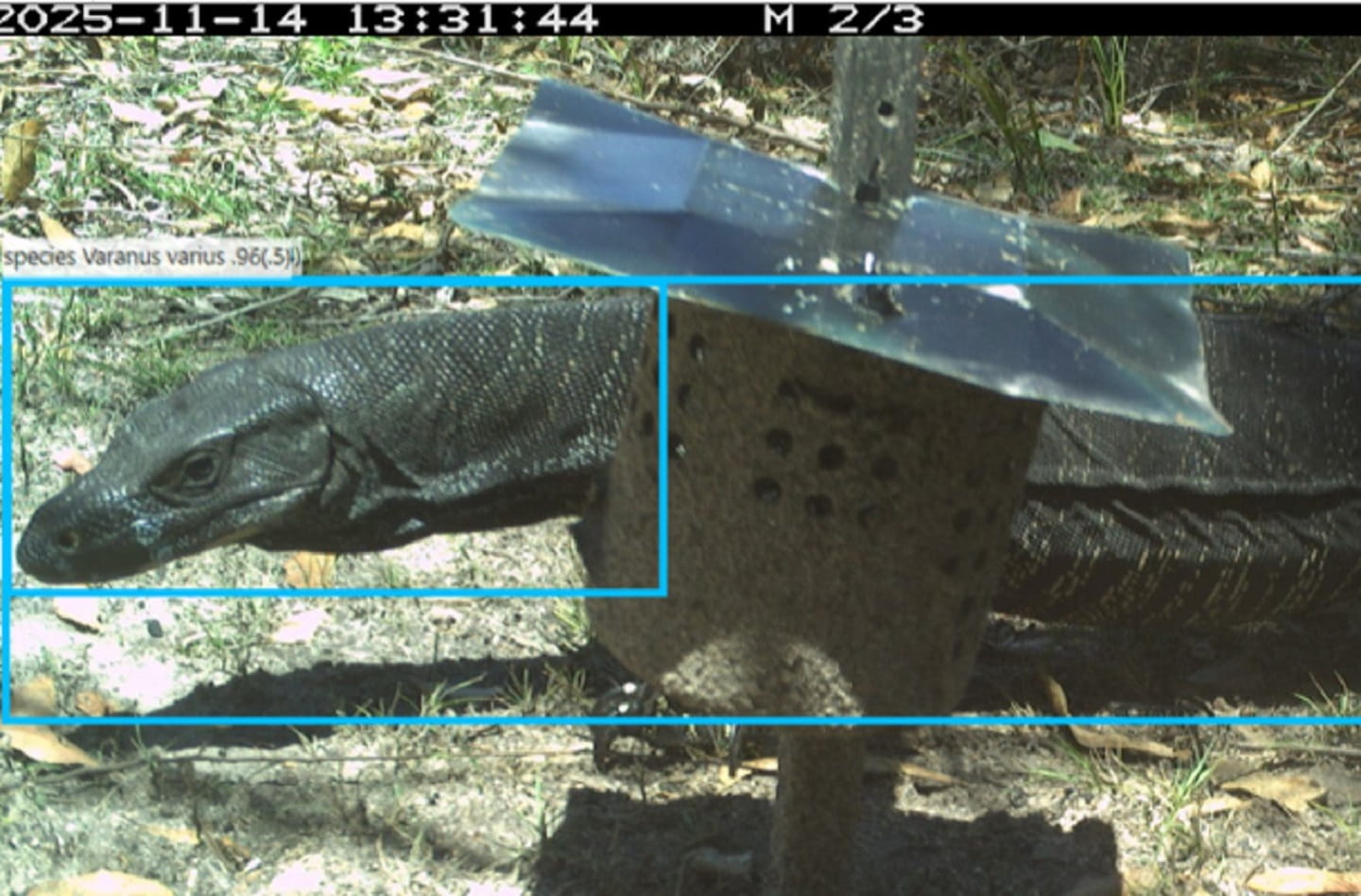
Lace monitor (Varanus various). The Victorian Species Recognition AI model can identify 212 different species
The tool is so fast that it automatically processes and identifies up to 20 images per second, removes all non-animal images, such as a waving branch in front of the camera, and produces a summary interface that can fully interrogate the data. This summary includes what was seen, and maps of their locations, times, dates, and trends – which enables rangers to have the information they need in near-real time to protect threatened species and take action to control feral animals.
The model has proven more accurate than the human eye at detecting animals such as the Eastern Ground Parrot, a species that hides in long grass and is notoriously difficult to spot. Unlike human observers, the computer can identify subtle feather patterns that would have otherwise been missed.
The tool is expected to be particularly valuable for land managers, researchers and citizen scientists supporting native wildlife recovery in disaster and bushfire‑affected areas, where animals have lost much of their natural habitat.
By releasing the tool as open‑source software, Parks Victoria is enabling land managers, researchers and conservation agencies everywhere to work together for stronger, more effective protection of nature.


