
Every year, millions of gallons of wine are pressed, leaving behind a mountain of pulpy residue - grape skins, seeds, stems and peels - that wineries struggle to dispose of. Now, researchers say this overlooked byproduct could find a new life on the farm, as a replacement for the antibiotics routinely added to chicken feed.
Dietary grape pomace mitigates high-NSP-induced inflammation and production loss via microbiome-SCFA-Immune mediated pathways, published May 7 in npj Biofilms and Microbiomes by a team of Cornell food scientists, tested grape pomace as an additive in broiler chicken diets, comparing it head-to-head against zinc bacitracin, one of the most widely used antibiotic growth promoters in the poultry industry.
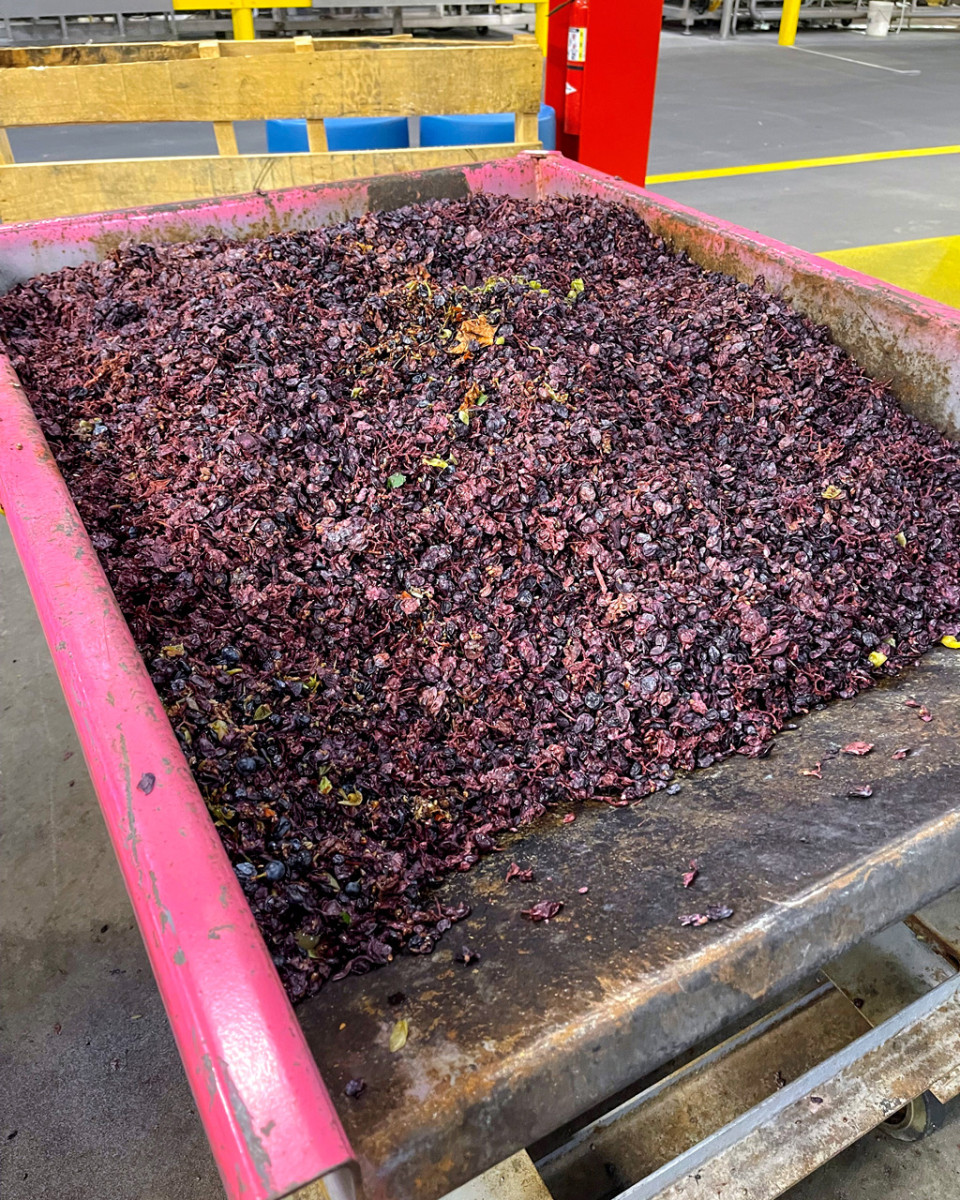
The grape industry, whether for wine or juice, produces millions of pounds of pulpy waste each year. Grape skins, seeds, stems and peels could be repurposed as a healthy feed supplement for the poultry business.
The results are striking, said corresponding author Elad Tako, associate professor in the Department of Food Science in the College of Agriculture and Life Sciences, suggesting that a modest half-percent inclusion of grape pomace in feed can nearly match the antibiotic's performance - improving weight gain, feed efficiency and gut health in birds raised on an inflammation-inducing diet.
"We've been studying this as a functional food ingredient for both humans and animals, and this is a defining moment," Tako said. "We were able to mitigate low-grade inflammation, which is status quo in the poultry industry."
The stakes are high. The withdrawal of antibiotic growth promoters from broiler production, driven by mounting concern over antimicrobial resistance, has long been associated with slower-growing, sicker birds and higher feed costs. The poultry industry has scrambled for alternatives, but few have matched antibiotics' dual punch: suppressing harmful bacteria while simultaneously reducing the low-grade gut inflammation that quietly saps a bird's growth energy.
"There is a full ban of the use of antibiotic growth promoters in the EU, China and Brazil," Tako said. "There's not yet a formal ban in the U.S., but there's a significant need because of the threat of introducing antibiotic resistance."
A gut under siege
To simulate the kind of intestinal stress that commonly affects commercial flocks, from poor-quality feed ingredients to crowded housing conditions, researchers fed 126 young broilers a diet containing 30% rice bran, a high-fiber ingredient known to trigger chronic low-grade inflammation in the gut. Birds on this diet alone showed significantly reduced weight gain and elevated levels of two proteins that serve as molecular signals of inflammation.

When grape pomace was added at just 0.5% of the diet, body weight gain improved by at least 79% compared to inflamed birds given no supplement, and feed conversion (a key measure of how efficiently birds turn feed into body mass) improved to levels on par with the antibiotic group. The improvements held through the final days of the 42-day experiment.
"Previous research by others showed negative effects of pomace in the feed because it was too much of a good thing," Tako said. "What we did was revisit the approach and reduce the dose."
Fermentation adds another dimension
The researchers also tested two fermented versions of the grape pomace - one processed with Lactobacillus casei, a bacterium used in yogurt and cheese-making, and another with Saccharomyces cerevisiae, the yeast responsible for bread and beer. Fermentation is known to alter the chemical structure of plant compounds, potentially making their beneficial molecules more bioavailable.
While fermentation slightly reduced the total concentration of polyphenols - the plant compounds thought to drive the anti-inflammatory effect - both fermented versions performed at least as well as the raw pomace on most performance metrics, and the bacteria-fermented version produced a notably larger villus surface area in the birds' small intestines, the tiny finger-like projections that determine how efficiently nutrients are absorbed.
In the cecum, a pouch at the junction of the small and large intestines that serves as the gut microbiome's primary residence, grape pomace and its fermented variants reshaped the microbial community in ways that researchers found encouraging. Populations of Klebsiella and Clostridium, both associated with intestinal disease, fell to levels comparable to the antibiotic group. Meanwhile, butyrate production rose - a meaningful signal, since this short-chain fatty acid is a primary fuel source for gut-lining cells and a known regulator of intestinal inflammation.
A byproduct with nowhere to go
Beyond the biology, the researchers note a practical appeal: Grape pomace is, by definition, a waste product. The global wine industry generates millions of tons of it annually, much of which ends up in landfills or is composted at a loss. Redirecting even a fraction of that stream into poultry feed additives could create a circular economy benefit while addressing one of agriculture's more pressing drug resistance problems.
"What needs to happen next is demonstrating that it works in real-world conditions with a much bigger number of birds," Tako said. "Our partners now are mostly on the wine and pomace-producer side. We communicate but don't yet collaborate with the poultry industry."
If widely adopted, this small change could serve as an effective alternative to antibiotic growth promoters in broiler production, dramatically reducing costs for chicken farmers.
Cornell co-authors include Milan Sharma, Nikita Agarwal, Sara Stadulis, Eliot Dugan, Chloe Giovannoni, Peter Gracey, Melissa Huang and Patrick Gibney. Additional researchers are from the Biodesign Institute at Arizona State University.


