
Media release: Thursday 14 May, 2026
Major Australian research breakthrough in heart disease detection
An Australian researcher and his global team have successfully shown that AI can detect a marker of heart disease from DEXA bone density machine scans, unlocking a cost-effective yet powerful way of preventing heart disease before it strikes.
The detection of abdominal aortic calcification (AAC) in DEXA lateral spine scans has until now only been limited to a specialist review - an expensive and time-consuming process that can be cost prohibitive.
Yet, because AAC often appears earlier in the abdominal aorta than calcification in the heart's arteries, it offers a critical window for early detection and prevention of a heart attack or stroke.
The major advancement by Professor Joshua Lewis from Edith Cowan University and his global team of researchers which was recently published in the Journal of American College of Cardiology: Advances means around 700,000 people in Australia who undergo a DEXA bone scan each year could also learn about their heart health using the same machines once it is rolled out.
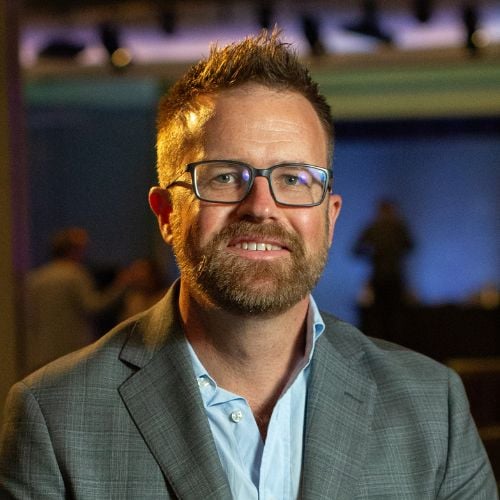
Our approach is a state-of-the-art, AI-powered solution that automatically detects and quantifies AAC on lateral spine images captured by the DEXA machines used to assess people's bone health.This technique means a widely used scan can now also assess blood vessel health in a matter of seconds.
Without a doubt, this is a significant advancement: it empowers individuals and clinicians to intervene earlier and help prevent serious cardiovascular events."
This technique means a widely used scan can now also assess blood vessel health in a matter of seconds.
Without a doubt, this is a significant advancement: it empowers individuals and clinicians to intervene earlier and help prevent serious cardiovascular events."
Joshua Lewis
Professor
As with any major discovery, the translation into every day practise can be a long and costly process.
Prof. Lewis and his team are not wasting any time, bringing the project to life through the Heart Foundation's Catalyst Partnership program. In 2025, they received support from the Heart Foundation and are now seeking further backing from private and philanthropic funders to bring this groundbreaking intervention to patients sooner rather than later.
Heart Foundation Chief Medical Advisor Professor Garry Jennings said the discovery was an exciting development in heart disease prevention and credited Heart Foundation donors, partners and supporters for making the innovating research possible. Professor Jennings explains:
Australia is home to some of the leading minds in cardiovascular research and this work is one example of how Heart Foundation donors enable us to fund life-changing research that can have an impact in preventing heart disease for future generations.
Garry Jennings
Chief Medical Advisor


