Why are medicine and materials converging now?
Cancer treatment, artificial joints, regenerative medicine, and fuel cells may seem to belong to very different fields, but they share a common foundation: materials.
As medicine advances and materials and device technologies rapidly evolve, the ability to control materials at the atomic and molecular levels is becoming a decisive factor in success. Improving the precision of treatments and enhancing the efficiency and durability of devices can no longer be achieved within a single field alone. Close collaboration among materials science, chemistry, physics, and life sciences is now essential.
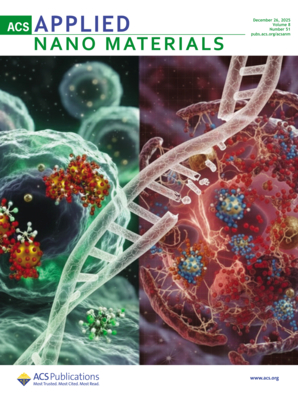
Reflecting these developments, Institute of Science Tokyo (Science Tokyo) was established in October 2024 through the merger of Tokyo Medical and Dental University and Tokyo Institute of Technology. The spirit of integration is embodied in a special issue of ACS Applied Nano Materials, titled "Commemorate the Establishment of the Institute of Science Tokyo."
This issue highlights how diverse research fields-medicine, materials, chemistry, and energy-can intersect through a shared perspective: the nanoscale.
At the nanoscale, materials reveal a different side of themselves
A nanometer is one billionth of a meter-about one hundred-thousandth the thickness of a human hair. At this extremely small scale, materials can exhibit completely different properties.
For example, gold is a stable metal that hardly reacts in bulk form. However, when reduced to the nanoscale, it becomes an active catalyst that promotes chemical reactions. Simply changing the size can transform the role of a material.
This special issue presents research across four areas-nanomechanics, nanobiomedical science, nanomaterials, and applied nanochemistry-all centered on understanding and controlling materials at the nanoscale. Many of these studies begin with real-world challenges in medicine and the environment and seek solutions through materials design and molecular-level control.
From medical challenges to materials design
A research team led by Professor Satoshi Uchida and Associate Professor Yuki Mochida of the Medical Research Laboratory at Science Tokyo reported a study on improving the stability of delivered mRNA.
mRNA has gained attention as a platform for vaccines and therapeutics. However, it is easily degraded in the body, limiting its effectiveness. Lipid nanoparticles (LNPs), already in practical use, play an important role in protecting mRNA and delivering it into cells.
The team developed a new approach by combining LNPs with a specific polymer called a polycation. Through nanoscale material design, they created a system in which the polycation continues to protect mRNA even after it enters cells. This approach improves existing LNP technology and shows potential for prolonging the effectiveness of mRNA medicines.
This study exemplifies a distinctive research style: starting from a medical problem and exploring solutions through materials design. Moving back and forth between medicine and materials science is becoming a central approach in nanobio research.
Another team led by Professor Chie Kojima of the School of Materials and Chemical Technology at Science Tokyo developed stimuli-responsive nanozymes with potential applications in cancer therapy.
If artificial nanomaterials can mimic enzymes, they could open new possibilities for treatment. The team designed a novel nanomaterial using highly branched polymers called dendrimers as templates, embedding extremely small gold nanoparticles inside them.
These gold nanoparticles act as nanozymes in the body, reacting with hydrogen peroxide to generate highly reactive oxygen species (hydroxyl radicals), which can damage cancer cells.
A key feature of this system is that its activity can be switched on and off. The dendrimer structure responds to environmental changes such as pH and temperature. When the structure aggregates, the gold nanoparticles are hidden, suppressing catalytic activity; when it disperses, they are exposed, increasing activity. This switchable behavior is unique to nanomaterials and not seen in natural enzymes.
In addition, these nanozymes are more stable than natural enzymes under harsh conditions. Experiments also showed that, when combined with ascorbic acid (vitamin C), they can selectively attack cancer cells.
This research demonstrates how nanomaterials designed at the molecular level can control biological reactions, opening new possibilities for artificial enzyme (nanozyme) research and cancer treatment.
Challenging the limits of materials synthesis
A research team including Naoto Ohtake, Science Tokyo president and chief executive officer, challenged a long-standing assumption in materials science.
Hexagonal boron nitride (hBN), a two-dimensional material just one atom thick, has generally required tens of minutes or more to grow with high quality. It was widely believed that faster growth would degrade crystal quality.
However, using a high temperature of around 1,200 °C and a carefully prepared metal surface, the team established a method to grow a single atomic layer in about one minute while maintaining high quality. This represents a dramatic acceleration-from tens of minutes to approximately one minute- compared with conventional processes.

They further demonstrated that this single-layer hBN can be used as a material for fuel cells and can contribute to improved power-generation performance. Another notable aspect of this study is that it presents, in an integrated way, a path from fundamental research on atomically thin materials to their application in energy devices.
Functional nanomaterials for environment and energy
Associate Professor Mark Tso-Fu Chang and colleagues developed a new catalytic function for ferrite (nickel iron oxide), a familiar material used in magnets.
While many reactions that break down harmful substances in water rely on light-driven photocatalysts, the team achieved a system that works without light by slightly modifying the material's composition. Moreover, the catalyst can be easily recovered using a magnet and reused.
This research integrates material design, performance evaluation, recyclability, and operational conditions, reflecting a strong collaboration between academia and industry. It shows how nanomaterials research is directly addressing real-world infrastructure challenges.
This special issue is more than a commemorative project marking the birth of a new university. It also demonstrates that interdisciplinary research is already beginning to generate tangible results.
Longer-lasting artificial joints, treatments with fewer side effects, more efficient fuel cells, and environmentally friendly catalytic technologies-all begin with understanding and controlling matter at the atomic and molecular levels. Over time, these advances have the potential to transform society itself.
Visionary Initiatives driving Science Tokyo: where they stand today and what comes next
Science Tokyo has launched a new, vision-driven research framework called Visionary Initiatives (VIs), which aims to turn future visions into reality through interdisciplinary research.
Many of the studies in this special issue lie at the boundaries between medicine, materials, and environmental science. This reflects the direction Science Tokyo is pursuing.
Whether this integration truly creates value will depend on future research. The fusion of medicine and science and engineering that begins at the nanoscale will accelerate under the VIs, generating greater societal impact.
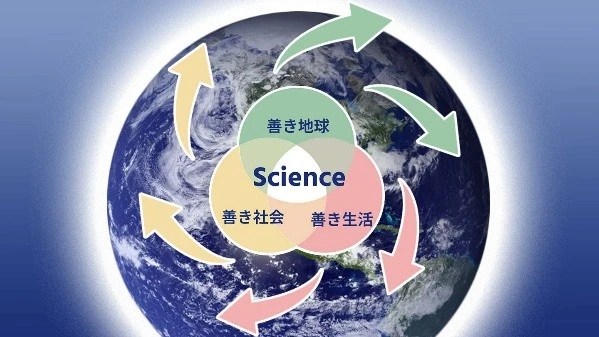
This special issue captures the current state of Science Tokyo while demonstrating its commitment to becoming a leading international research hub.
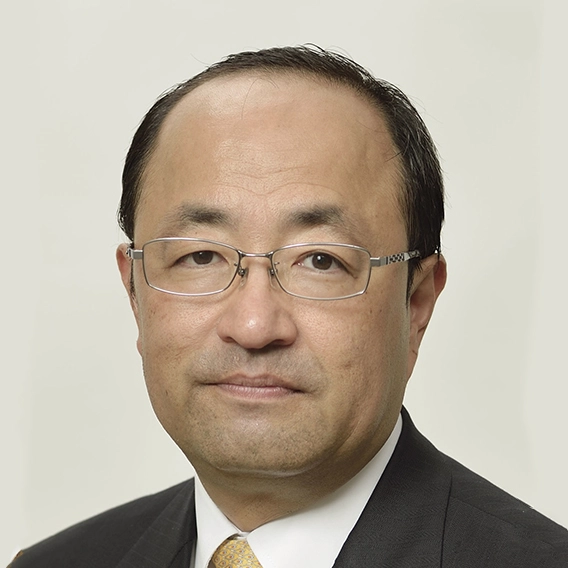
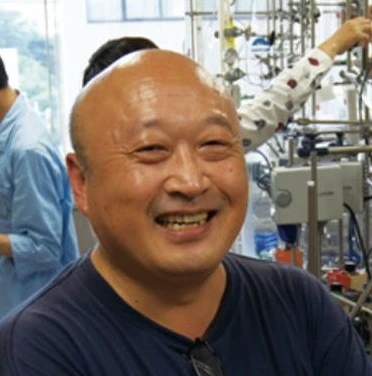
The guest editors behind the special issue
This special issue presents nanoscience from four complementary perspectives. This editorial introduction was authored by the guest editors leading each area:
Naoto Ohtake (Nanomechanics),
Hiroyuki Kagechika (Nanobiomedical Science),
Michikazu Hara (Nanomaterials),
Masato Sone (Applied Nanochemistry)