
Age-related macular degeneration (AMD) is the leading cause of irreversible blindness among ageing people globally . Around one in seven Australians over the age of 50 have some signs of AMD.
The disease results in blurred and distorted vision, and often loss of function at the centre of the eye's visual field.
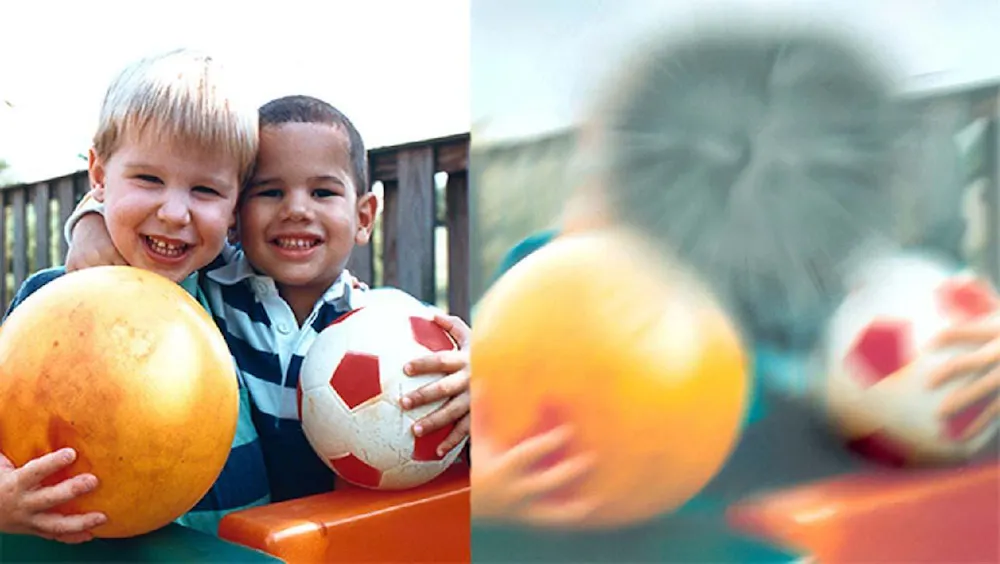
The best current treatment involves a series of injections to slow the progression of the disease, but this process can be expensive and difficult with potentially negative long-term effects.
In our latest research , we trialled a surprisingly effective non-invasive way to improve the vision of people with AMD: augmented reality headsets that add "visual noise" to what they see.
Noise - and how it can help
We usually think of noise as an annoyance. If you are listening to the radio, auditory noise makes it hard to hear the music.
However, it turns out that the right amount of controlled noise can actually be beneficial. This is due to an interesting phenomenon called stochastic resonance .
In the right circumstances, a little bit of noise can make a faint signal "loud enough" for us to detect.
Different forms of noise, such as tactile noise (vibrations) or auditory noise, have been used previously to improve balance, gait and hearing in patients.
Visual noise (essentially static, like on a detuned TV) has also been shown to improve performance on computer-based letter identification tasks.
However, it had not yet been tested in a device that could actually serve as a visual aid for people with AMD.
Augmenting reality with a little bit of noise
In our new study, we used the Microsoft HoloLens 2 augmented reality headset to introduce visual noise to what people with AMD saw.
Twelve patients with a particular kind of AMD (called the exudative variant) wore the headset and completed a standard letter chart vision test (this type of letter chart is often used for measuring visual driving ability). We assessed their performance with no added visual noise against several different amounts of added noise.
The patients' vision improved with medium levels of visual noise, as predicted by stochastic resonance.
On average, there was a small improvement, showing people could read about half a line lower on a letter chart. This moved the average from 6/13.5 to 6/12 vision in our study, which is the minimum standard for driving a private car or motorcycle. If this were to occur for an individual, that could mean the difference between being allowed to drive or not being allowed to drive.
Additionally, we also saw the effect in a control group of healthy individuals, although the amount of vision gain was smaller. This suggests that people with healthy vision can also benefit from this setup.
What does the future look like?
Our study showed that noise-adding augmented reality devices may be a promising avenue for non-invasive visual aids for AMD patients. An approach like ours could help improve the quality of life in AMD patients while supporting greater independence.
Our work is only a proof of concept at this stage. Further research is required in various contexts (such as reading and driving tasks), with more patients, before we know how it might work in practice.

Jeroen van Boxtel has received funding from the ACT government, as well as from the Australian Research Council.
Pratik Raul does not work for, consult, own shares in or receive funding from any company or organisation that would benefit from this article, and has disclosed no relevant affiliations beyond their academic appointment.


