
Mitigating heat waves and pollution in urban areas does not depend on applying a single green solution. Instead, it is necessary to strategically combine infrastructures such as urban parks and peri-urban agriculture with construction measures like white roofs, according to a research conducted by ICTA-UAB.
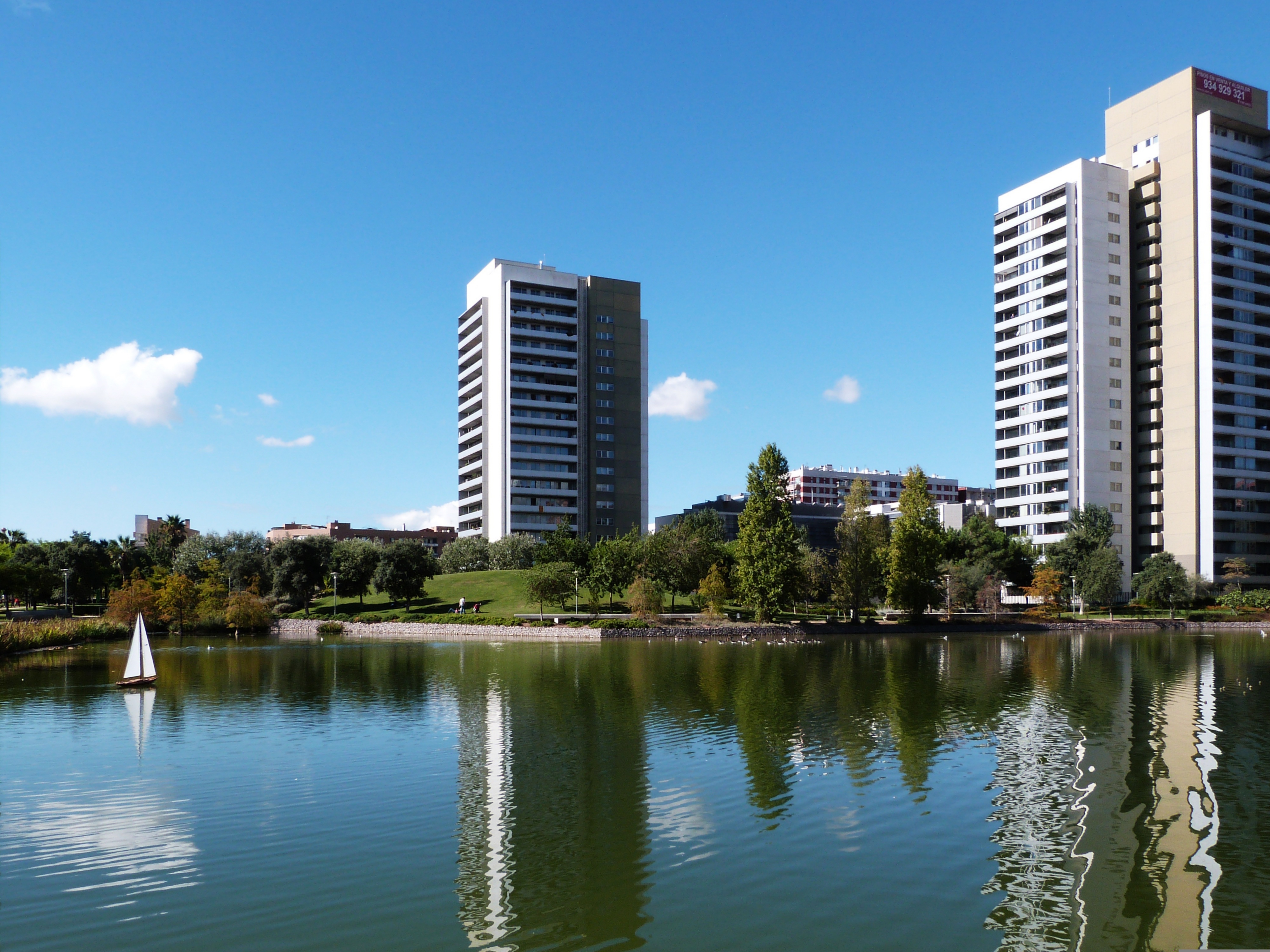
The Integrated System Analysis of Urban Vegetation and Agriculture (URBAG) project spent six years analysing how urban agriculture and green areas can reduce environmental impact and improve sustainability in regions such as the Barcelona Metropolitan Area (AMB).
White roofs, also known as cool roofs, increase albedo, that is, the percentage of solar radiation that is reflected rather than absorbed by buildings. In dense environments, where asphalt and concrete store heat during the day and release it at night, this measure reduces heat accumulation and helps mitigate the urban heat island effect.
Simulations carried out in the AMB show that increasing albedo on residential and industrial roofs particularly reduces daytime temperatures in central and compact areas. When this measure is combined with an increase in green areas, the effect lasts for 24 hours, adding to the reduction in nighttime heat generated by the evapotranspiration of vegetation.
The final assessment of the European URBAG project, funded by the European Research Council (ERC), shows that the strategic combination of these solutions can generate an average temperature reduction of 1.26 °C during extreme episodes, with even greater decreases in nighttime temperatures. It also contributes to reducing pollutants such as nitrogen dioxide (NO₂) in certain areas.
"White roofs have a direct impact on the city's energy balance. They are a quick, relatively inexpensive and particularly effective measure in dense neighborhoods", explains Gara Villalba, ICREA research professor at ICTA-UAB and coordinator of URBAG. "However, their full potential is reached when they are integrated with other green solutions", she says.
Greener, but better planned
The project has evaluated different future scenarios by comparing current urbanization trends with strategies based on urban parks and the recovery of peri-urban agriculture.
The results indicate that continuing with current urban growth trends increases the built-up area and exacerbates both heat and pollution. In some northern areas of the AMB, the replacement of forest with urban development could increase NO₂ concentrations by up to 8%.
In contrast, the strategic creation of urban parks can reduce nighttime temperatures by up to 1.2 °C during episodes of extreme heat. Peri-urban agriculture, meanwhile, contributes to a 7% overall reduction in tropospheric ozone (O₃) levels and improves access to fresh food, although it requires proper management to avoid increases in runoff and phosphorus loads in surface waters.
URBAG warns, however, that expanding green areas without proper planning may generate unintended side effects. Vegetation can slow down wind and promote certain chemical reactions that increase ozone levels in specific contexts. For this reason, the project has developed tools that allow for simultaneous analysis of temperature, air quality, resources, and social vulnerability before implementing policies.
Designing cities with data
In a scenario where heat waves could intensify up to 6 °C by the end of the century under high emissions, the team emphasizes the need for decisions based on scientific evidence. URBAG has contributed to the development of the new Metropolitan Urban Master Plan (PDUM) with a 2050 horizon, providing high-resolution atmospheric modelling and life cycle analysis.
The project also culminates in the publication of the practical guide Green Infrastructures – A Guide for City Planners and Policy Makers, which synthesizes more than twenty scientific articles and offers concrete recommendations for public administrations.
The final report shows that maximizing green spaces is not always effective. "It is essential to combine parks, peri-urban agriculture, and other solutions in an integrated way to reduce temperatures, improve air quality, and minimize social vulnerabilities, while avoiding unintended effects such as increased emissions or runoff", stresses Gara Villalba.
After six years of research, the message is clear: solutions to urban warming exist. Painting roofs white may be the first step, but climate resilience requires a combination of science, planning, and long-term vision.
Reference


