<(From Left) Professor Jin-Hee Han, Dr. Mujun Kim>
"Why do patients with dementia or cognitive decline remain stuck in past memories?"
KAIST researchers have identified, for the first time in the world, the existence of a "neural switch" in the brain that selectively retrieves the most recent memories. This study reveals the principle by which the brain selects necessary information between past memories and new memories, presenting new possibilities for future treatments for memory decline and reduced cognitive flexibility.
KAIST announced on the 17th of May that a research team led by Professor Jin-Hee Han of the Department of Biological Sciences has discovered, for the first time in the world, that a specific neural circuit connecting the medial septum (MS, a brain region that regulates memory and learning) and the medial entorhinal cortex (MEC, a brain region connected to the hippocampus* that processes memory information) switches between past and recent memories and plays a key role in selecting up-to-date information appropriate for the situation.
*Hippocampus: a key brain region that creates and stores new memories
We live by updating our memories through new experiences every day. For example, if the restaurant we visited today was more satisfying than the one we visited yesterday, the brain modifies the existing memory to reflect the new information. In this way, the ability to select necessary information between past and present memories is central to higher cognitive functions such as decision-making, problem-solving, future prediction, and logical reasoning. However, the principle by which the brain distinguishes and switches between memories has long remained unknown.
The research team focused on the medial septum, located deep within the brain. The medial septum regulates the activity rhythms of the hippocampus and acts as a "conductor" that helps the brain effectively store and retrieve information.
The study found that when specific neurons in the medial septum send signals to the medial entorhinal cortex, a brain region that processes memory information and delivers it to the hippocampus, the brain is better able to recall recent memories.

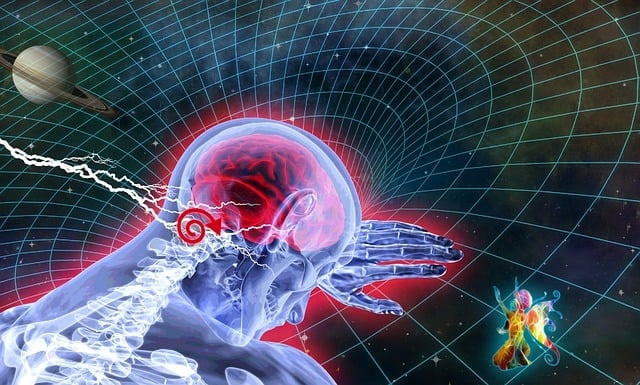
<(AI image) An inhibitory neural circuit switch in the MS–MEC pathway that regulates the selection between past and recent memories>
Conversely, when the research team artificially blocked this neural circuit using light, experimental animals were unable to use recent information and behaved according to past patterns. Neural activity in the hippocampus, which plays an important role in memory storage, also reverted to a past state. This shows that the circuit acts as a "neural switch" that selects the most recent information needed for the current situation among multiple memories.
The research team also analyzed memory performance according to brain activity states. Our brain repeatedly shifts between an "online state" (theta waves, brain waves activated during learning and concentration), in which it actively processes information, and an "offline state" (delta waves, slow brain waves that appear during sleep or rest), which is a resting state.
The analysis showed that the longer the online state was maintained, the better recent memories were recalled, while frequent switching between online and offline states significantly reduced memory retrieval ability. This suggests that specific brain rhythms and states are important neurological indicators that determine effective memory retrieval.
This study is significant in that it identified the mechanism by which the brain flexibly reflects new information while maintaining past memories. The research team expects that this discovery could lead to the development of new therapeutic technologies to improve memory decline and reduced cognitive flexibility in patients with degenerative brain diseases such as dementia and Alzheimer's disease.

Professor Jin-Hee Han stated, "This study presents a new paradigm for understanding the principle by which our brain organizes and uses numerous experiences in chronological order," adding, "Previously, memory retrieval was understood simply as the replaying of stored traces, but through this study, we proved that the brain has a regulatory system that actively selects recent information among competing memories."
This study involved Dr. Mujun Kim of the Department of Biological Sciences at KAIST, doctoral students Boin Suh, Sunhoi So, Jung Wook Choi, Jaemin Hwang, and Juhee Park, and was published on April 29 in Nature Neuroscience, a top-tier international journal in neuroscience.
※ Paper title: "A septo-entorhinal GABAergic pathway that enables switching between episodic memories," https://doi.org/10.1038/s41593-026-02280-6
※ Author information: Mujun Kim (KAIST, first author), Boin Suh (KAIST), Sunhoi So (KAIST), Jung Wook Choi (KAIST), Jaemin Hwang (KAIST), Juhee Park (KAIST) & Jin-Hee Han (KAIST, corresponding author)
This research was supported by the Mid-Career Research Program (National Research Foundation of Korea), the Samsung Science and Technology Foundation, and the KAIST Jang Young Sil Fellow Program.