
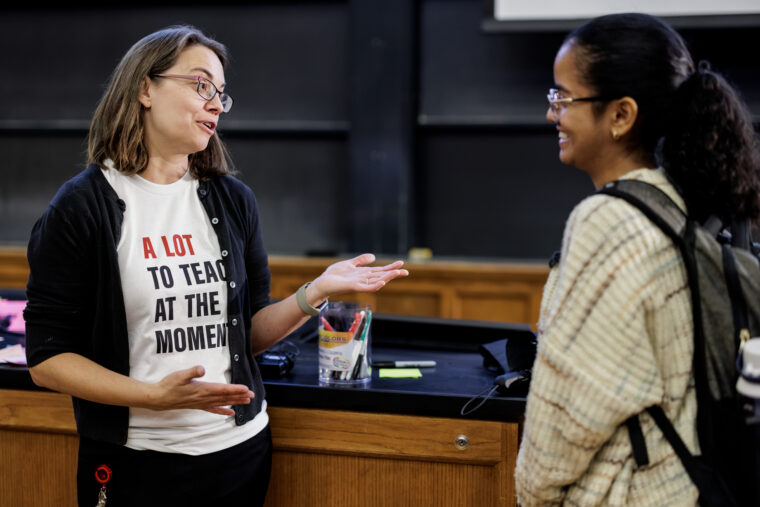
Interest in public health is surging at WashU - and a new undergraduate program is meeting that demand in ways that differ from traditional models.
The Program in Public Health & Society has quickly gained traction since launching its minor in fall 2024 and adding a major in fall 2025. Less than a year after its debut, the major has attracted 84 students, alongside 72 minors. More than 650 students have taken related courses, and the program will graduate its first cohort of 11 students this spring - primarily minors, along with several secondary majors and one primary major.
Faculty say the momentum reflects a broader shift in how students think about health - not just as a clinical pursuit, but as a complex set of social, environmental and structural forces.
A different model
Unlike many undergraduate public health programs housed in public health schools, Public Health & Society is based in WashU Arts & Sciences. This allows students to approach health through a broader intellectual lens - drawing on the humanities, social and natural sciences. "Health outcomes are rarely random," said Lindsay Stark, DrPH, program co-director and a professor of public health. "They follow patterns of gender, race, poverty and power. This program gives students the frameworks to see those patterns and understand pathways to intervene."
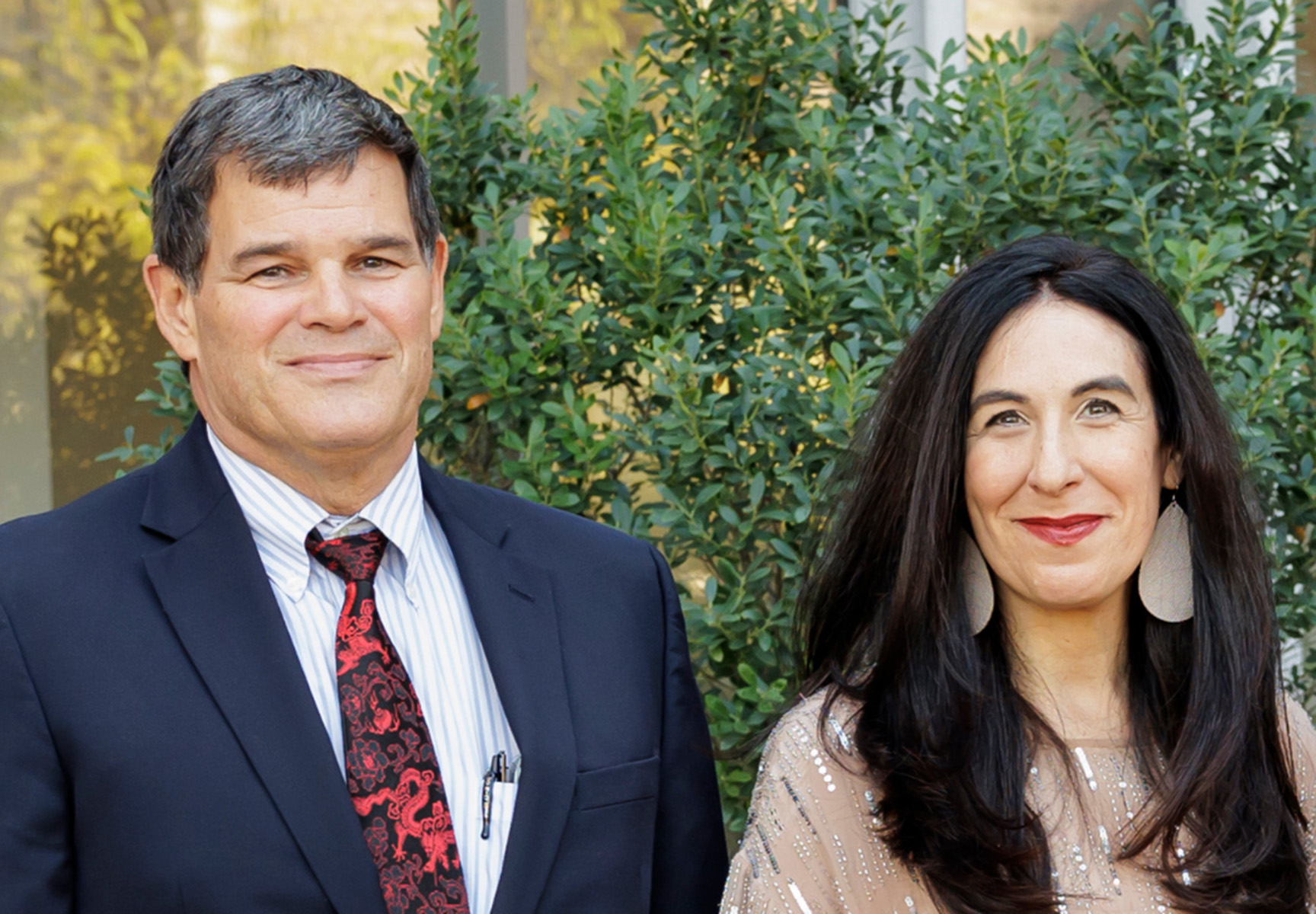
At its core, the program treats public health as a study of people and the systems around them, recognizing that health outcomes cannot be separated from the conditions that shape them.
"Public health is 'health for everybody,' but that doesn't mean everyone experiences health equally," said T.R. Kidder, PhD, program co-director and the Edward S. and Tedi Macias Professor in the Department of Anthropology. "By rooting this program in Arts & Sciences, we give students tools to think critically about ethics, inequality and the broader forces that define well-being."
The program was developed in collaboration with the WashU School of Public Health, which confers graduate-level degrees. That partnership aligns undergraduate coursework with expectations for graduate training and public health practice, easing the transition to graduate study and offering an optional accelerated bachelor's-to-master's in public health pathway.
"Public health challenges are complex, and no single discipline can solve them," said Sandro Galea, MD, DrPH, the Margaret C. Ryan Dean of WashU Public Health, the Eugene S. and Constance Kahn Distinguished Professor in Public Health and the university's vice provost for interdisciplinary initiatives.
"Undergraduate education is a critical entry point for public health. It's where students begin to understand how complex the drivers of health are - and how they can contribute to addressing them," he added.
Students complete a shared core curriculum and choose from more than 180 electives. In practice, it's a "design-your-own-adventure" approach, Kidder said. The program draws on coursework and expertise from across WashU's academic schools and disciplines, supporting both structured and flexible pathways.
Sophomore Teddy Basa, who is double-majoring in architecture and in public health and society, is interested in how design shapes health - from hospital environments to community spaces. He has worked as a research assistant on sustainable concrete projects in the WashU Sam Fox School.
"I've always wanted to design for people," Basa said. "Public health helped me understand who those people are - and how the spaces we build influence their health."
Core courses are team-taught by faculty in Arts & Sciences and WashU Public Health. Electives, drawn from across departments, reflect the many ways students can approach health, including "Health and Human Rights"; "Environmental Justice as Public Health"; "Animals and Insects and the Making of Modern Public Health"; "Disability Anthropology"; and "Biopsychosocial Aspects of Eating Disorders."
Faculty are working with students to shape the program as it evolves. A team of student ambassadors gathers input from peers, helps inform curricular pathways and supports outreach - creating social media content that educates the community about public health issues and raises program awareness.
Senior Mia Kouveliotes, who is majoring in anthropology, with a minor in public health and society, focuses on mental health, stigma and how policy shapes care. Her passion for the field led her to become one of the program's first ambassadors. "I often tell prospective students that public health really touches everything," she said. "No matter what you're studying, there's a way it connects back to health."
Meeting a longstanding demand
Faculty say interest in public health has been building for years and accelerated during the COVID-19 pandemic, as students saw firsthand how misinformation, public trust, preparedness and health disparities shape outcomes.
Nearly half of Arts & Sciences students arrive at WashU interested in pre-medical studies, but only about 16-18% ultimately become physicians. That leaves a substantial group of students interested in health - without a clear academic pathway.
Earlier efforts to meet that demand, including interdisciplinary offerings within anthropology and a previous public health minor, were limited in scope. The launch of WashU Public Health, with its 70-plus faculty, research networks and centers, created a stronger foundation for a more comprehensive undergraduate program.
Public health has become a central focus across majors at WashU - as evidenced by initiatives such as the Health Communication Design Studio at the Sam Fox School and the Business of Health initiative at WashU Olin Business School. Public Health & Society builds on that momentum, giving students in other schools more ways to explore those intersections without changing majors.
Learning in the community
A defining feature of the program is its required capstone, APEX (Advanced Practical EXperience in Public Health), which places students in real-world settings - from youth and environmental programs such as Gateway to the Great Outdoors to community-based care and state health agencies. Through a 140-hour practicum with a community partner, students complete either an internship or a directed research project, bridging the gap between public health theory and practice. Rarely required at the undergraduate level, the experience provides hands-on preparation for careers or graduate study.
"We require field experience at the undergraduate level, paired with structured reflection, so students can connect classroom learning to real-world practice," Stark said. "That experience also emphasizes the ethical responsibilities of working in community settings."
Preparing students for the field
While many students plan to pursue advanced degrees in public health, faculty emphasize that the program prepares them for a wide range of careers. "We're training students to take what they learn and apply it across fields," Stark said. "It opens doors to medicine, business, law and policy, architecture, urban planning … the list goes on."
Srikar Vegesna is the first student to complete the public health and society major, along with a minor in biology. He has begun charting a path that blends clinical training with population health. He plans to train as an emergency medical technician before applying to medical school.
"Many of my science courses focused on the pathological mechanisms of disease but rarely delved into prevention," he said. "Public health gave me insight into making broader population impacts beyond individual biology and outcomes."
Part of a broader investment
Public Health & Society grew out of a multiyear, faculty-led planning effort that also helped shape WashU Public Health and reflects a broader institutional focus on addressing society's greatest challenges.
"We're building something that reflects how the world actually works," Kidder said. "Health challenges don't exist in isolation - and neither should the way we prepare students to address them."


