
Flinders bowel cancer experts have been awarded a major $2.7 million grant to help doctors detect bowel cancer earlier in Australians under the age of 50 using personalised risk checks and simple blood and stool tests.
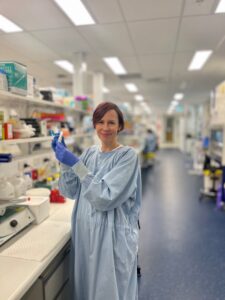
Lead researcher Associate Professor Erin Symonds, Head Medical Scientist at FHMRI's Bowel Health Service, says that bowel cancer is increasing in young people, but is often found late due to misdiagnosis and exclusion of young people from screening programs.
"While the National Bowel Cancer Screening Program is effective at reducing the incidence and mortality of bowel cancer, it does not include people under 45 years," says Associate Professor Symonds from the College of Medicine and Public Health and Flinders Medical Centre.
"Consequently, many young people are unaware of the disease until they have symptoms, and then often experience delayed diagnosis, leading to reduced trust in the healthcare system, and poorer outcomes.
"While it is not currently clear what is causing the increase in young onset bowel cancer, it is essential that we have strategies in place to allow diagnoses as quickly as possible."
Bowel cancer in Australians under 50 is rising rapidly and is now the leading cause of cancer‑related death for people aged 25-44.
Australia has the highest rate of young onset bowel cancer in the world and the risk of being diagnosed under the age of 40 has more than doubled since 2000.
The National Bowel Cancer Screening Program mainly targets people aged 50 and over. Although eligibility now starts at 45, people aged 45-49 must opt in, and participation is low, especially in rural and remote communities.
As a result, many young people experience long delays before diagnosis and are more likely to be diagnosed at an advanced stage, when survival is much lower and long‑term health and financial impacts are severe.
The project, 'Next-Generation Screening: a risk-based model for the timely detection and prevention of early-onset colorectal cancer', will study the risk factors for why younger people are getting bowel cancer and how to find it earlier.
A team of researchers, doctors, and young people affected by bowel cancer will analyse data from Australia's largest colonoscopy database to identify risk factors and design a testing pathway that enables faster diagnosis for young people in city and regional areas.
"By introducing risk‑based screening in general practice, our project aims to change how young people are diagnosed with bowel cancer, helping ensure earlier detection and better outcomes," says Associate Professor Symonds.
"If successful, it could also deliver a smarter, more targeted way to protect younger Australians from one of the most common cancers."
Deputy Vice-Chancellor (Research) Professor Raymond Chan says this latest funding supports research that has the potential to change lives.
"By focusing on earlier detection for younger Australians, Flinders' researchers are addressing a critical gap in our health system and delivering solutions that could improve outcomes nationwide," says Professor Chan.
"Flinders is proud to be leading this study as part of our national efforts to address the rising incidence of early onset cancers."
The project has been funded by The Cancer Australia Research Initiative (CARI), a new initiative led by Cancer Australia, and jointly funded with the National Health and Medical Research Council (NHMRC).
CARI has a focus on research into early-onset cancers. Early-onset cancer refers to cancers that are diagnosed in younger adults, typically between the ages of 20 and 49.


