
Imagine looking at yourself in the mirror, only to find that your reflection is governed by different laws than you are: Identical movements produce different outcomes, and what seems like a perfect copy behaves in an entirely different way. It may sound absurd, but researchers at the Weizmann Institute of Science and the Hebrew University of Jerusalem have discovered that this is precisely how chiral molecules behave. These molecules can exist in two forms that are mirror images of one another, like left and right hands.
In a new study published in Science Advances , the researchers found that an electron experiences a magnetic field of different strength when traveling through each mirror-image form. This asymmetric behavior not only challenges conventional assumptions but also lends support to a theory about how life began on Earth.
Although chiral molecules can exist in two forms, scientists realized more than 150 years ago that living organisms "choose" only one: a left-handed form for proteins and a right-handed form for sugars, DNA and RNA. This preference is puzzling, since according to established laws of chemistry and physics, mirror-image molecules should have identical energy. The question of how this asymmetry arose has occupied scientists for decades, and resolving it could shed light on how the first biological molecules were created - in other words, the very origin of life.
A first step toward solving the puzzle came in 1999 , when Prof. Ron Naaman and his colleagues at the Weizmann Institute passed an electric current - a stream of electrons - through chiral molecules and discovered that each mirror-image form behaves differently. Electrons act like tiny magnets, with north and south poles, and possess a property called spin, which determines their magnetic orientation. As these tiny magnets move through a chiral molecule, they follow a spiral path, which causes them to experience a magnetic force that can either accelerate or hinder their motion. The researchers found that the two mirror-image forms exert opposite effects: One mainly speeds up electrons whose north pole aligns with their direction of motion, while the other speeds up electrons whose north pole points in the opposite direction.
""Our breakthrough was realizing that the difference between these two seemingly identical forms only emerges in motion"
"This still didn't explain why nature 'prefers' one form," says Naaman. "The next clue came from accumulating evidence that the two mirror-image forms not only favor electrons with opposite spins but also transmit them with different efficiencies. Many assumed this was due to contamination of samples, but the differences were too large, and the samples too pure, for that explanation to hold."
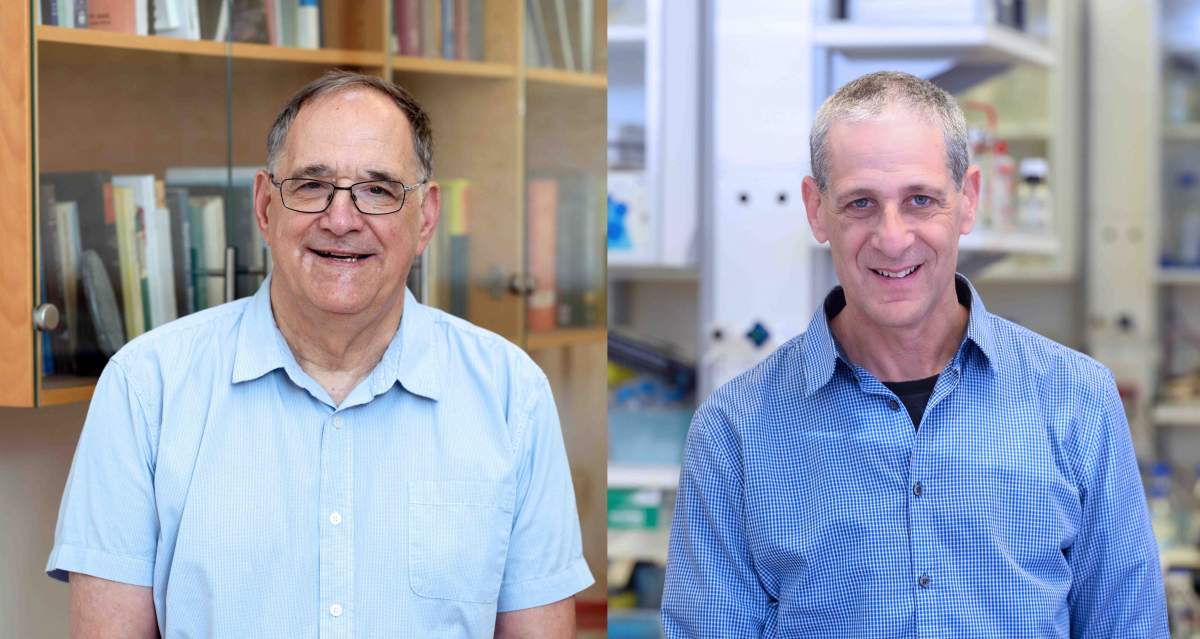
In the new study, led by Naaman and Prof. Yossi Paltiel of the Hebrew University, the researchers examined chiral versions of gold and silver, as well as biological chiral molecules, passing electric current through each of their mirror-image forms. The experiments revealed substantial differences in the strength of the magnetic field experienced by electrons in the two forms - differences that reached about 30 percent in chiral gold.
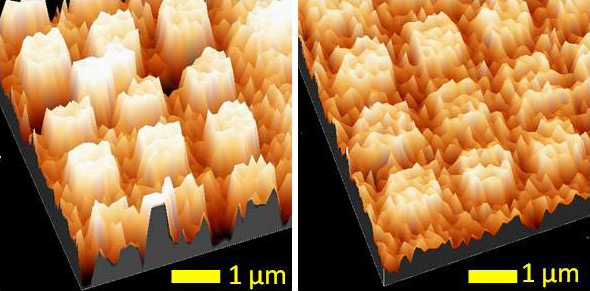
Using mathematical analysis and computer simulations, the researchers managed to explain how this can happen. When a magnetic field is not aligned with an electron's direction of motion, the electron experiences only part of its strength. Crucially, in each mirror-image form the magnetic field is oriented differently, so the electron effectively "feels" a different fraction of it.
"Our breakthrough was realizing that the difference between these two seemingly identical forms only emerges in motion," explains Paltiel. "At rest, there is no difference. But once electrons start moving in a particular direction and encounter magnetic forces of varying intensity, a significant gap opens up between the forms, altering their chemical and physical behavior."
The implications extend far beyond chemistry and physics, offering important clues about the origin of life. About three years ago, Prof. Dimitar Sasselov's group at Harvard University proposed that life began on naturally magnetized surfaces at the bottoms of ancient lakes, which were rich in magnetite, the most magnetic mineral found in nature.
When a chiral molecule approaches a magnetic surface, its electrons begin to move, and electrons with the same magnetic orientation accumulate at one end of the surface. If this orientation is opposite to that of the surface, the molecule is attracted; if it matches, the molecule is repelled. Thus, if the surface presents a fixed magnetic pole while each mirror-image form presents a different one, only one form will be attracted to this surface, accumulating and crystallizing into a stable structure. According to the Harvard theory, this is what happened with a primordial molecule called RAO, from which RNA eventually evolved.
"This theory explains how one mirror-image form could come to dominate, if the magnetic surface consistently favors it," says Naaman. "The problem is that magnetic surfaces are not uniform - they contain regions with both north and south orientations, so it seemed that both forms could accumulate."
This is where the new findings come in. Because one mirror-image form transmits electrons of a given spin more efficiently to its edge, it can align more effectively with a surface that contains both magnetic orientations. The researchers also observed that when a biological chiral molecule comes into contact with a metallic surface, the magnetic differences between its mirror forms are amplified - potentially enough to ensure that only one form accumulates.

In the case of the primordial RAO molecule, the right-handed form appears to have been favored. This physical advantage made it the default for all RNA molecules in nature. And proteins are synthesized from RNA in a process that preserves the handedness relationship, so if all RNA molecules are right-handed, all proteins will end up being left-handed.
Thus, the new findings not only help resolve a 150-year-old mystery, but also lend support to the idea that life on Earth may have originated on magnetic mineral surfaces at the bottoms of ancient lakes.
Today, this primordial selection process can be replicated in the lab for the benefit of humankind. "In biological reactions, the specific mirror-image form is crucial," says Naaman. "Using the wrong form in industrial processes can be ineffective at best and harmful at worst, both to human health and to the environment. Based on our findings, magnetic surfaces could be used to ensure, with unprecedented precision, that only the desired chiral form crystallizes during production. This could lead to the development of safer and more effective drugs, fertilizers and pesticides."
Also participating in the study were Daniel Goldberg, Nir Yuran and Dr. Shira Yochelis from the Hebrew University of Jerusalem; Jia Hao Soh, Christopher Seibel and Prof. Anna I. Krylov from the University of Southern California; Prof. Jurgen Gauss from Johannes Gutenberg-Universität Mainz, Germany; Prof. Shmuel Zilberg from Ariel University, Israel; Prof. S. Furkan Ozturk from the California Institute of Technology; and Prof. Jonas Fransson from Uppsala University, Sweden.

Science Numbers
The temperature range in which chiral molecules efficiently select electrons with a specific spin is between 60 and 80°C. This range matches the estimated temperatures at the bottoms of ancient lakes thought to have been the cradle of life on Earth.


