A carnivorous fruit fly living in bubbling African streams may sound like a fever dream. However, with the help of DNA analysis of a pinned insect from a museum in Zurich, researchers have managed to draw an evolutionary map of a mysterious species that has not been seen since 1981.
Researchers at Lund University have successfully mapped the genome of one of the world's most unusual fruit flies - Drosophila enhydrobia. Unlike its well-known relatives in the kitchen, its larvae live entirely underwater, in flowing streams where they actively hunt other insects.
"We're talking about a fruit fly that has completely turned its lifestyle upside down. From feeding on yeast and rotting fruit, it has become a specialised predator in running water," says Marcus Stensmyr, biology researcher at Lund University, who led the study.
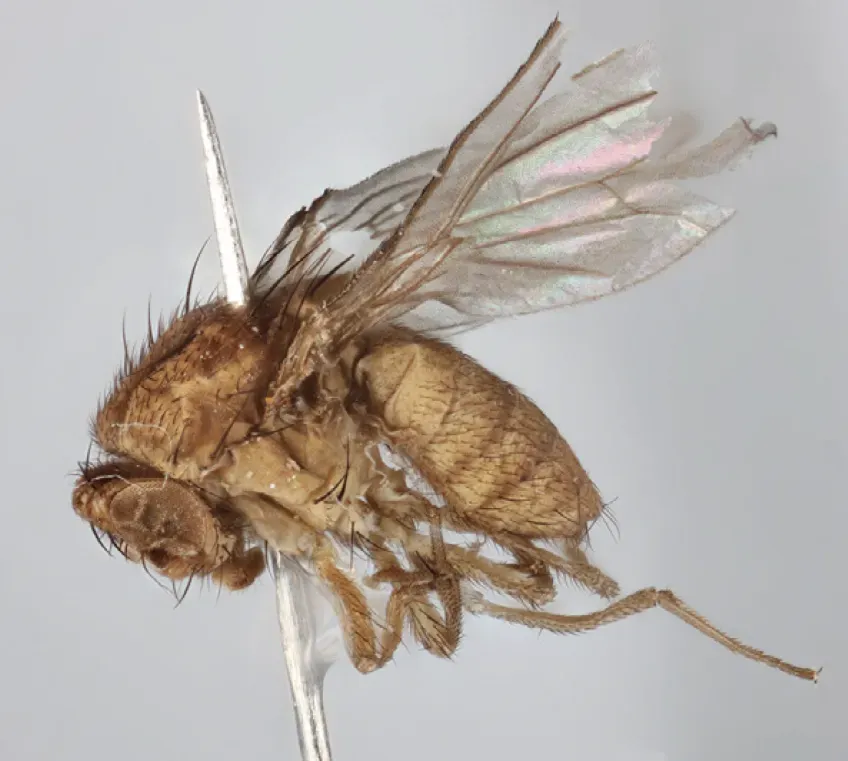
Since the aquatic predator has not been observed in the wild since 1981, the researchers had to turn to a natural history museum in Switzerland to track down the fruit fly. Using modern DNA techniques, the research team managed to extract and analyse an almost complete genome from an old, pinned specimen - without destroying it. The results show that Drosophila enhydrobia is not an "evolutionary loner" but belongs to a group of flies associated with water-adjacent environments, mainly in South Asia.
"What at first looked like an evolutionary mystery turned out to be an extreme elaboration of something that already existed. That makes the story both more understandable and, in a way, even more fascinating," says Marcus Stensmyr.
The study reveals clear genetic adaptations to the fly's unusual lifestyle. Its genome has been "trimmed" of several gene families linked to smell, taste, and metabolism. At the same time, the results suggest that the remaining sensory genes have become more specialised.
"It's as if it has fewer tools in the toolbox, but the tools that remain are all the more finely tuned for this particular environment," says Hamid Ghanavi, biology researcher at Lund University.
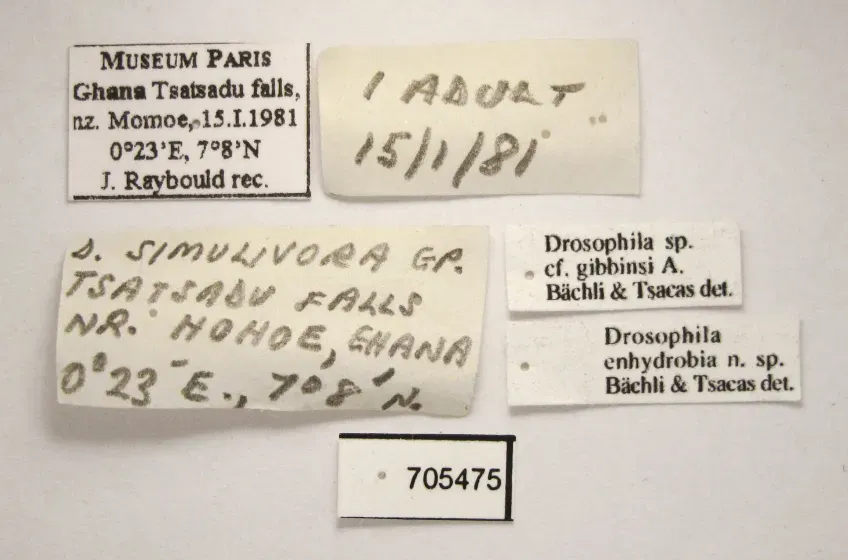
Beyond the evolutionary insights, the research also highlights the value of natural history museums. Collections of old, seemingly insignificant specimens can, with today's technology, yield entirely new knowledge about biodiversity and the evolution of life. The study also shows that species not seen for decades can still contribute to research - and to our understanding of how organisms change over time.
"We have only just begun to scratch the surface of what is hidden in museum collections. With continued technological advances, they may become important for understanding both evolution and how species are affected by future environmental changes," concludes Marcus Stensmyr.
Publication:
Link to the article in Current Biology:
Chemosensory evolution in the aquatic predator Drosophila enhydrobia